Ruth E. Board – författare
Visar alla böcker från författaren Ruth E. Board. Handla med fri frakt och snabb leverans.
7 produkter
End of Life Choices for Cancer Patients
An International Perspective
Av Ruth E. Board, Michael I. Bennett m. fl.
Häftad, 2020
503 kr
Lägg i varukorg
There have been impressive improvements in the diagnosis and treatment of cancer in recent decades. In economically advantaged countries with well-developed healthcare systems over 50% of all cancer patients achieve long term survival and are probably cured. Not only has survival improved radically …
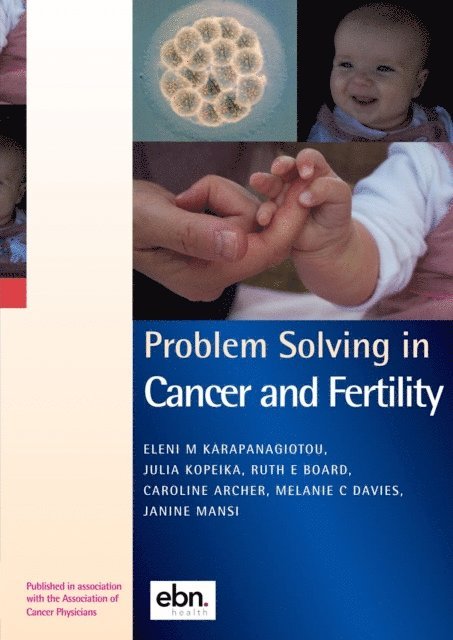
Problem Solving in Cancer and Fertility
Av Eleni Karapanagiotou, Julia Kopeika m. fl.
Häftad, 2020
672 kr
Lägg i varukorg
The treatment of cancer in young women and men is increasingly turning from focusing purely on survival to a recognition of the long-term effects of treatment on subsequent quality of life. In this regard, fertility is a very high priority for patients. This is the first book to explain the latest …
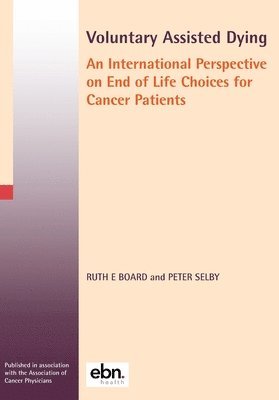
Voluntary Assisted Dying
An International Perspective on End of Life Choices for Cancer Patients
Av Ruth E Board, Ruth E. Board m. fl.
Häftad, 2025
435 kr
Lägg i varukorg
Cancer treatment has advanced remarkably, offering hope andextending life for many. But with these advances, clinicians and policymakersare increasingly faced with the complex and challenging questions surroundingend-of-life care. How can we ensure the highest quality of life for patientswith …
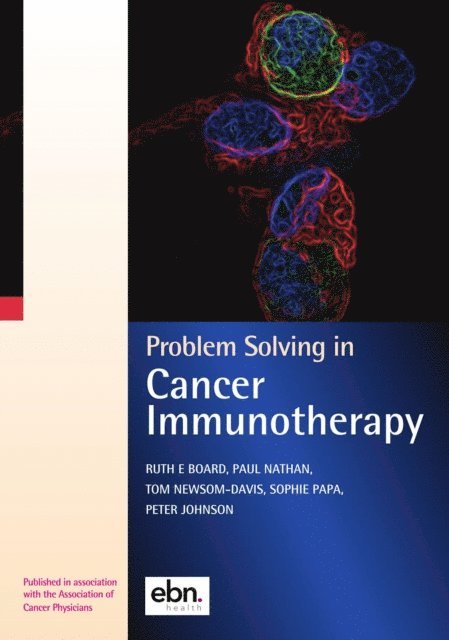
Problem Solving in Cancer Immunotherapy
Av Tom Newsom-Davis, Paul Nathan m. fl.
E-bok, 2019
839 kr
Lägg i varukorg
A broad and experienced team, including medical oncologists and life scientists, have collaborated to produce this practical guide to cancer immunotherapy. It provides a compendium of best practice, including 23 case studies to act as models for professionals to make decisions, either for …
Problem Solving in Acute Oncology
Av Pauline Leonard, Ruth E Board m. fl.
E-bok, 2020
821 kr
Lägg i varukorg
Increasing attention is being paid to the needs of cancer patients who present acutely with issues relating to their diagnosis an management, complications of their cancer, complications arising from their treatment, or who require appropriate symptom control or palliative care. Recent years have …
End of Life Choices for Cancer Patients
An International Perspective
Av Penney Lewis, Michael I Bennett m. fl.
E-bok, 2020
672 kr
Lägg i varukorg
There have been impressive improvements in the diagnosis and treatment of cancer in recent decades. In economically advantaged countries with well-developed healthcare systems over 50% of all cancer patients achieve long term survival and are probably cured. Not only has survival improved radically …
Problem Solving in Cancer and Fertility
Av Ruth E Board, Julia Kopeika m. fl.
E-bok, 2020
1007 kr
Lägg i varukorg
The treatment of cancer in young women and men is increasingly turning from focusing purely on survival to a recognition of the long-term effects of treatment on subsequent quality of life. In this regard, fertility is a very high priority for patients. This is the first book to explain the latest …