Ruth Kramer – författare
Visar alla böcker från författaren Ruth Kramer. Handla med fri frakt och snabb leverans.
11 produkter
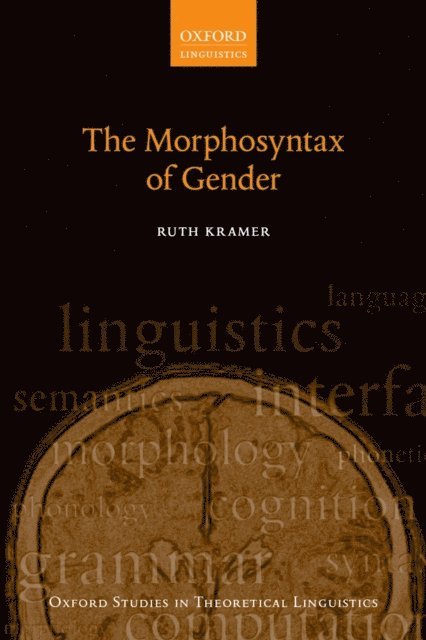
Morphosyntax of Gender
Av Ruth Kramer
E-bok, 2015
655 kr
Lägg i varukorg
This book presents a new cross-linguistic analysis of gender and its effects on morphosyntax. It addresses questions including the syntactic location of gender features; the role of natural gender; and the relationship between syntactic gender features and the morphological realization of gender. …
The Morphosyntax of Gender
Av Ruth Kramer
Inbunden, 2015
1777 kr
Lägg i varukorg
This book presents a new cross-linguistic analysis of gender and its effects on morphosyntax. It addresses questions including the syntactic location of gender features; the role of natural gender; and the relationship between syntactic gender features and the morphological realization of gender. …
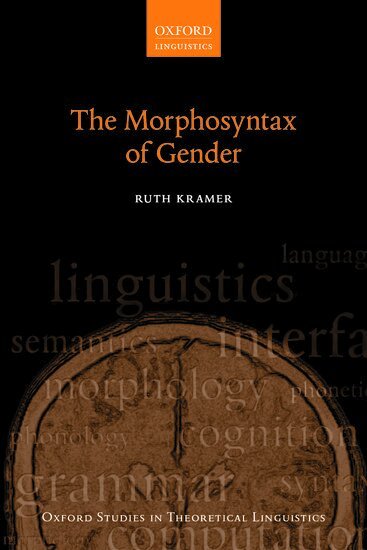
The Morphosyntax of Gender
Av Ruth Kramer
Häftad, 2015
786 kr
Lägg i varukorg
This book presents a new cross-linguistic analysis of gender and its effects on morphosyntax. It addresses questions including the syntactic location of gender features; the role of natural gender; and the relationship between syntactic gender features and the morphological realization of gender. …
The Cambridge Handbook of Distributed Morphology: Volume 1
Core Components and the Syntax-Morphology Interface
Av Artemis Alexiadou, Ruth Kramer m. fl.
Inbunden, 2026
2525 kr
Kommande
With contributions from a team of renowned scholars, this two-volume Handbook is a comprehensive guide to the Distributed Morphology (DM) framework, providing an overview of all major theoretical issues in morphology. This volume, the first, covers the core components of DM, its historical context, …
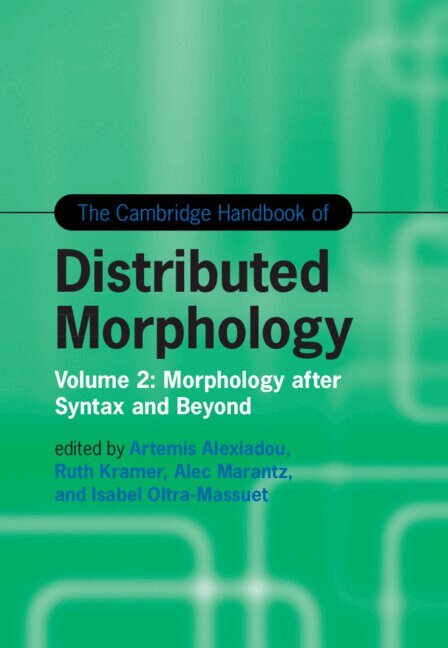
The Cambridge Handbook of Distributed Morphology: Volume 2
Morphology after Syntax and Beyond
Av Artemis Alexiadou, Ruth Kramer m. fl.
Inbunden, 2026
2525 kr
Kommande
With contributions from a team of renowned scholars, this two-volume Handbook is a comprehensive guide to the Distributed Morphology (DM) framework, providing an overview of all major theoretical issues in morphology. This volume, the second, looks at morphology post-syntax within the Distributed …
You Belong
A Guidebook for the Career-Minded Woman on the Move
Av Ruth Kramer
Inbunden, 2024
364 kr
Lägg i varukorg
Languages in Africa
Multilingualism, Language Policy, and Education
Av Elizabeth C. Zsiga, One Tlale Boyer m. fl.
Häftad, 2015
821 kr
Lägg i varukorg
People in many African communities live within a series of concentric circles when it comes to language. In a small group, a speaker uses an often unwritten and endangered mother tongue that is rarely used in school. A national indigenous language - written, widespread, sometimes used in school - …
Languages in Africa
Multilingualism, Language Policy, and Education
Av Ruth Kramer, One Tlale Boyer m. fl.
E-bok, 2015
806 kr
Lägg i varukorg
People in many African communities live within a series of concentric circles when it comes to language. In a small group, a speaker uses an often unwritten and endangered mother tongue that is rarely used in school. A national indigenous language—written, widespread, sometimes used in …
You Belong
A Guidebook for the Career-Minded Woman on the Move
Av Ruth Kramer
Häftad, 2024
288 kr
Lägg i varukorg