Ruth Linn - Böcker
Visar alla böcker från författaren Ruth Linn. Handla med fri frakt och snabb leverans.
5 produkter
5 produkter
518 kr
Skickas inom 10-15 vardagar
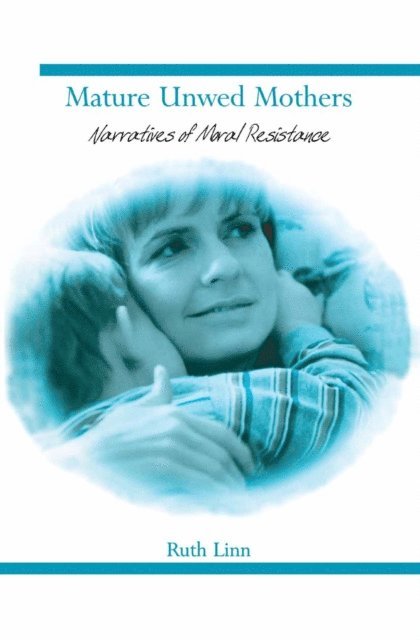
This text describes the moral decision-making process toward unwed motherhood based on a 15-year longitudinal study of 50 Israeli single women aged 30 and over, each of whom decided to have a child on her own following a short- or long-term relationship with a male partner. The author views these women as conscious resisters to the societal script of marriage, reproduction and motherhood, and documents their narratives of moral subjectivity.
809 kr
Skickas inom 10-15 vardagar
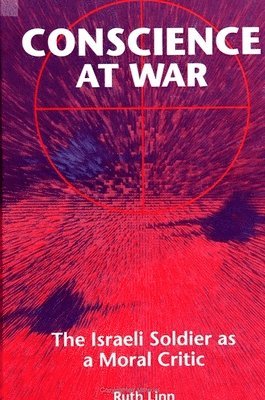
"Mr. Prime Minister, to achieve order in the casbah I have to act brutally toward people free of crime, too. I feel humiliated by this behavior. The situation has become a catastrophe. It's breaking us." So spoke an Israeli soldier when Prime Minister Shamir visited troops in the West Bank. Until Not Shooting and Not Crying, few have addressed, from a psychological perspective, the coping strategies and unconventional resolutions constructed by the Israeli soldier in the face of overwhelming moral dilemmas, which he traditionally solved by unselfishly risking his life, but not by refusing to fight. In Israel, refusing to fight for one's country is considered deviant behavior, but in the war in Lebanon individuals adopted this unconventional mode of moral resolution for the first time. Linn assesses the nature of the decision-making process involved in this mode of selective conscientious objection and attempts to define the moral meaning of such behavior, both to the dedicated Israeli soldier and his society. This volume investigates how and why the phenomenon of selective conscientious objection emerged so dramatically during the war in Lebanon, identifies the psychological characteristics of the soldiers who chose this course of action, and considers the impact and future consequences of this action on Israeli society.Linn summarizes the military history of Israel from the 1967 Six-Day War to the undeclared war currently being waged in the occupied territories. The nine chapters, followed by references, tables, and appendixes, address such areas as: the individual conscience at war--a search for a theoretical framework; why the Lebanon war precipitated the phenomenon of conscientious objection; the objectors' claims for moral superiority and consistency; refusing soldiers compared to striking physicians; and others. Scholars and students of military affairs, psychologists, and those concerned with contemporary ethical/moral issues will find Linn's work indispensable.
382 kr
Tillfälligt slut
An exploration of the moral and intellectual conflict of Israeli citizens who have resisted military service, and of how they justify their choices of action.Israel's security is maintained largely by civilians in uniform. The chronic state of war in Israel requires that every Israeli civilian serve in the Israel Defense Forces as a reservist until the age of 55. The focus of this book is the intellectual and moral challenges selective conscientious objection poses for resisters in Israel. It is the first psychological study of the Intifada refusniks.The 1982–1985 Lebanon War was a dramatic turning point in the intensity, depth, forms, and magnitude of criticism against the army, and this war serves as the starting point for Ruth Linn's inquiry into moral criticism of Israeli soldiers in morally no-win situations during the Intifada. In each of these conflicts, about 170 reserve soldiers became selective conscientious objectors. In each conflict, however, numerous objecting soldiers also "refused to refuse," proclaiming that their right to voice their moral concern springs from their dedication to, and fulfillment of, the hardship of military obligation.Linn uses the theories of Rawls, Walzer, Kohlberg, and Gilligan as a framework for understanding and interpreting interviews with objecting soldiers. By this means, she seeks to answer such questions as: How would various groups of objecting soldiers justify their specific choice of action? What are the psychological, moral, and non-moral characteristics of those individuals who decided to be, or refused to be, patriotic? And how did the Intifada, as a limited yet morally problematic military conflict, affect the moral thinking, emotions, and moral language of long term soldiers?
349 kr
Skickas inom 10-15 vardagar
On 7 April 1944 a Slovakian Jew, Rudolf Vrba (born Walter Rosenberg), and a fellow prisoner, Alfred Wetzler, succeeded in escaping from Auschwitz-Birkenau. As block registrars both men had been allowed relative (though always risky) freedom of movement in the camp and thus had been able to observe the massive preparations underway at Birkenau of the entire killing machine for the eradication of Europe's last remaining Jewish community, the 800,000 Jews of Hungary. The two men somehow made their way back to Slovakia where they sought out the Jewish Council (Judenrat) to warn them of the impending disaster. The Vrba-Wetzler report was the first document about the Auschwitz death camp to reach the free world and to be accepted as credible. Its authenticity broke the barrier of skepticism and apathy that had existed up to that point. However, though their critical and alarming assessment was in the hands of Hungarian Jewish leaders by April 28 or early May 1944, it is doubtful that the information it contained reached more than just a small part of the prospective victims—during May and June 1944, about 437,000 Hungarian Jews boarded, in good faith, the "resettlement" trains that were to carry them off to Auschwitz, where most of them were gassed on arrival. Vrba, who emigrated to Canada at war's end, published his autobiography in England nearly forty years ago. Yet his and Wetzler's story has been carefully kept from Israel's Hebrew-reading public and appears nowhere in any of the history texts that are part of the official curriculum. As Ruth Linn writes, "Israeli Holocaust historiography was to follow the spirit of the court's policy at the Eichmann trial: silencing and removing challenging survivors from the gallery, and muting questions about the role of the Jewish Council in the deportations." In 1998 Linn arranged for publication of the first Hebrew edition of Vrba's memoirs. In Escaping Auschwitz she establishes the chronology of Vrba's disappearance not only from Auschwitz but also from the Israeli Holocaust narrative, skillfully exposing how the official Israeli historiography of the Holocaust has sought to suppress the story.
518 kr
Skickas inom 10-15 vardagar
I have often wondered if the opposition to women's choosing to abort a pregnancy masks a fear of women choosing to have and raise children on their own. When a woman separatesmotherhood from marriage, she claims a freedom in the realm of intimate rela tionships that may be as fundamental as Freedom of Conscience or Freedom of Association. Yet, we do not usually think about women's decisions concerning motherhood in these terms. In a pair of remarkable studies begun in the 1980s, Ruth Linn-pregnant at the time, and married to a medical officer in the Israeli army-took the study of moral psychology into two highly controversial arenas of moral action: Israeli soldiers who refused to serve in Lebanon and single women who refused to remain childless. While conscientious objection to war has long been recognized as an act ofmoral resistance and courage,women who question societal norms and values linking motherhood with marriage, are typically dismissed as bad women. Rather than approaching these questions in the abstract, Linn chose to inter view women who made the decision to have and raise children on their own. What she found was that in the course of making this decision, women came to see themselves as moral resisters. In freeing their childbearing capability from men's control,they were also freeing their capacity to love. The very title of this book, Mature Unwed Mothers, calls us to think about what we mean by maturity on the part of mothers.