Ruth Malkinson – författare
Visar alla böcker från författaren Ruth Malkinson. Handla med fri frakt och snabb leverans.
5 produkter
Cognitive Grief Therapy
Constructing a Rational Meaning to Life Following Loss
Häftad, 2007
487 kr
Lägg i varukorg
In successful grief therapy, a healthy psyche copes with the stress of loss by maintaining high functioning in day-to-day life while constructing a positive inner relationship with the deceased. Ruth Malkinson shows professionals how to achieve these aims in the context of brief cognitive therapy …
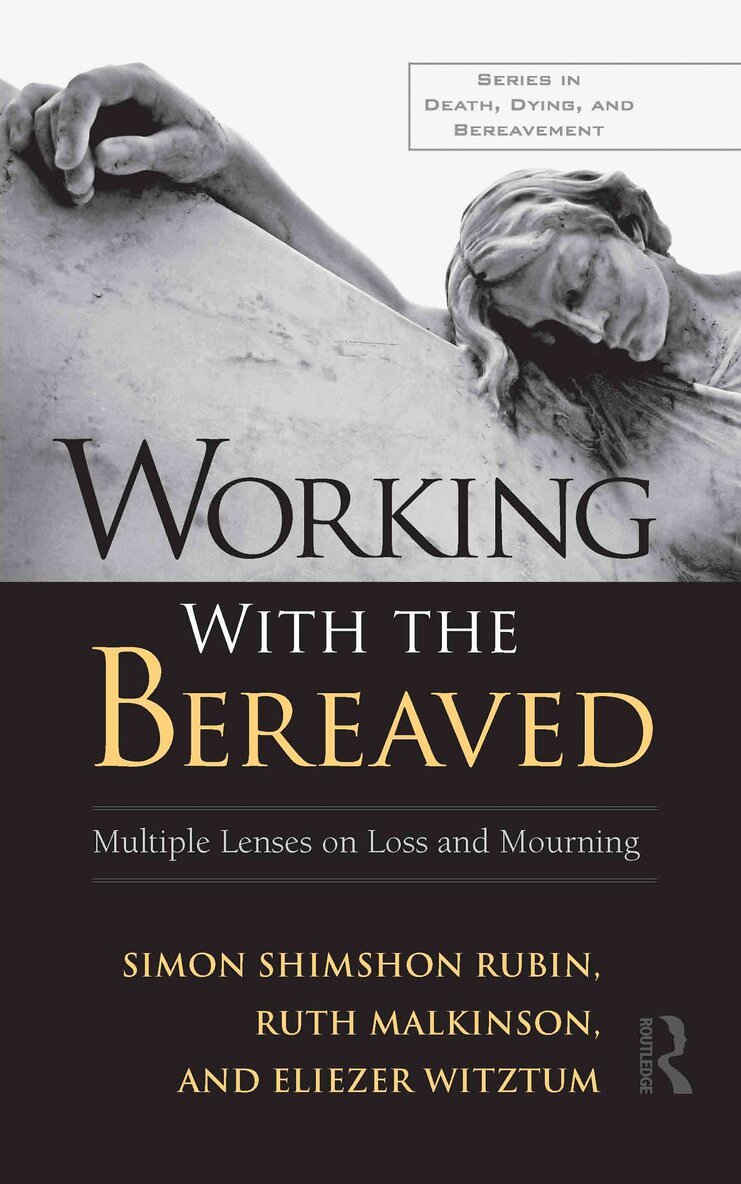
Working With the Bereaved
Multiple Lenses on Loss and Mourning
Av Simon Shimshon Rubin, Ruth Malkinson m. fl.
Inbunden, 2011
2433 kr
Lägg i varukorg
Working With the Bereaved summarizes the major themes in bereavement research and clinical work and uses the authors’ own cutting-edge research to show mental-health practitioners how to integrate these themes into their practice. It provides clinicians with a framework for exploring their own …
Working With the Bereaved
Multiple Lenses on Loss and Mourning
Av Simon Shimshon Rubin, Ruth Malkinson m. fl.
Häftad, 2011
627 kr
Lägg i varukorg
Working With the Bereaved summarizes the major themes in bereavement research and clinical work and uses the authors’ own cutting-edge research to show mental-health practitioners how to integrate these themes into their practice. It provides clinicians with a framework for exploring their own …
Working With the Bereaved
Multiple Lenses on Loss and Mourning
Av Eliezer Witztum, Ruth Malkinson m. fl.
E-bok, 2012
768 kr
Lägg i varukorg
Working With the Bereaved summarizes the major themes in bereavement research and clinical work and uses the authors’ own cutting-edge research to show mental-health practitioners how to integrate these themes into their practice. It provides clinicians with a framework for exploring their own …
Working With the Bereaved
Multiple Lenses on Loss and Mourning
Av Eliezer Witztum, Ruth Malkinson m. fl.
E-bok, 2012
785 kr
Lägg i varukorg
Working With the Bereaved summarizes the major themes in bereavement research and clinical work and uses the authors’ own cutting-edge research to show mental-health practitioners how to integrate these themes into their practice. It provides clinicians with a framework for exploring their own …