Ruth Vassar Burgess – författare
Visar alla böcker från författaren Ruth Vassar Burgess. Handla med fri frakt och snabb leverans.
7 produkter
Shantistan
Enabling a Land of Peace
E-bok, 2020
52 kr
Lägg i varukorg
Shantistan is a cross-culture peacemaking workbook. Its purpose is to encourge the development and use of culture bearers, who are dedicated to promoting peace. Both theoretical and practical applications are provided. Applications of thirteen personal cross-cultural narratives form the Shantistan …
Shantistan Tablet
Enabling Land of Peace
Av Ruth Vassar Burgess, Stanley M Burgess
Häftad, 2022
172 kr
Lägg i varukorg
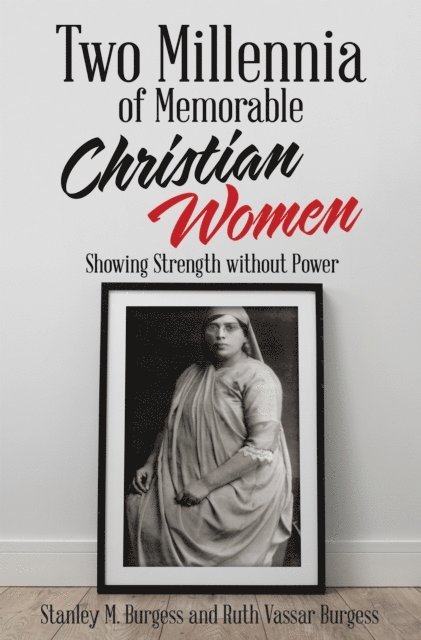
Two Millennia of Memorable Christian Women
Showing Strength Without Power
Av Ruth Vassar Burgess, Stanley M. Burgess
E-bok, 2020
53 kr
Lägg i varukorg
For over 2,000 years, Christian women have struggled with inequities between the genders. This certainly has been true in matters religious. Christian women have shown ethical, moral and spiritual strength, while being deprived of leadership or power positions reserved for their male counterparts. …
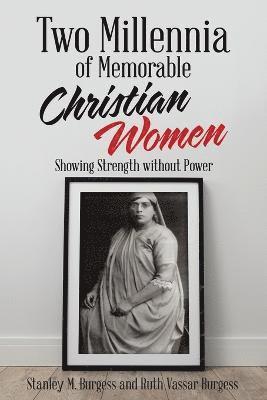
Two Millennia of Memorable Christian Women
Showing Strength Without Power
Av Stanley M Burgess, Ruth Vassar Burgess
Häftad, 2020
242 kr
Lägg i varukorg
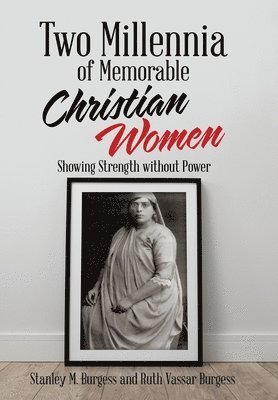
Two Millennia of Memorable Christian Women
Showing Strength Without Power
Av Stanley M Burgess, Ruth Vassar Burgess
Inbunden, 2020
421 kr
Lägg i varukorg