Ruud M. Bolle – författare
Visar alla böcker från författaren Ruud M. Bolle. Handla med fri frakt och snabb leverans.
4 produkter
4 produkter
Häftad, Engelska, 2005
1 114 kr
Skickas inom 10-15 vardagar
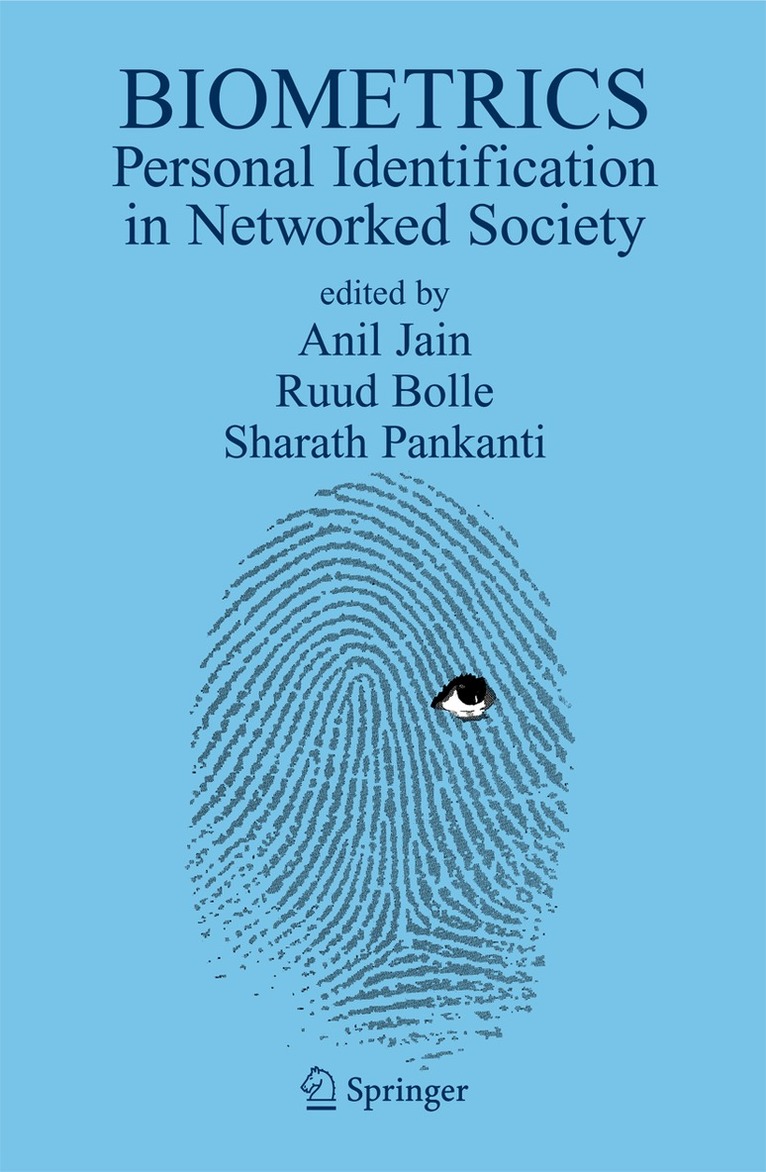
Biometrics: Personal Identification in Networked Society is a comprehensive and accessible source of state-of-the-art information on all existing and emerging biometrics: the science of automatically identifying individuals based on their physiological or behavior characteristics. In particular, the book covers:- General principles and ideas of designing biometric-based systems and their underlying tradeoffs- Identification of important issues in the evaluation of biometrics-based systems- Integration of biometric cues, and the integration of biometrics with other existing technologies- Assessment of the capabilities and limitations of different biometrics- The comprehensive examination of biometric methods in commercial use and in research development- Exploration of some of the numerous privacy and security implications of biometricsAlso included are chapters on face and eye identification, speaker recognition, networking, and other timely technology-related issues. All chapters are written by leading internationally recognized experts from academia and industry.Biometrics: Personal Identification in Networked Society is an invaluable work for scientists, engineers, application developers, systems integrators, and others working in biometrics.
Inbunden, Engelska, 2003
2 221 kr
Skickas inom 10-15 vardagar
This complete, technical guide details the principles, methods, technologies, and core ideas used in biometric authentication systems. It explains the definition and measurement of performance and examines the factors involved in choosing between different biometrics. It also delves into practical applications and covers a number of topics critical for successful system integration. These include recognition accuracy, total cost of ownership, acquisition and processing speed, intrinsic and system security, privacy and legal requirements, and user acceptance.The "Guide to Biometrics:"* Debunks myths and candidly confronts problems associated with biometrics research* Details relevant issues in choosing between biometrics, as well as defining and measuring performance* Defines and explains how to measure the performance of both verification and identification systems* Addresses challenges in managing tradeoffs between security and convenienceSecurity and financial administrators, computer science professionals, and biometric systems developers will all benefit from an enhanced understanding of this important technology.
Häftad, Engelska, 2010
1 557 kr
Skickas inom 10-15 vardagar
This complete, technical guide details the principles, methods, technologies, and core ideas used in biometric authentication systems. It explains the definition and measurement of performance and examines the factors involved in choosing between different biometrics. It also delves into practical applications and covers a number of topics critical for successful system integration. These include recognition accuracy, total cost of ownership, acquisition and processing speed, intrinsic and system security, privacy and legal requirements, and user acceptance. The "Guide to Biometrics:" * Debunks myths and candidly confronts problems associated with biometrics research * Details relevant issues in choosing between biometrics, as well as defining and measuring performance * Defines and explains how to measure the performance of both verification and identification systems * Addresses challenges in managing tradeoffs between security and convenience Security and financial administrators, computer science professionals, and biometric systems developers will all benefit from an enhanced understanding of this important technology.
E-bok
PDF, Engelska, 20131 934 kr
Läs direkt efter köp
Starting with fingerprints more than a hundred years ago, there has been ongoing research in biometrics. Within the last forty years face and speaker recognition have emerged as research topics. However, as recently as a decade ago, biometrics itself did not exist as an independent field. Each of the biometric-related topics grew out of different disciplines. For example, the study of fingerprints came from forensics and pattern recognition, speaker recognition evolved from signal processing, the beginnings of face recognition were in computer vision, and privacy concerns arose from the public policy arena. One of the challenges of any new field is to state what the core ideas are that define the field in order to provide a research agenda for the field and identify key research problems. Biometrics has been grappling with this challenge since the late 1990s. With the matu ration of biometrics, the separate biometrics areas are coalescing into the new discipline of biometrics. The establishment of biometrics as a recognized field of inquiry allows the research community to identify problems that are common to biometrics in general. It is this identification of common problems that will define biometrics as a field and allow for broad advancement.