R.V. Smith – författare
Visar alla böcker från författaren . Handla med fri frakt och snabb leverans.
4 produkter
4 produkter
Inbunden, Engelska, 1993
2 168 kr
Skickas inom 10-15 vardagar
Lough Neagh is the largest lake in the British Isles. It covers an area of 383 km2 being 30 km along its longest axis. From pre-historic times the lake and its rivers influenced the settlements of man in the role of a fishery and communication link with the interior of Ireland. Ireland's first canal, completed in 1787, linked the small but significant coal deposits of Tyrone to Dublin by way of the lough and later the Lagen Canal became an important commercial route to the new city of Belfast.Today, only sand barge transport persists but the lough supports Europe's largest eel fishery and provides commercial salmon, trout and perch catches, besides acting as an important centre for recreational pursuits. Increasingly it has become the major water resource for Northern Ireland supplying much of the demand for the heavily populated Belfast area.Biologically the lough is rich, sustaining enormous invertebrate populations of, for example, chironomids and gammarids alongside the comparatively exotic glacial relict, Mysis relicta. Its bird life makes the lough an area of very special conservation interest as a Ramsar site.The book describes the basic ecology of the lough with particular emphasis on both the interaction of the physical, chemical and biological components and the role of ecology in resource management. Extensive recent researches are set in geological, geographical and historical context and together with palaeolimnological studies of the sediments are used to trace major changes in the ecology of the lough under man's influence, especially in the past 100 years.
Häftad, Engelska, 2010
2 168 kr
Skickas inom 10-15 vardagar
Lough Neagh is the largest lake in the British Isles. It covers an area of 383 km2 being 30 km along its longest axis. From pre-historic times the lake and its rivers influenced the settlements of man in the role of a fishery and communication link with the interior of Ireland. Ireland's first canal, completed in 1787, linked the small but significant coal deposits of Tyrone to Dublin by way of the lough and later the Lagen Canal became an important commercial route to the new city of Belfast.Today, only sand barge transport persists but the lough supports Europe's largest eel fishery and provides commercial salmon, trout and perch catches, besides acting as an important centre for recreational pursuits. Increasingly it has become the major water resource for Northern Ireland supplying much of the demand for the heavily populated Belfast area.Biologically the lough is rich, sustaining enormous invertebrate populations of, for example, chironomids and gammarids alongside the comparatively exotic glacial relict, Mysis relicta. Its bird life makes the lough an area of very special conservation interest as a Ramsar site.The book describes the basic ecology of the lough with particular emphasis on both the interaction of the physical, chemical and biological components and the role of ecology in resource management. Extensive recent researches are set in geological, geographical and historical context and together with palaeolimnological studies of the sediments are used to trace major changes in the ecology of the lough under man's influence, especially in the past 100 years.
E-bok
Engelska, 2015107 kr
Läs direkt efter köp
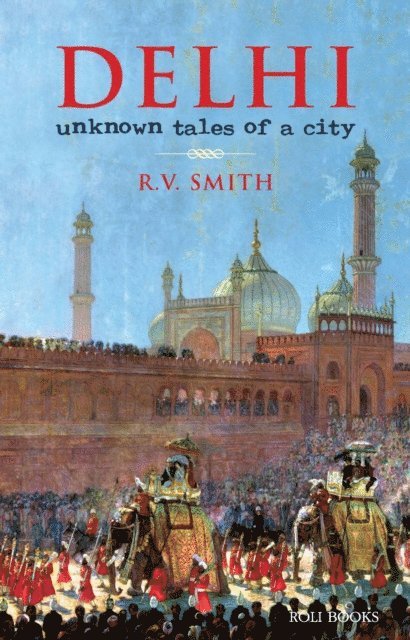
Ronald Vivian Smith is an author of personal experiences - a rare breed to find in a time when even journalists hesitate to put pen to paper without scanning through the internet. A definitive voice when it comes to some known and unknown tales and an inspiration to a new generation of city-scribes, Smith is a master-chronicler of Delhi's myriad realities. Among the capital's most ardent lovers, Smith believes in the power of observation and interaction. His travels across Delhi, most often in a DTC bus, examine the big and small curiosities - seamlessly juxtaposing the past with the present. Be it the pride he encounters in the hutments of one of Chandni Chowk's age-old beggar families, or his ambling walks around Delhi's now-dilapidated cemeteries, Smith paints with his words a city full of magic and history. This anthology features short essays on the Indian sultanate, its fall after the British Raj, and its resurrection to become what it is today - the National Capital Territory of Delhi. 'No amount of bookish knowledge can compete with the sort of insights and real, lived memories he [Smith] has.' -Rakshanda Jalil, LiveMint '... When it comes to writing on monuments of Delhi - known, little known or unknown - no one does a better job than R.V. Smith.' -Khushwant Singh, Hindustan Times
E-bok
PDF, Engelska, 20132 840 kr
Läs direkt efter köp
Lough Neagh is the largest lake in the British Isles. It covers an area of 383 km2 being 30 km along its longest axis. From pre-historic times the lake and its rivers influenced the settlements of man in the role of a fishery and communication link with the interior of Ireland. Ireland''s first canal, completed in 1787, linked the small but significant coal deposits of Tyrone to Dublin by way of the lough and later the Lagen Canal became an important commercial route to the new city of Belfast. Today, only sand barge transport persists but the lough supports Europe''s largest eel fishery and provides commercial salmon, trout and perch catches, besides acting as an important centre for recreational pursuits. Increasingly it has become the major water resource for Northern Ireland supplying much of the demand for the heavily populated Belfast area. Biologically the lough is rich, sustaining enormous invertebrate populations of, for example, chironomids and gammarids alongside the comparatively exotic glacial relict, Mysis relicta. Its bird life makes the lough an area of very special conservation interest as a Ramsar site. The book describes the basic ecology of the lough with particular emphasis on both the interaction of the physical, chemical and biological components and the role of ecology in resource management. Extensive recent researches are set in geological, geographical and historical context and together with palaeolimnological studies of the sediments are used to trace major changes in the ecology of the lough under man''s influence, especially in the past 100 years.