Ryszard Laskowski – författare
Visar alla böcker från författaren Ryszard Laskowski. Handla med fri frakt och snabb leverans.
4 produkter
4 produkter
Inbunden, Engelska, 2000
3 387 kr
Skickas inom 5-8 vardagar
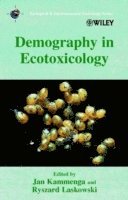
Demography in Ecotoxicology focuses on the interface between toxicology, life history and demographic theory. This comprehensive book examines the different ways of adequately assessing the potential impact of toxic stress on populations and discusses how to obtain an insight into the underlying physiological and genetic mechanisms. The theory is illustrated with empiricial observations on a number of species and organisational levels and the book incorporates:* case studies;* real data;* life history models;* methodologies; and,* recommendations for risk assessmentWritten by an international team of researchers, Demography in Ecotoxicology will be invaluable to ecotoxicologists, ecologists and wildlife conservationists in academia, industry and regulatory bodies wishing to gain a greater understanding into the prediction and effects of natural and man-made toxicants on populations.
E-bok
Engelska, 2016633 kr
Läs direkt efter köp
In the last decade and a half, great progress has been made in the development of concepts and models for mixture toxicity, both in human and environmental toxicology. However, due to their different protection goals, developments have often progressed in parallel but with little integration. Arguably the first book to clearly link ecotoxicology an
Inbunden, Engelska, 2010
603 kr
Skickas
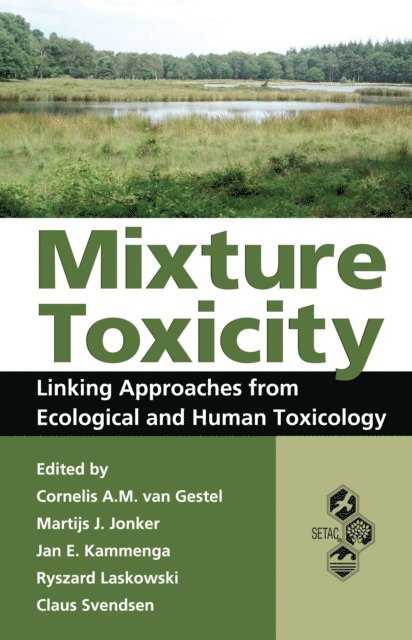
In the last decade and a half, great progress has been made in the development of concepts and models for mixture toxicity, both in human and environmental toxicology. However, due to their different protection goals, developments have often progressed in parallel but with little integration. Arguably the first book to clearly link ecotoxicology and classic human toxicology, Mixture Toxicity: Linking Approaches from Ecological and Human Toxicology incorporates extensive reviews of exposure to toxicants, toxicokinetics and toxicodynamics, toxicity of mixtures, and risk assessment.The book examines developments in both fields, compares and contrasts their current state of the art, and identifies where one field can learn from the other. Each chapter provides an essential overview of the state of the art in both human and ecotoxicological mixture risk assessment, focusing on the work published in the last fifteen years. The coverage progresses from exposure to risk assessment, at each step identifying the special complications typically raised by mixtures. Based on in-depth discussions among specialists representing different disciplines and approaches, the chapters each address: Exposure — how to quantify the amounts of chemicals that may enter the living organismKinetics, dynamics, and metabolism — how the chemicals enter an organism, travel within the organism, how they are metabolized and reach the target site, and explain development of toxicity with timeToxicity — what are the chemicals’ detrimental effects on the organismTest design and complex mixture characterization — how chemicals interact, how to measure effects of mixtures, and how to identify responsible chemicalsRisk assessment — how to assess for risks in humans and the environmentAn unusual combination of different points of view on exposure to and risk assessment of chemical mixtures, this book summarizes current knowledge on combined effects of toxicant mixtures, information that is generally only available in a very fragmented form as individual journal papers. It identifies possible crosslinks and includes recommendations for mutual developments that can improve the state of knowledge on mixture toxicity and ultimately lead to better and more integrated risk assessment.
E-bok
PDF, Engelska, 2016633 kr
Läs direkt efter köp
In the last decade and a half, great progress has been made in the development of concepts and models for mixture toxicity, both in human and environmental toxicology. However, due to their different protection goals, developments have often progressed in parallel but with little integration. Arguably the first book to clearly link ecotoxicology an