S. A. Hamed Hosseini - Böcker
Visar alla böcker från författaren S. A. Hamed Hosseini. Handla med fri frakt och snabb leverans.
7 produkter
7 produkter
683 kr
Skickas inom 10-15 vardagar
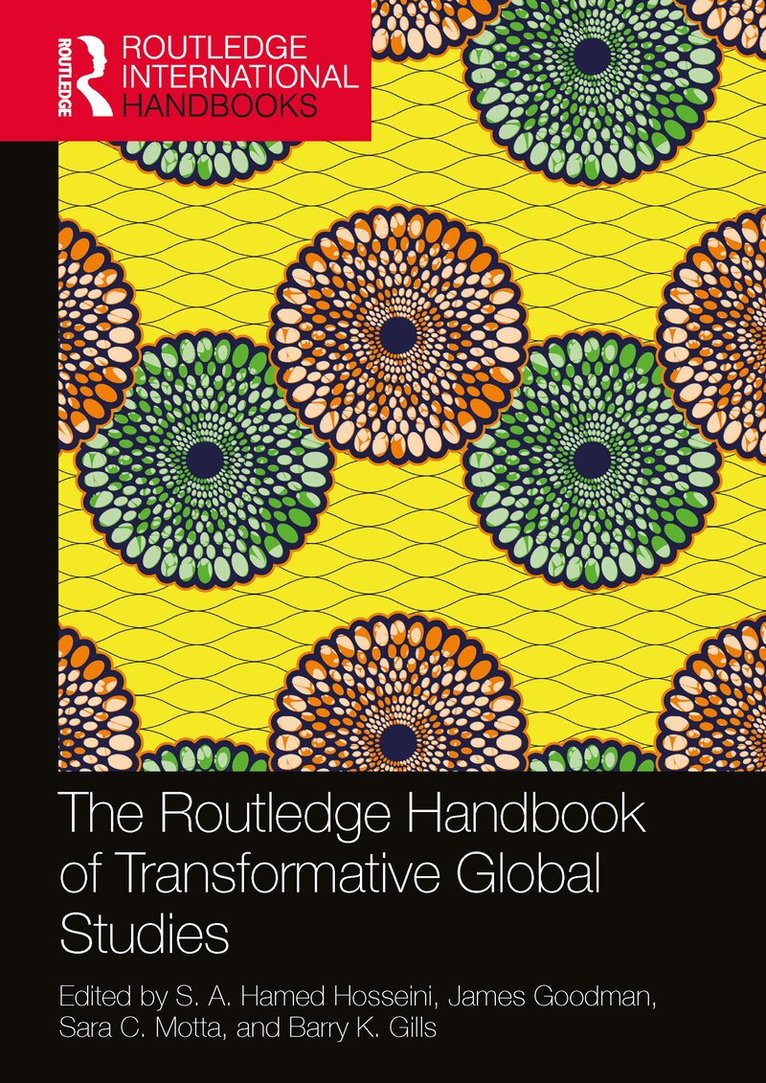
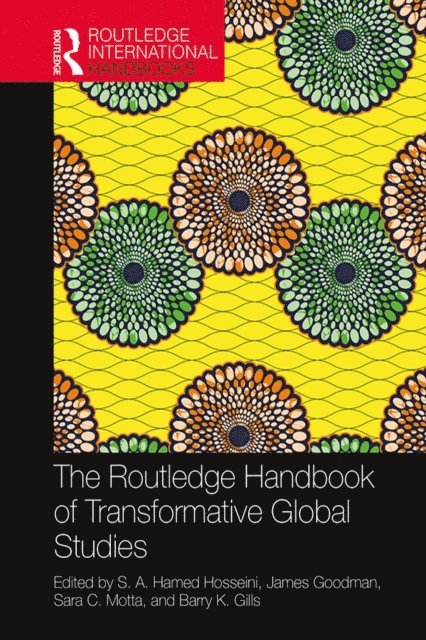
The Routledge Handbook of Transformative Global Studies provides diverse and cutting-edge perspectives on this fast-changing field. For 30 years the world has been caught in a long ‘global interregnum,’ plunging from one crisis to the next and witnessing the emergence of new, vibrant, multiple, and sometimes contradictory forms of popular resistance and politics.This global ‘interregnum’ – or a period of uncertainty where the old hegemony is fading and the new ones have not yet been fully realized – necessitates critical self-reflection, brave intellectual speculation and (un)learning of perceived wisdoms, and greater transdisciplinary collaboration across theories, localities, and subjects. This Handbook takes up this challenge by developing fresh perspectives on globalization, development, neoliberalism, capitalism, and their progressive alternatives, addressing issues of democracy, power, inequality, insecurity, precarity, wellbeing, education, displacement, social movements, violence and war, and climate change. Throughout, it emphasizes the dynamics for system change, including bringing post-capitalist, feminist, (de)colonial, and other critical perspectives to support transformative global praxis.This volume brings together a mixture of fresh and established scholars from across disciplines and from a range of both Northern and Southern contexts. Researchers and students from around the world and across the fields of politics, sociology, international development, international relations, geography, economics, area studies, and philosophy will find this an invaluable and fresh guide to global studies in the 21st century.
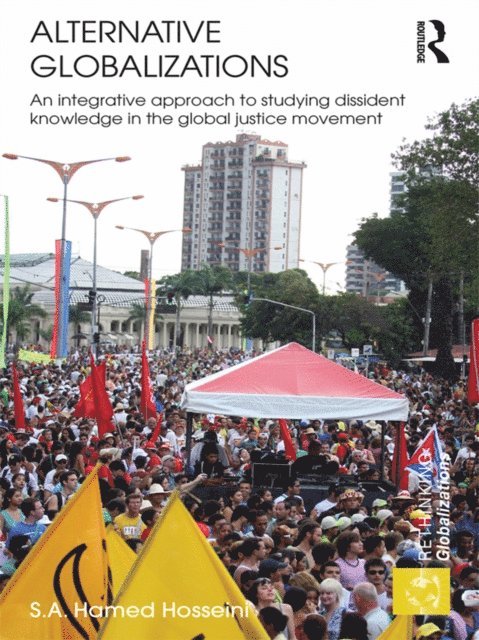
Alternative Globalizations
An Integrative Approach to Studying Dissident Knowledge in the Global Justice Movement
Inbunden, Engelska, 2009
2 171 kr
Skickas inom 10-15 vardagar
Are the growing oppositions to neoliberal market globalism (especially in the aftermath of global economic meltdown) able to develop meaningful alternative ideologies? Is there any substantial alternative to the world capitalist system on the horizon? How would the ideologies and ideas address the dire dilemmas of economy vs. ecology, redistribution vs. recognition, global vs. local, reform vs. revolution etc.? This book answers such important questions by examining the intellectual structure of the so-called ‘anti-globalization’ or ‘global justice’ movement. It explores the formation and transformation of ideas, identities, and solidarities in the movement. The book also develops an analytical model to explain the movement’s ideational novelties and continuities in terms of both activist social experiences and global social changes. Hosseini develops new sociological concepts, integrates opposing theoretical perspectives into one approach, and addresses the gap between critical theories and activist practices. Through this endeavor, he discovers an emerging mode of consciousness which is characterized by its cross-identity and cross-ideological nature. This is a live but quiet global revolution. Drawing on a variety of disciplines, this gourd-breaking volume will be of interest to students and scholars of global studies, political sciences, sociology and social movement studies.
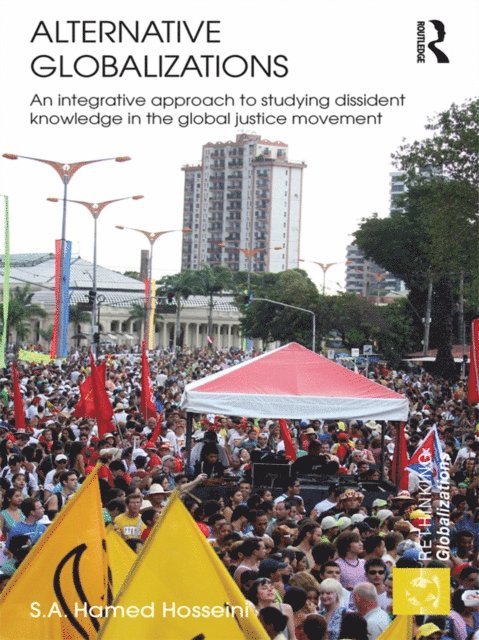
Alternative Globalizations
An Integrative Approach to Studying Dissident Knowledge in the Global Justice Movement
Häftad, Engelska, 2011
805 kr
Skickas inom 10-15 vardagar
Are the growing oppositions to neoliberal market globalism (especially in the aftermath of global economic meltdown) able to develop meaningful alternative ideologies? Is there any substantial alternative to the world capitalist system on the horizon? How would the ideologies and ideas address the dire dilemmas of economy vs. ecology, redistribution vs. recognition, global vs. local, reform vs. revolution etc.? This book answers such important questions by examining the intellectual structure of the so-called ‘anti-globalization’ or ‘global justice’ movement. It explores the formation and transformation of ideas, identities, and solidarities in the movement. The book also develops an analytical model to explain the movement’s ideational novelties and continuities in terms of both activist social experiences and global social changes. Hosseini develops new sociological concepts, integrates opposing theoretical perspectives into one approach, and addresses the gap between critical theories and activist practices. Through this endeavor, he discovers an emerging mode of consciousness which is characterized by its cross-identity and cross-ideological nature. This is a live but quiet global revolution. Drawing on a variety of disciplines, this gourd-breaking volume will be of interest to students and scholars of global studies, political sciences, sociology and social movement studies.
790 kr
Skickas inom 10-15 vardagar
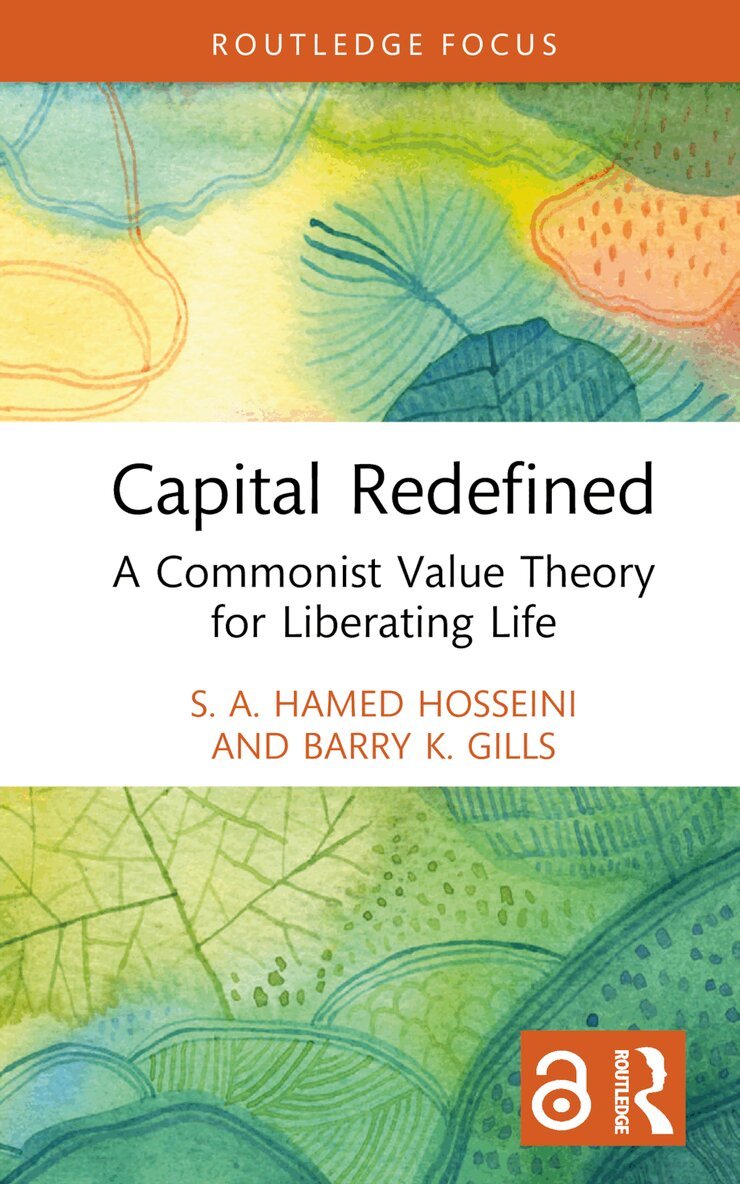
Capital Redefined presents a unique perspective on the nature of “capital,” departing from the prevailing reductionist accounts. Hosseini and Gills offer an expanded perspective on Marxian value theory by addressing its main limitations and building their own integrative value theory. They argue that the current understanding of “value” must be re-examined and liberated from its subservient ties to capital while acknowledging the ways in which capital appropriates value. This is achieved by differentiating between “fetish value” created by capital and “true value” generated through various commons-based forms of coexistence.The authors propose a defetishization of value by rejecting the commonly accepted idea of its objectivity. They introduce their “commonist value theory,” which redefines capital as both the product and process of perverting the fundamental commoning causes of true value into sources of fetish value. Capital is theorized through a “modular” framework, where multiple intersecting processes constitute a comprehensive power structure, a “value regime,” representing an unprecedented degree of the domination of capital over life. Their theory reconciles two apparently incompatible views on the notion of value. One view encompasses all inputs involved in capitalist value production and conflates intrinsic and commodity values. The other warns against this conflation as it treats capital as an entity tightly associated only with commodity production and wage labor.The authors believe that establishing alternative forms of value creation based on normative principles of living in commons is crucial as an analytical base for criticizing existing power structures and economic systems. The book offers a theoretical foundation for transforming our life worlds toward “post-capitalist” futures. It appeals to scholars and students in various fields, such as political economy, capitalism, and post-capitalist studies, economic and political sociology, globalization, development studies, social ecology, and ecological philosophy.The Open Access version of this book, available at http://www.taylorfrancis.com, has been made available under a Creative Commons Attribution-Non Commercial-No Derivatives (CC-BY-NC-ND) 4.0 license.
290 kr
Skickas inom 10-15 vardagar
Capital Redefined presents a unique perspective on the nature of “capital,” departing from the prevailing reductionist accounts. Hosseini and Gills offer an expanded perspective on Marxian value theory by addressing its main limitations and building their own integrative value theory. They argue that the current understanding of “value” must be re-examined and liberated from its subservient ties to capital while acknowledging the ways in which capital appropriates value. This is achieved by differentiating between “fetish value” created by capital and “true value” generated through various commons-based forms of coexistence.The authors propose a defetishization of value by rejecting the commonly accepted idea of its objectivity. They introduce their “commonist value theory,” which redefines capital as both the product and process of perverting the fundamental commoning causes of true value into sources of fetish value. Capital is theorized through a “modular” framework, where multiple intersecting processes constitute a comprehensive power structure, a “value regime,” representing an unprecedented degree of the domination of capital over life. Their theory reconciles two apparently incompatible views on the notion of value. One view encompasses all inputs involved in capitalist value production and conflates intrinsic and commodity values. The other warns against this conflation as it treats capital as an entity tightly associated only with commodity production and wage labor.The authors believe that establishing alternative forms of value creation based on normative principles of living in commons is crucial as an analytical base for criticizing existing power structures and economic systems. The book offers a theoretical foundation for transforming our life worlds toward “post-capitalist” futures. It appeals to scholars and students in various fields, such as political economy, capitalism, and post-capitalist studies, economic and political sociology, globalization, development studies, social ecology, and ecological philosophy.The Open Access version of this book, available at http://www.taylorfrancis.com, has been made available under a Creative Commons Attribution-Non Commercial-No Derivatives (CC-BY-NC-ND) 4.0 license.
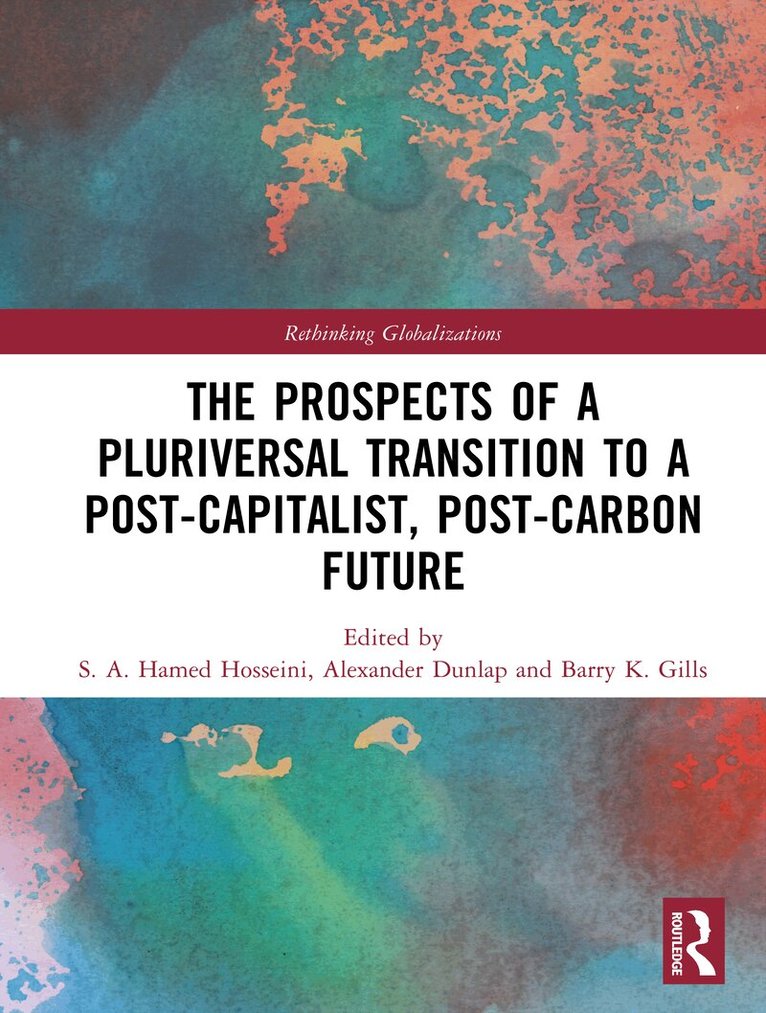
Prospects of a Pluriversal Transition to a Post-Capitalist, Post-Carbon Future
Inbunden, Engelska, 2026
2 100 kr
Skickas inom 10-15 vardagar
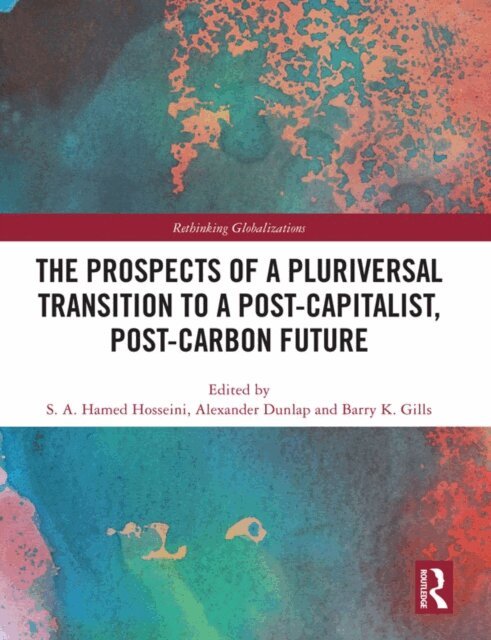
This book critically engages with a central dilemma facing counter-hegemonic movements as global crises intensify: how to foster systemic change while maintaining the plurality of their struggles. The Prospects of a Pluriversal Transition to a Post-Capitalist, Post-Carbon Future explores the tensions between fragmentation and convergence, autonomy and solidarity, and the risks of compartmentalization in pluriversal politics. Through rigorous analysis and compelling case studies, it interrogates the possibilities and limitations of building transformative synergies across decolonial, post-developmentalist, post-ecomodernist, and post-capitalist struggles. The volume examines movements resisting extractivism, food sovereignty initiatives, feminist and care-based ethics, commons-based governance, and radical pluriversalist networks that challenge dominant power structures. By blending theoretical inquiry with grounded research, this collection offers a vital resource for those reimagining and realizing alternative futures beyond capitalism, carbon modernity, and coloniality. It invites readers to critically reflect on the complexities of systemic transformation, highlighting pathways for co-creating relational, diverse, and interconnected forms of resistance and transformation.This book will be relevant to academic researchers and scholars in political ecology, critical theory, decolonial studies, environmental humanities, and social movement studies; graduate students in sociology, political science, geography, anthropology, and interdisciplinary environmental studies, and policy practitioners working on sustainable development alternatives and participatory governance.The chapters in this book were originally published in Globalizations.
3 180 kr
Skickas inom 10-15 vardagar
The Routledge Handbook of Transformative Global Studies provides diverse and cutting-edge perspectives on this fast-changing field. For 30 years the world has been caught in a long ‘global interregnum,’ plunging from one crisis to the next and witnessing the emergence of new, vibrant, multiple, and sometimes contradictory forms of popular resistance and politics.This global ‘interregnum’ – or a period of uncertainty where the old hegemony is fading and the new ones have not yet been fully realized – necessitates critical self-reflection, brave intellectual speculation and (un)learning of perceived wisdoms, and greater transdisciplinary collaboration across theories, localities, and subjects. This Handbook takes up this challenge by developing fresh perspectives on globalization, development, neoliberalism, capitalism, and their progressive alternatives, addressing issues of democracy, power, inequality, insecurity, precarity, wellbeing, education, displacement, social movements, violence and war, and climate change. Throughout, it emphasizes the dynamics for system change, including bringing post-capitalist, feminist, (de)colonial, and other critical perspectives to support transformative global praxis.This volume brings together a mixture of fresh and established scholars from across disciplines and from a range of both Northern and Southern contexts. Researchers and students from around the world and across the fields of politics, sociology, international development, international relations, geography, economics, area studies, and philosophy will find this an invaluable and fresh guide to global studies in the 21st century.