S. Fujita – författare
Visar alla böcker från författaren S. Fujita. Handla med fri frakt och snabb leverans.
6 produkter
6 produkter
Inbunden, Engelska, 1996
1 090 kr
Skickas inom 10-15 vardagar
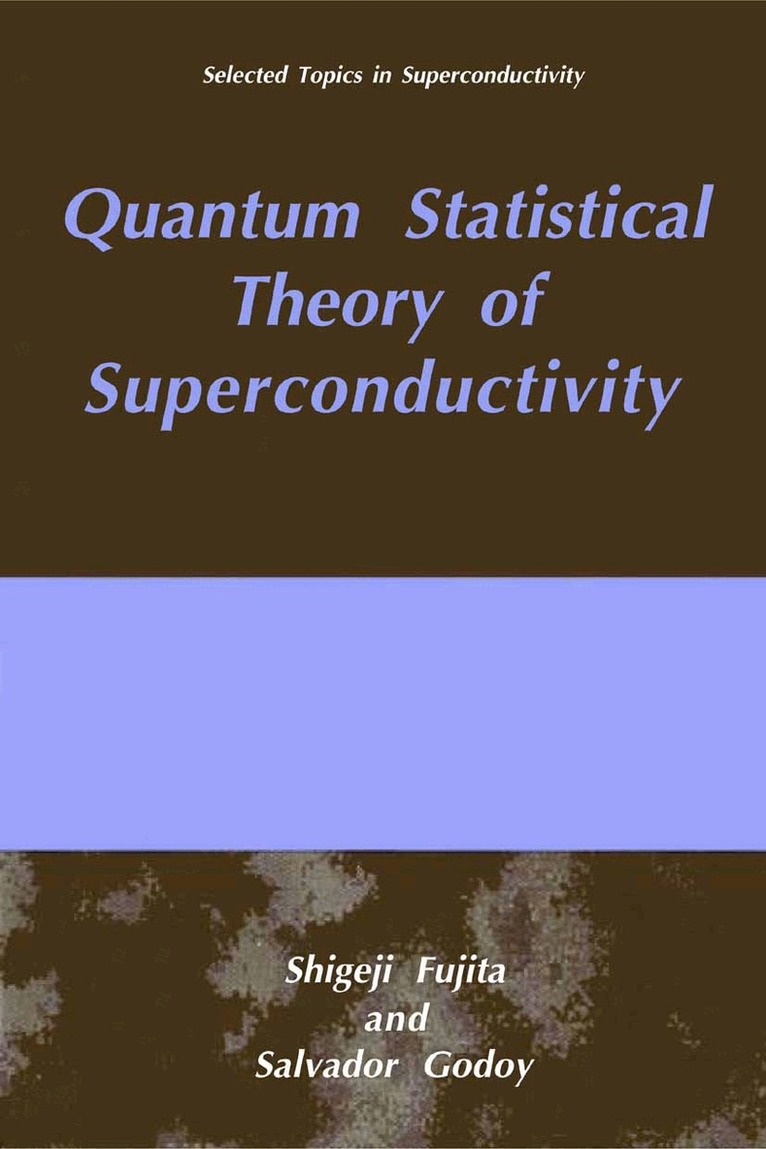
In this text, Shigeji Fujita and Salvador Godoy guide first and second-year graduate students through the essential aspects of superconductivity. The authors open with five preparatory chapters thoroughly reviewing a number of advanced physical concepts-such as free-electron model of a metal, theory of lattice vibrations, and Bloch electrons. The remaining chapters deal with the theory of superconductivity-describing the basic properties of type I, type II compound, and high-Tc superconductors as well as treating quasi-particles using Heisenberg's equation of motion. The book includes step-by-step derivations of mathematical formulas, sample problems, and illustrations.
E-bok
PDF, Engelska, 20061 367 kr
Läs direkt efter köp
In this text, Shigeji Fujita and Salvador Godoy guide first and second-year graduate students through the essential aspects of superconductivity. The authors open with five preparatory chapters thoroughly reviewing a number of advanced physical concepts-such as free-electron model of a metal, theory of lattice vibrations, and Bloch electrons. The remaining chapters deal with the theory of superconductivity-describing the basic properties of type I, type II compound, and high-Tc superconductors as well as treating quasi-particles using Heisenberg''s equation of motion. The book includes step-by-step derivations of mathematical formulas, sample problems, and illustrations.
E-bok
PDF, Engelska, 20061 977 kr
Läs direkt efter köp
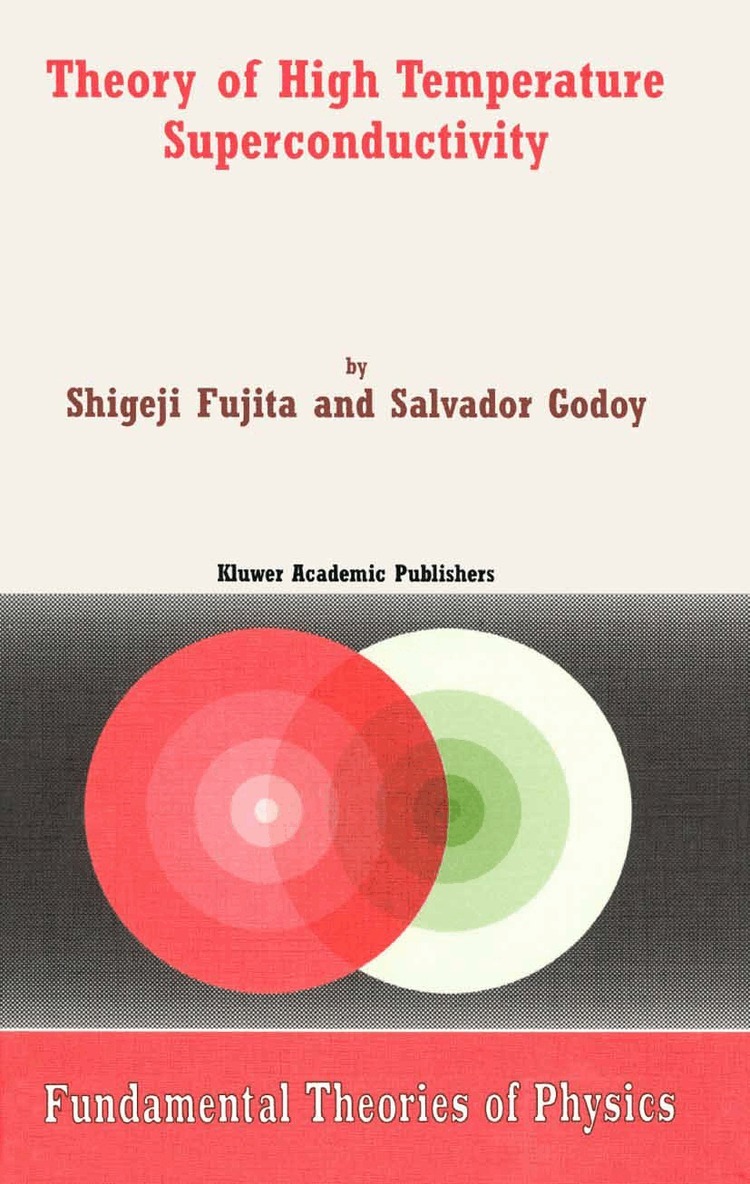
Flux quantization experiments indicate that the carriers, Cooper pairs (pairons), in the supercurrent have charge magnitude 2e, and that they move independently. Josephson interference in a Superconducting Quantum Int- ference Device (SQUID) shows that the centers of masses (CM) of pairons move as bosons with a linear dispersion relation. Based on this evidence we develop a theory of superconductivity in conventional and mate- als from a unified point of view. Following Bardeen, Cooper and Schrieffer (BCS) we regard the phonon exchange attraction as the cause of superc- ductivity. For cuprate superconductors, however, we take account of both optical- and acoustic-phonon exchange. BCS started with a Hamiltonian containing “electron” and “hole” kinetic energies and a pairing interaction with the phonon variables eliminated. These “electrons” and “holes” were introduced formally in terms of a free-electron model, which we consider unsatisfactory. We define “electrons” and “holes” in terms of the cur- tures of the Fermi surface. “Electrons” (1) and “holes” (2) are different and so they are assigned with different effective masses: Blatt, Schafroth and Butler proposed to explain superconductivity in terms of a Bose-Einstein Condensation (BEC) of electron pairs, each having mass M and a size. The system of free massive bosons, having a quadratic dispersion relation: and moving in three dimensions (3D) undergoes a BEC transition at where is the pair density.
Inbunden, Engelska, 2001
1 631 kr
Skickas inom 10-15 vardagar
This work describes all basic experimental facts about high temperature superconductors with a critical temperature Tc = 30 K and above, and explains them microscopically starting with a Hamiltonian and a step-by-step statistical mechanical calculation. All important theoretical formulas are derived without omitting steps and all basic questions are answered in a user-friendly manner. The book, aimed at second-year graduate students, is written in a self-contained manner. Hence, non-physics majors and professional scientists should find it useful as a self-study reference.
Häftad, Engelska, 2013
1 090 kr
Skickas inom 10-15 vardagar
In this text, Shigeji Fujita and Salvador Godoy guide first and second-year graduate students through the essential aspects of superconductivity. The authors open with five preparatory chapters thoroughly reviewing a number of advanced physical concepts-such as free-electron model of a metal, theory of lattice vibrations, and Bloch electrons. The remaining chapters deal with the theory of superconductivity-describing the basic properties of type I, type II compound, and high-Tc superconductors as well as treating quasi-particles using Heisenberg's equation of motion. The book includes step-by-step derivations of mathematical formulas, sample problems, and illustrations.
Del 121 - Fundamental Theories of Physics
Theory of High Temperature Superconductivity
Häftad, Engelska, 2010
1 631 kr
Skickas inom 10-15 vardagar
Flux quantization experiments indicate that the carriers, Cooper pairs (pairons), in the supercurrent have charge magnitude 2e, and that they move independently. Josephson interference in a Superconducting Quantum Int- ference Device (SQUID) shows that the centers of masses (CM) of pairons move as bosons with a linear dispersion relation. Based on this evidence we develop a theory of superconductivity in conventional and mate- als from a unified point of view. Following Bardeen, Cooper and Schrieffer (BCS) we regard the phonon exchange attraction as the cause of superc- ductivity. For cuprate superconductors, however, we take account of both optical- and acoustic-phonon exchange. BCS started with a Hamiltonian containing “electron” and “hole” kinetic energies and a pairing interaction with the phonon variables eliminated. These “electrons” and “holes” were introduced formally in terms of a free-electron model, which we consider unsatisfactory. We define “electrons” and “holes” in terms of the cur- tures of the Fermi surface. “Electrons” (1) and “holes” (2) are different and so they are assigned with different effective masses: Blatt, Schafroth and Butler proposed to explain superconductivity in terms of a Bose-Einstein Condensation (BEC) of electron pairs, each having mass M and a size. The system of free massive bosons, having a quadratic dispersion relation: and moving in three dimensions (3D) undergoes a BEC transition at where is the pair density.