S. I. Keethaponcalan - Böcker
Visar alla böcker från författaren S. I. Keethaponcalan. Handla med fri frakt och snabb leverans.
5 produkter
5 produkter
2 104 kr
Skickas inom 10-15 vardagar
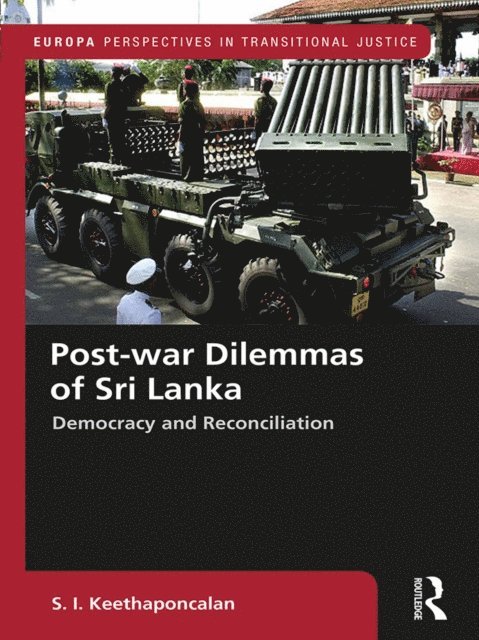
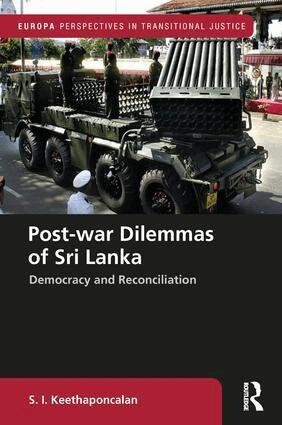
By investigating Sri Lanka as a case study, this book examines whether democracy, compared to authoritarianism, is conducive to post-war reconciliation. The research, founded on primary as well as secondary data, concludes that political systems have little to do with the success or failure of post-war ethnic reconciliation. The Sri Lankan case indicated that post-war reconciliation is more contingent on the readiness of the former enemies to come together. Readiness stems from, for example, satisfaction in the way issues have been resolved, confidence in the other party's intentions, and the compulsion to coexist. If the level of satisfaction, confidence, and the compulsion to coexist are low, the readiness to reconcile will also be low.The end of the war had a profound impact on post-war governance and ethnic relations in Sri Lanka. Hence, the volume provides an in-depth analysis of the factors that led to the military victory of the Sri Lankan government over the Liberation Tigers of Tamil Eelam (LTTE) in 2009. The chapters delve into the nexus between governance and reconciliation under the first two post-war governments. Reconciliation did not materialize in this period. Instead, new fault-lines emerged as attacks on the Muslim community escalated drastically. This book provides a comprehensive analysis of the nature of relations between the Sinhalese and Muslims and the Tamils and Muslims, as well as the nature and causes of post-war anti-Muslim riots.
656 kr
Skickas inom 10-15 vardagar
By investigating Sri Lanka as a case study, this book examines whether democracy, compared to authoritarianism, is conducive to post-war reconciliation. The research, founded on primary as well as secondary data, concludes that political systems have little to do with the success or failure of post-war ethnic reconciliation. The Sri Lankan case indicated that post-war reconciliation is more contingent on the readiness of the former enemies to come together. Readiness stems from, for example, satisfaction in the way issues have been resolved, confidence in the other party's intentions, and the compulsion to coexist. If the level of satisfaction, confidence, and the compulsion to coexist are low, the readiness to reconcile will also be low.The end of the war had a profound impact on post-war governance and ethnic relations in Sri Lanka. Hence, the volume provides an in-depth analysis of the factors that led to the military victory of the Sri Lankan government over the Liberation Tigers of Tamil Eelam (LTTE) in 2009. The chapters delve into the nexus between governance and reconciliation under the first two post-war governments. Reconciliation did not materialize in this period. Instead, new fault-lines emerged as attacks on the Muslim community escalated drastically. This book provides a comprehensive analysis of the nature of relations between the Sinhalese and Muslims and the Tamils and Muslims, as well as the nature and causes of post-war anti-Muslim riots.
2 185 kr
Kommande
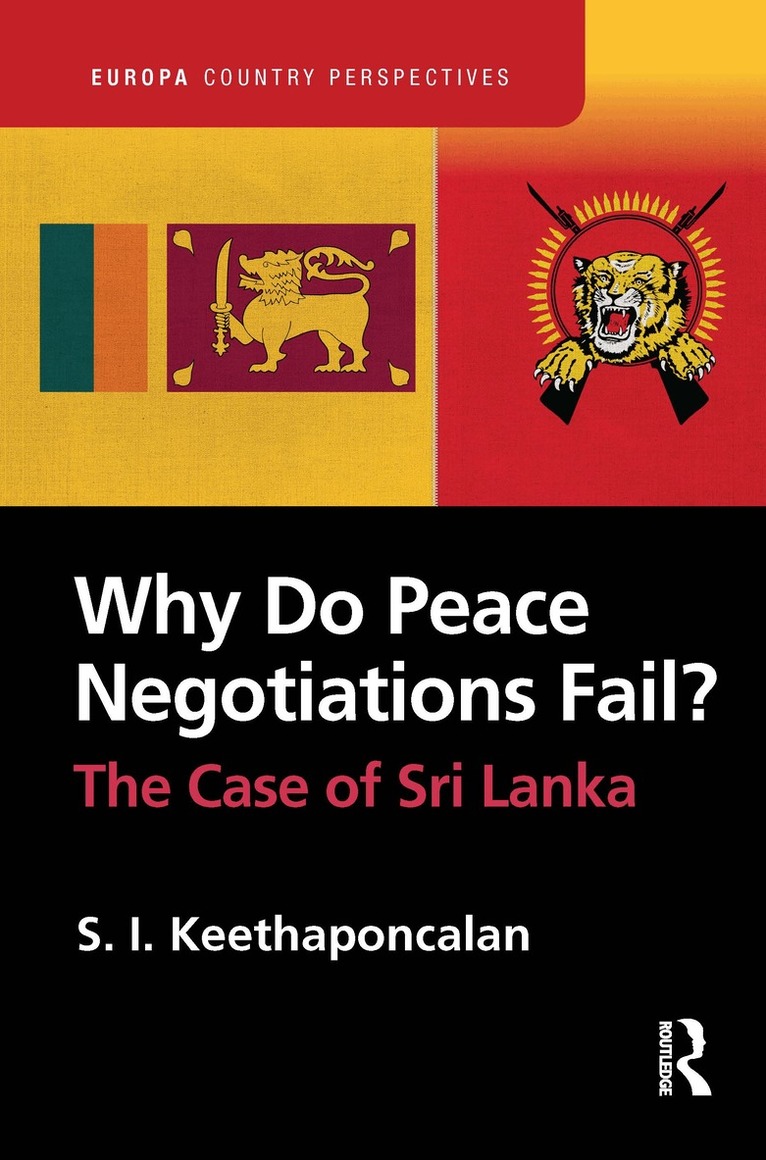
Peace negotiation is one of the cornerstones of peacemaking praxis and a central theme in peace studies and international conflict resolution. Many peace negotiations collapse without producing an agreement to resolve the conflict, and thus the failure of peace negotiations is a crucial research problem. However, it is one that remains severely understudied.This volume examines why peace negotiations fail, using Sri Lanka as a case study. Four civil war peace negotiations are examined: (1) the Thimphu Talks; (2) the Hilton Talks; (3) the hybrid negotiations from 1994–95; and (4) the Norway-facilitated process. The cases include bilateral and third party-assisted negotiations. All four processes failed. The volume examines and analyses the factors primarily contributing to these failures, which include the deep commitment of political parties to their causes, confidence in military victory and the desire to use peace talks as a strategic tool. Moreover, it investigates the acceleration of failure owing to sudden shifts in the conflict system, violence during peace talks and the imposition of a third-party agenda. The volume aims to provide further insight into the theoretical debate on peacemaking and, with regard to peacemaking practice, a better understanding of why peace negotiations fail could help third-party interveners to adjust their strategies.The book will be a valuable resource for students, academics and researchers interested in peace, conflict and civil war studies, and in Sri Lanka and South Asia.
1 276 kr
Skickas inom 10-15 vardagar
This book introduces the subject of third party intervention, one of the core subject matters of the fields of conflict resolution and peace studies. It provides a comprehensive introduction to the dimensions, issues, and methods of third party intervention, and approaches the subject from an interdisciplinary perspective. It delves into third party definitions, typologies, actors, rationale, motives, decision dimensions, and roles. This book provides in-depth analysis of such third party methods as mediation, arbitration, hybrid procedures, problem solving workshops, and peacekeeping, uniquely bringing all major topics of third party intervention into one text. The last two chapters deal with timing of intervention and ripe moments, and ethics. Students of conflict resolution and peace studies will benefit from this book.
541 kr
Skickas inom 10-15 vardagar
This book introduces the subject of third party intervention, one of the core subject matters of the fields of conflict resolution and peace studies. It provides a comprehensive introduction to the dimensions, issues, and methods of third party intervention, and approaches the subject from an interdisciplinary perspective. It delves into third party definitions, typologies, actors, rationale, motives, decision dimensions, and roles. This book provides in-depth analysis of such third party methods as mediation, arbitration, hybrid procedures, problem solving workshops, and peacekeeping, uniquely bringing all major topics of third party intervention into one text. The last two chapters deal with timing of intervention and ripe moments, and ethics. Students of conflict resolution and peace studies will benefit from this book.