S. James Adelstein - Böcker
Visar alla böcker från författaren . Handla med fri frakt och snabb leverans.
2 produkter
2 produkter
582 kr
Tillfälligt slut
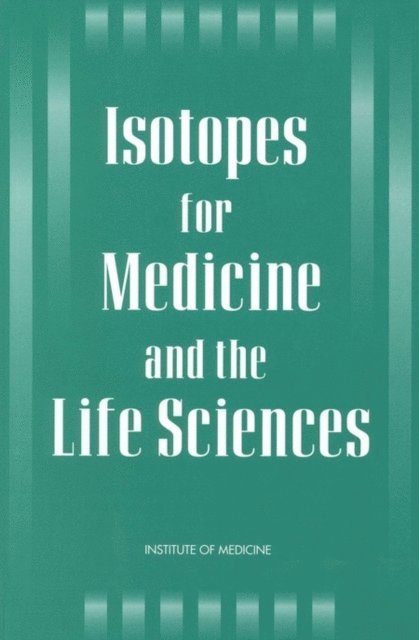
Radioactive isotopes and enriched stable isotopes are used widely in medicine, agriculture, industry, and science, where their application allows us to perform many tasks more accurately, more simply, less expensively, and more quickly than would otherwise be possible. Indeed, in many cases--for example, biological tracers--there is no alternative. In a stellar example of "technology transfer" that began before the term was popular, the Department of Energy (DOE) and its predecessors has supported the development and application of isotopes and their transfer to the private sector. The DOE is now at an important crossroads: Isotope production has suffered as support for DOE's laboratories has declined. In response to a DOE request, this book is an intensive examination of isotope production and availability, including the education and training of those who will be needed to sustain the flow of radioactive and stable materials from their sources to the laboratories and medical care facilities in which they are used.Chapters include an examination of enriched stable isotopes; reactor and accelerator-produced radionuclides; partnerships among industries, national laboratories, and universities; and national isotope policy.
318 kr
Skickas inom 10-15 vardagar
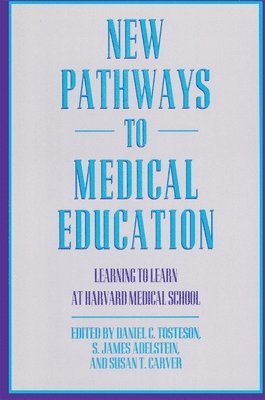
Medicine in the twenty-first century will be very different from the medicine of today; scientific, technological, economic, and ethical conditions of practice will be transformed. What do these changes portend for medical education? What knowledge should all medical students acquire? How can medical educators prepare students in the most cost-effective way?This book describes efforts made at Harvard Medical School during the past to reorient general medical education. Harvard’s New Pathway has received national attention since its inception—including a multipart special on PBS’s Nova—because it offers a radical restructuring of the traditional medical school curriculum. Its creators, most of them contributors to this book, designed a program that gives students not only a core of scientific, biomedical, and clinical knowledge but also the skills, tools, and attitudes that will enable them to become lifelong learners, to cope with and use new information, and—most important—to provide better patient care.New Pathways to Medical Education also tells the inside story of how a traditional and research-oriented faculty was persuaded to cooperate with colleagues outside their departments in adopting a student-centered, problem-based approach to learning. Central to this transformation was the Patient–Doctor course, which the book describes in detail. This course—which teaches students to LISC the patient–doctor relationship for the benefit of patients—is considered one of the most significant contributions to medical education in the New Pathway.New Pathways to Medical Education will inspire physicians, medical scientists, and medical educators around the world to think and act more decisively to reform medical education. And because it documents the development of an innovative curriculum, this study will interest educators in all fields.