S. Murugan – författare
Visar alla böcker från författaren . Handla med fri frakt och snabb leverans.
3 produkter
3 produkter
E-bok
Engelska, 20094 450 kr
Läs direkt efter köp
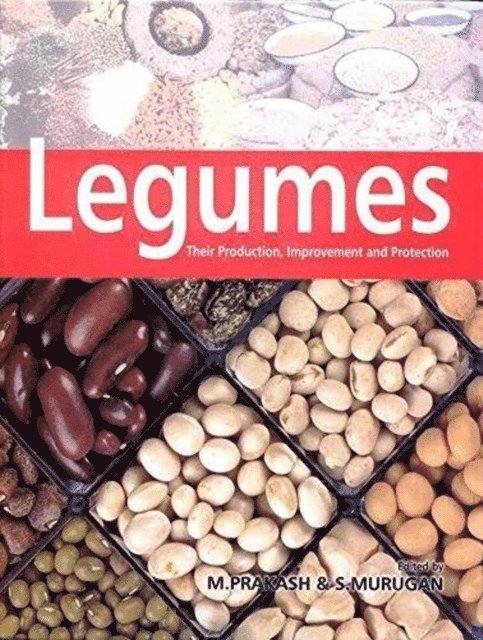
Legumes are a large, diverse family ranging from herbaceous annuals to woody perennials that, because of their capacity to fix nitrogen, are essential components in natural and managed terrestrial ecosystems. Legumes have been domesticated for the production of food, feed, forage, fiber, industrial and medicinal compounds, flowers, and other end uses. The book covers a wide-ranging survey of all the major legumes from their evolution to their potential for further development and improvement as economically important food crops. The contents of the book have been divided into five themes viz., Crop Improvement, Crop Production, Physiological Bio-Chemical and Bio-Technological advances, Crop Protection and Policies and Programmes. It covers the changes that have occurred in the course of plant domestication leading to our present pulse crops and oilseed legume crops. It also includes reviews on the benefits to be gained from evaluation and improvement of grain legume genetic resources. This book will serve as a suitable study and reference material for postgraduate students and researchers.
Inbunden, Engelska, 2026
2 164 kr
Skickas inom 10-15 vardagar
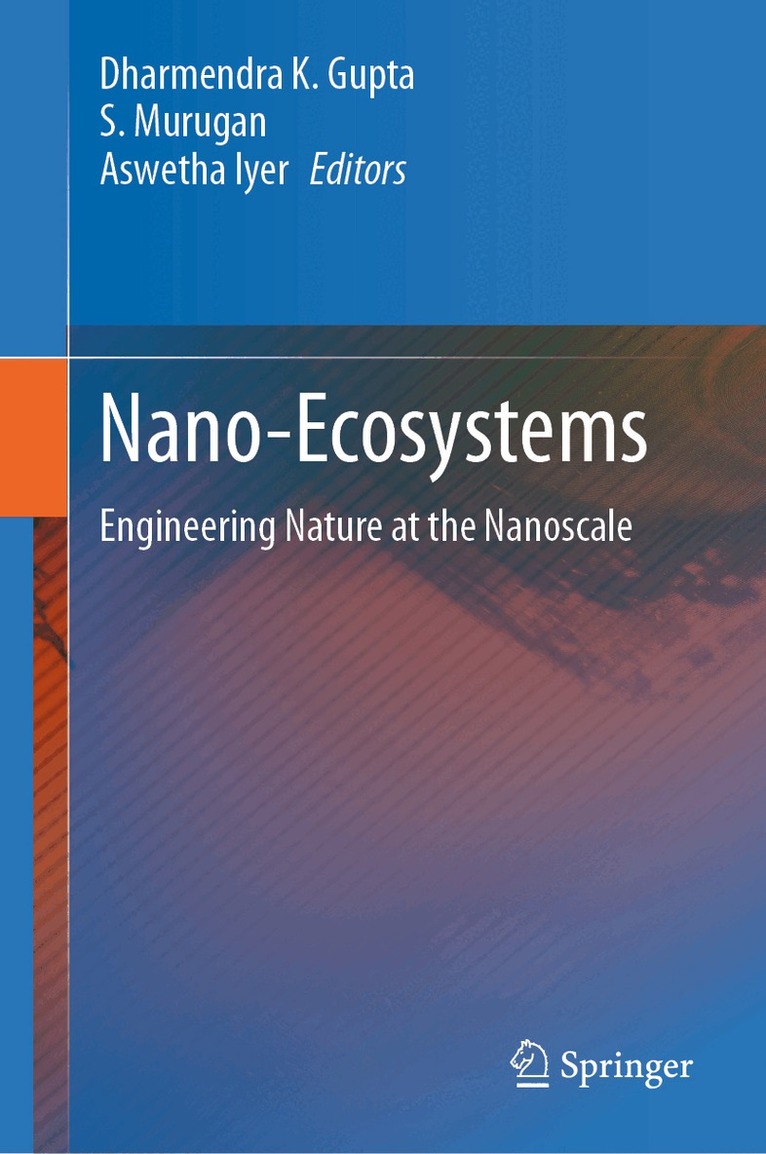
The book introduces the concept of using nanotechnology to support and restore natural ecosystems. It explains how tiny materials and devices can be designed to work like parts of nature, helping to solve problems related to energy, pollution, soil health, and climate change.The book begins by defining what nano-ecosystems are and the principles behind engineering them. It then discusses the practical applications, such as using nanomaterials for energy harvesting and storage, creating bio-inspired structures, and developing nanosensors for environmental monitoring. Other chapters explore how nanotechnology can help in improving soil quality, capture carbon emissions, manage waste, and support biodiversity. The later sections look at the use of artificial intelligence in managing these systems, modelling them at different scales, and considering the ethical and social aspects of their use. The book ends with a discussion on the challenges and future directions of this field.This book is a useful resource for students, researchers, and professionals in life sciences, environmental science, nanotechnology, and sustainability.
E-bok
Engelska, 20262 840 kr
Läs direkt efter köp
The book introduces the concept of using nanotechnology to support and restore natural ecosystems. It explains how tiny materials and devices can be designed to work like parts of nature, helping to solve problems related to energy, pollution, soil health, and climate change.The book begins by defining what nano-ecosystems are and the principles behind engineering them. It then discusses the practical applications, such as using nanomaterials for energy harvesting and storage, creating bio-inspired structures, and developing nanosensors for environmental monitoring. Other chapters explore how nanotechnology can help in improving soil quality, capture carbon emissions, manage waste, and support biodiversity. The later sections look at the use of artificial intelligence in managing these systems, modelling them at different scales, and considering the ethical and social aspects of their use. The book ends with a discussion on the challenges and future directions of this field.This book is a useful resource for students, researchers, and professionals in life sciences, environmental science, nanotechnology, and sustainability.