S. Musterd – författare
Visar alla böcker från författaren S. Musterd. Handla med fri frakt och snabb leverans.
9 produkter
9 produkter
E-bok
PDF, Engelska, 2006687 kr
Läs direkt efter köp
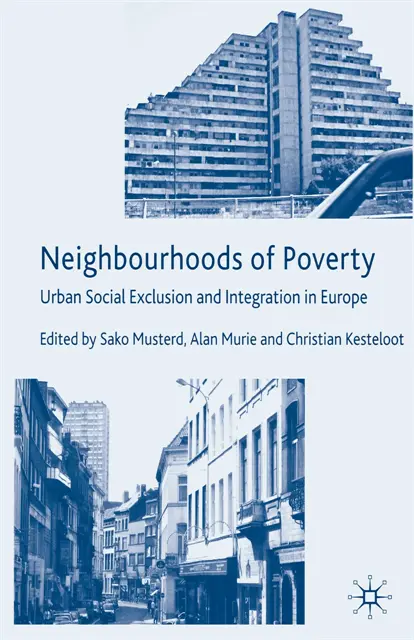
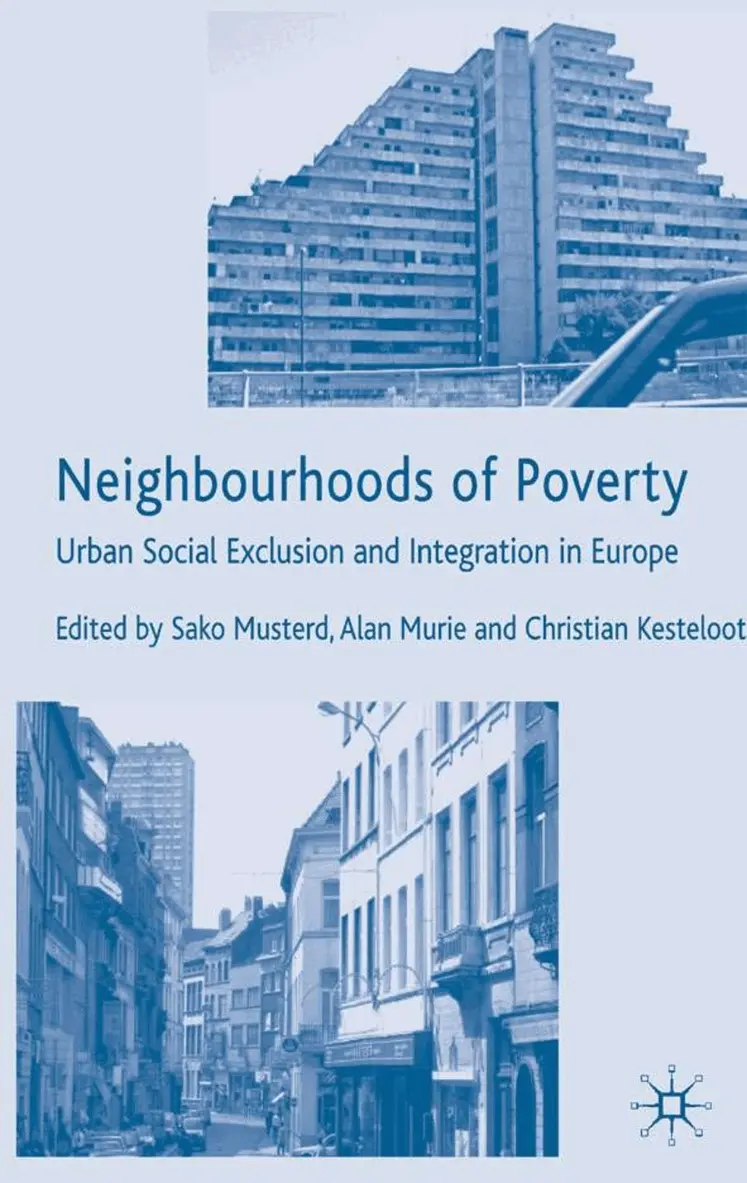
Neighbourhoods of Poverty is concerned with the spatial dimension of urban social exclusion and integration. It draws on research from twenty-two neighbourhoods in eleven European cities: Amsterdam, Rotterdam, Brussels, Antwerp, London, Birmingham, Berlin, Hamburg, Milan, Naples and Paris and addresses two questions: - How do different neighbourhoods have an impact upon the opportunities and perspectives of poor individuals and households? - Are these neighbourhood impacts conditioned by national and welfare state contexts, by the wider metropolitan structures and by specific neighbourhood characteristics? Various aspects of poverty, social exclusion and integration are brought together and provide a new assessment of the place of neighbourhood within these wider debates.
Inbunden, Engelska, 1992
1 091 kr
Skickas inom 10-15 vardagar
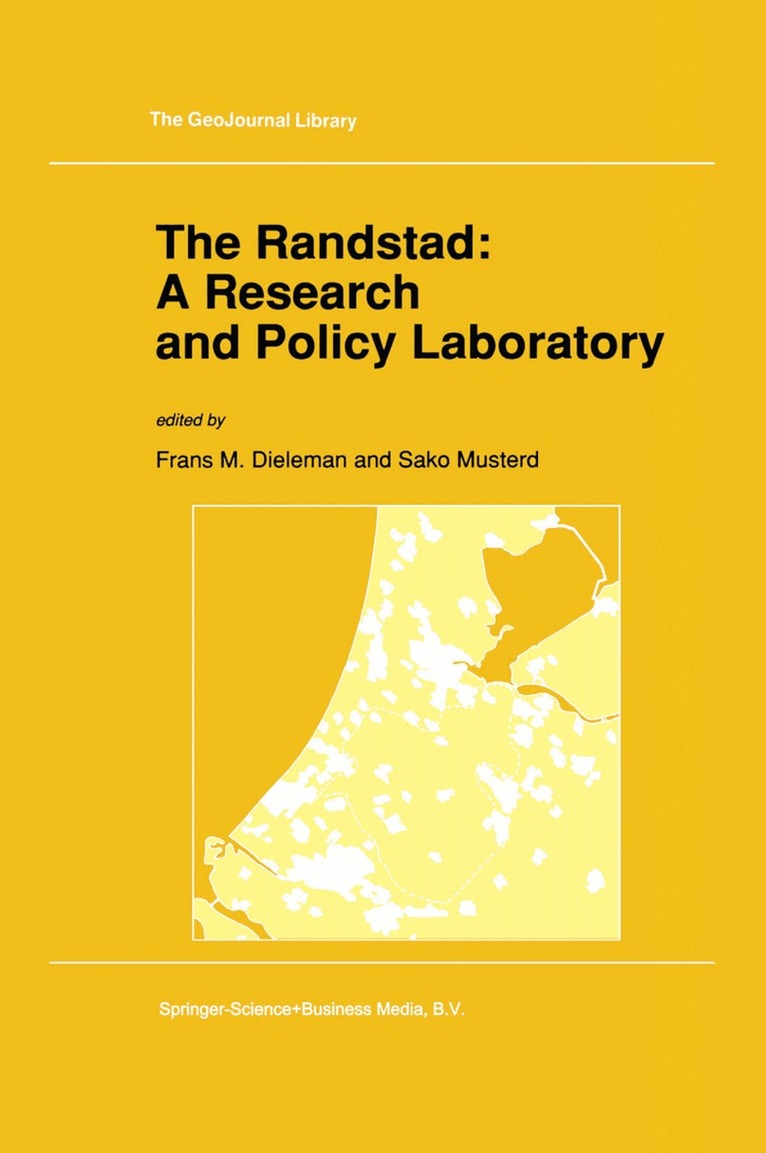
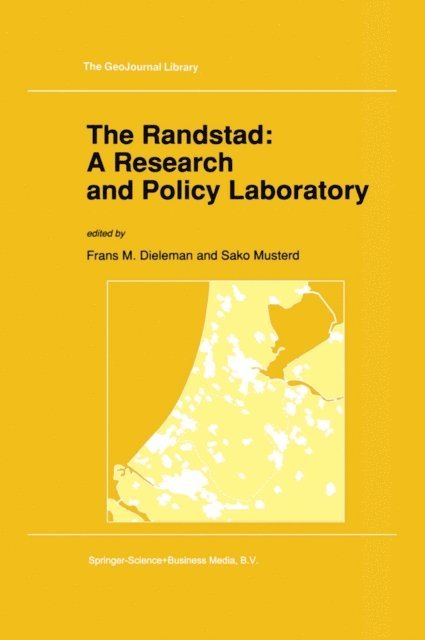
Randstad Holland is the urbanized western part of the Netherlands. It contains the four largest cities of the country: Amsterdam, Rotterdam, The Hague and Utrecht. The name Randstad (rim city) refers to the distinctive shape of the conurbation, a horseshoe of cities around an open agricultural and recreational area, known as the Green Heart. This book analyzes the restructuring of the region. The volume summarizes the research of the Urban Networks Research Program. The discussion is focused on four themes: housing, labour market and employment, infrastructure and transportation, and the provision of public services. The Randstad is internationally known as the playground of urban and regional planners. Their debates on present policy issues are extensively reviewed in the book. This work should be of interest to teachers and students of urban change and planning, and policy makers and planners in The Netherlands and abroad.
Inbunden, Engelska, 1998
1 091 kr
Skickas inom 10-15 vardagar
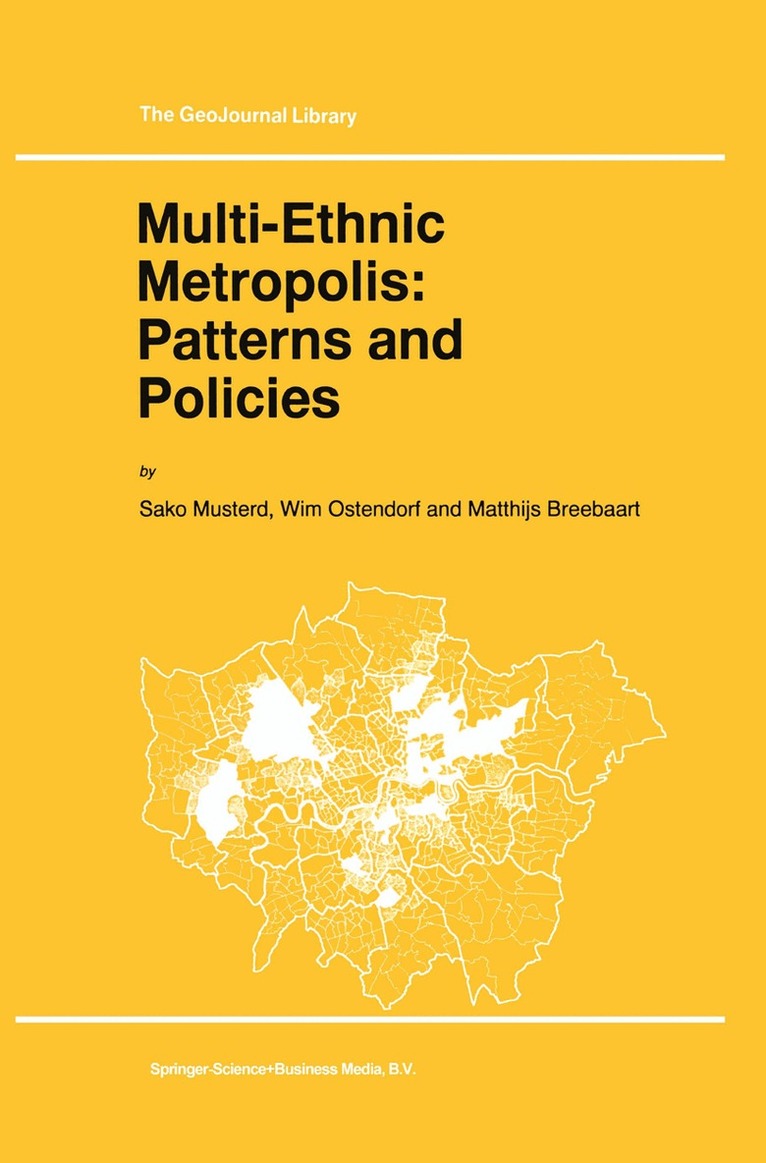
Presenting an international comparison of segregation patterns of immigrants and policy reactions at local and state level, this book sets out to give an insight into the European experience with ethnic segregation in metropolitan areas. European cities have generally become multi-ethnic metropolises, consisting of a mix of ethnic categories, but a homogeneous European picture does not exist. Patterns of ethnic segregation and policy reactions differ from city to city. The metropolises compared in this study are Amsterdam, Brussels, Dusseldorf, Frankfurt, London, Manchester, Paris and Stockholm, and the Canadian city of Toronto. The book is intended for researchers and students in the fields of geographical, ethnic and policy studies, as well as for civil servants and policy-makers working in large metropolises and national governments.
Häftad, Engelska, 2006
548 kr
Skickas inom 10-15 vardagar
Neighbourhoods of Poverty is concerned with the spatial dimension of urban social exclusion and integration. It draws on research from twenty-two neighbourhoods in eleven European cities: Amsterdam, Rotterdam, Brussels, Antwerp, London, Birmingham, Berlin, Hamburg, Milan, Naples and Paris and addresses two questions: - How do different neighbourhoods have an impact upon the opportunities and perspectives of poor individuals and households? - Are these neighbourhood impacts conditioned by national and welfare state contexts, by the wider metropolitan structures and by specific neighbourhood characteristics? Various aspects of poverty, social exclusion and integration are brought together and provide a new assessment of the place of neighbourhood within these wider debates.
Inbunden, Engelska, 2006
549 kr
Skickas inom 10-15 vardagar
Neighbourhoods of Poverty is concerned with the spatial dimension of urban social exclusion and integration. It draws on research from twenty-two neighbourhoods in eleven European cities: Amsterdam, Rotterdam, Brussels, Antwerp, London, Birmingham, Berlin, Hamburg, Milan, Naples and Paris and addresses two questions: - How do different neighbourhoods have an impact upon the opportunities and perspectives of poor individuals and households? - Are these neighbourhood impacts conditioned by national and welfare state contexts, by the wider metropolitan structures and by specific neighbourhood characteristics? Various aspects of poverty, social exclusion and integration are brought together and provide a new assessment of the place of neighbourhood within these wider debates.
Häftad, Engelska, 2010
1 091 kr
Skickas inom 10-15 vardagar
Randstad Holland is the urbanized western part of the Netherlands. It contains the four largest cities of the country: Amsterdam, Rotterdam, The Hague and Utrecht. The name Randstad (rim city) refers to the distinctive shape of the conurbation, a horseshoe of cities around an open agricultural and recreational area, known as the Green Heart.This book analyzes the restructuring of the region. The volume summarizes the research of the Urban Networks research program. The discussion is focused on four themes: housing, labor market and employment, infrastructure and transportation, and the provision of public services. The Randstad is internationally known as the playground of urban and regional planners. Their debates on present policy issues are extensively reviewed in the book.Teachers and students of urban change and planning, and policy makers and planners in The Netherlands and abroad will find much valuable information in this book.
Häftad, Engelska, 2010
1 091 kr
Skickas inom 10-15 vardagar
This volume presents an international comparison of segregation patterns of immigrants and policy reactions at local and state level. The objective is to give an insight into the European experience with ethnic segregation in metropolitan areas. European cities have generally become multi-ethnic metropolises, consisting of a mix of ethnic categories. However, a homogeneous European picture does not exist. Patterns of ethnic segregation and policy reactions differ from city to city. The following metropolises are compared: Amsterdam, Brussels, Dusseldorf, Frankfurt, London, Manchester, Paris, Stockholm and Toronto (Canada). Audience: This invaluable book will be of interest to researchers and students in geographical, ethnic and policy studies as well as to civil servants and policy makers working in large metropolises and national governments.
E-bok
PDF, Engelska, 20131 367 kr
Läs direkt efter köp
Multi-Ethnic Metropolis is based on international comparative research on ethnic segre gation patterns and policy reactions at local and national level. The objective was to achieve a broader, European perspective. For the acquisition of the information on which this book is based, we relied heavily on our colleagues abroad and their network of relations, since a great deal of factual data and information on the policies pursued is usually not available in a freely accessible form and can only be obtained through persons who know their way around. Eventually, in formation was provided by about seventy people (data administrators, policymakers at local and state level, politicians, academic researchers, representatives of interest groups, etc. ). The names of all people that contributed to this study are mentioned in the list of persons who were interviewed. Without wishing to wrong all these people, we especially want to thank the key informants who acted as intermediaries for following contacts. In alphabetical order, these are the following persons: Dr. Lars-Erik Borgegard (Stockholm}, Prof. Chris Hamnett (London), Dr. Herve Vieil lard Baron (Paris}, Prof. dr. Chris Kesteloot (Brussels}, Prof. dr. Bob Murdie (Toronto}, Prof. Ceri Peach (London), Prof. Phil Rees (London and Manchester}, Prof Brian Rob son (Manchester) and Prof. GUnther Glebe (Dusseldorf and Frankfurt). Furthermore we owe thanks to Prof. Herman van der Wusten, who took care of the in terviews in ''Paris'', which was an unruly case.
E-bok
PDF, Engelska, 20131 339 kr
Läs direkt efter köp
Randstad Holland is the urbanized western part of the Netherlands. It contains the four largest cities of the country: Amsterdam, Rotterdam, The Hague and Utrecht. The name Randstad (rim city) refers to the distinctive shape of the conurbation, a horseshoe of cities around an open agricultural and recreational area, known as the Green Heart. This book analyzes the restructuring of the region. The volume summarizes the research of the Urban Networks research program. The discussion is focused on four themes: housing, labor market and employment, infrastructure and transportation, and the provision of public services. The Randstad is internationally known as the playground of urban and regional planners. Their debates on present policy issues are extensively reviewed in the book. Teachers and students of urban change and planning, and policy makers and planners in The Netherlands and abroad will find much valuable information in this book.