S. P. Venkateshan – författare
Visar alla böcker från författaren S. P. Venkateshan. Handla med fri frakt och snabb leverans.
8 produkter
8 produkter
Inbunden, Engelska, 2015
1 033 kr
Skickas inom 5-8 vardagar
The first edition of this book was co-published by Ane Books India, and CRC Press in 2008. This second edition is an enlarged version of the web course developed by the author at IIT Madras, and also a modified and augmented version of the earlier book. Major additions/modifications presented are in the treatment of errors in measurement, temperature measurement, measurement of thermo-physical properties, and data manipulation. Many new worked examples have been introduced in this new and updated second edition.
Inbunden, Engelska, 2022
1 084 kr
Skickas inom 10-15 vardagar
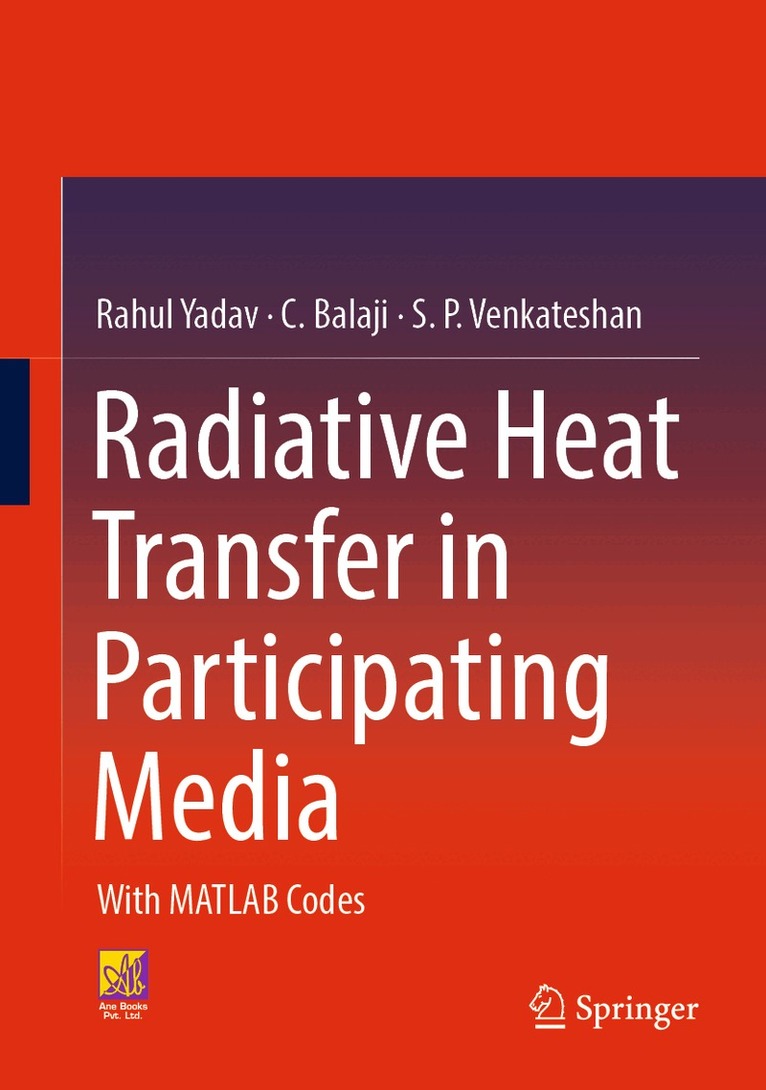
This book aims at providing a computational framework of radiative heat transfer in participating media. The book mainly helps engineers and researchers develop their own codes for radiative transfer analysis, starting from simple benchmark problems and extending further to industry scale problems. The computations related to radiative heat transfer are very relevant in iron and steel manufacturing industries, rocket exhaust designing, fire resistance testing, and atmospheric and solar applications. The methods to accurately treat the non-gray nature of the participating gases such as H2O, CO2, and CO are discussed along with considering particle radiation. The solver development based on these methods and its application to a variety of industry problems and different kind of geometries is a significant attraction in the book. The last section of the book deals with the use of artificial neural networks and genetic algorithm-based optimization technique for solving practical problemsof process parameter optimization in industry. This book is a comprehensive package taking the readers from the basics of radiative heat transfer in participating media to equip them with their own solvers and help to apply to industry problems.
E-bok
Engelska, 20221 416 kr
Läs direkt efter köp
This book aims at providing a computational framework of radiative heat transfer in participating media. The book mainly helps engineers and researchers develop their own codes for radiative transfer analysis, starting from simple benchmark problems and extending further to industry scale problems. The computations related to radiative heat transfer are very relevant in iron and steel manufacturing industries, rocket exhaust designing, fire resistance testing, and atmospheric and solar applications. The methods to accurately treat the non-gray nature of the participating gases such as H2O, CO2, and CO are discussed along with considering particle radiation. The solver development based on these methods and its application to a variety of industry problems and different kind of geometries is a significant attraction in the book. The last section of the book deals with the use of artificial neural networks and genetic algorithm-based optimization technique for solving practical problemsof process parameter optimization in industry. This book is a comprehensive package taking the readers from the basics of radiative heat transfer in participating media to equip them with their own solvers and help to apply to industry problems.
Häftad, Engelska, 2023
1 084 kr
Skickas inom 10-15 vardagar
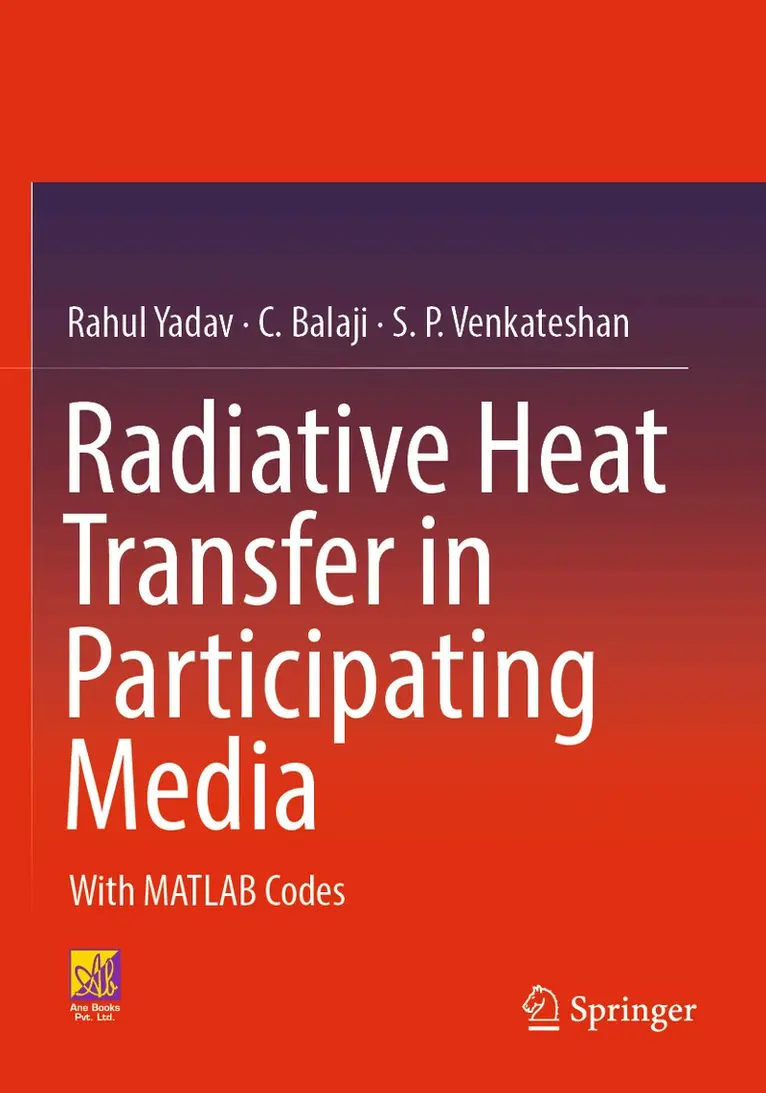
This book aims at providing a computational framework of radiative heat transfer in participating media. The book mainly helps engineers and researchers develop their own codes for radiative transfer analysis, starting from simple benchmark problems and extending further to industry scale problems. The computations related to radiative heat transfer are very relevant in iron and steel manufacturing industries, rocket exhaust designing, fire resistance testing, and atmospheric and solar applications. The methods to accurately treat the non-gray nature of the participating gases such as H2O, CO2, and CO are discussed along with considering particle radiation. The solver development based on these methods and its application to a variety of industry problems and different kind of geometries is a significant attraction in the book. The last section of the book deals with the use of artificial neural networks and genetic algorithm-based optimization technique for solving practical problemsof process parameter optimization in industry. This book is a comprehensive package taking the readers from the basics of radiative heat transfer in participating media to equip them with their own solvers and help to apply to industry problems.
Inbunden, Engelska, 2023
1 730 kr
Skickas inom 10-15 vardagar
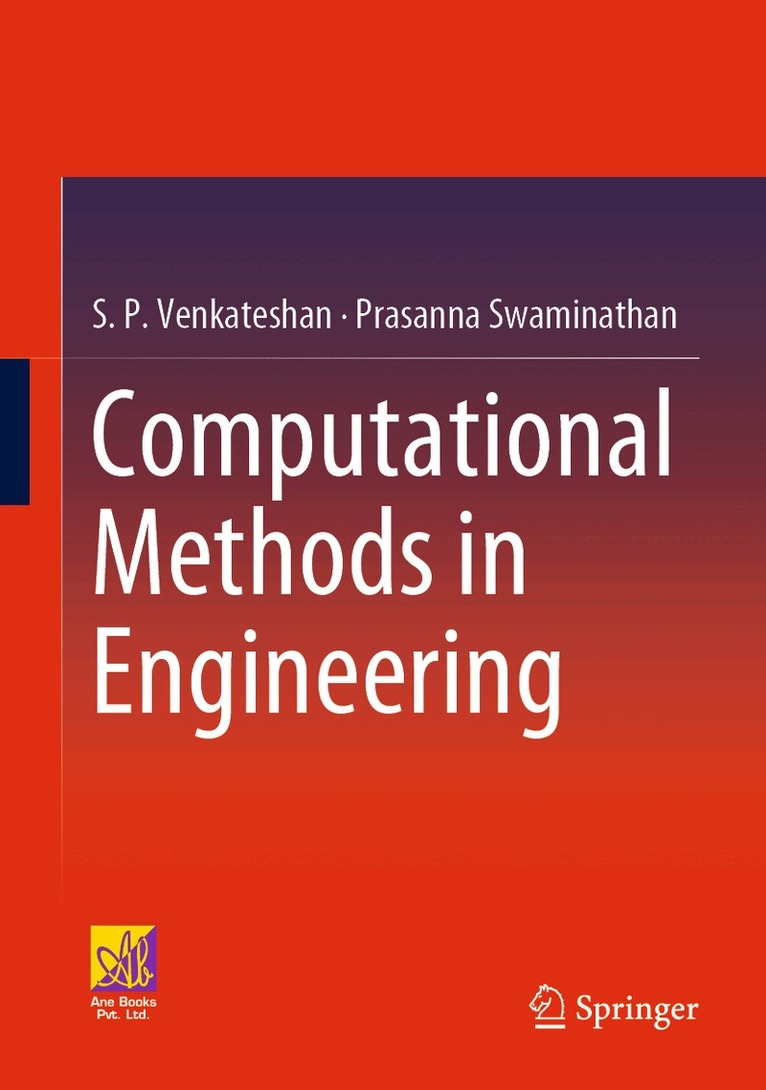
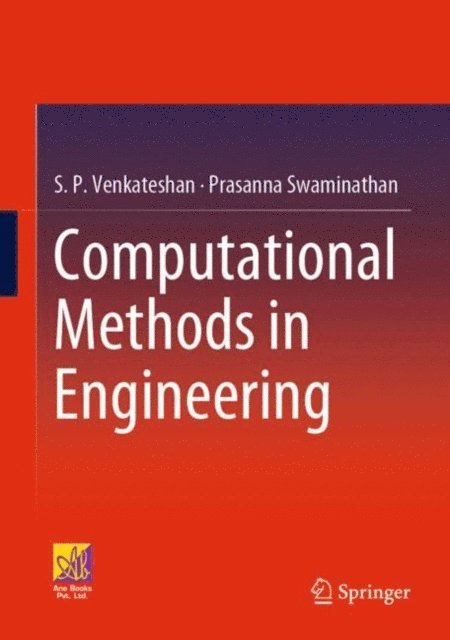
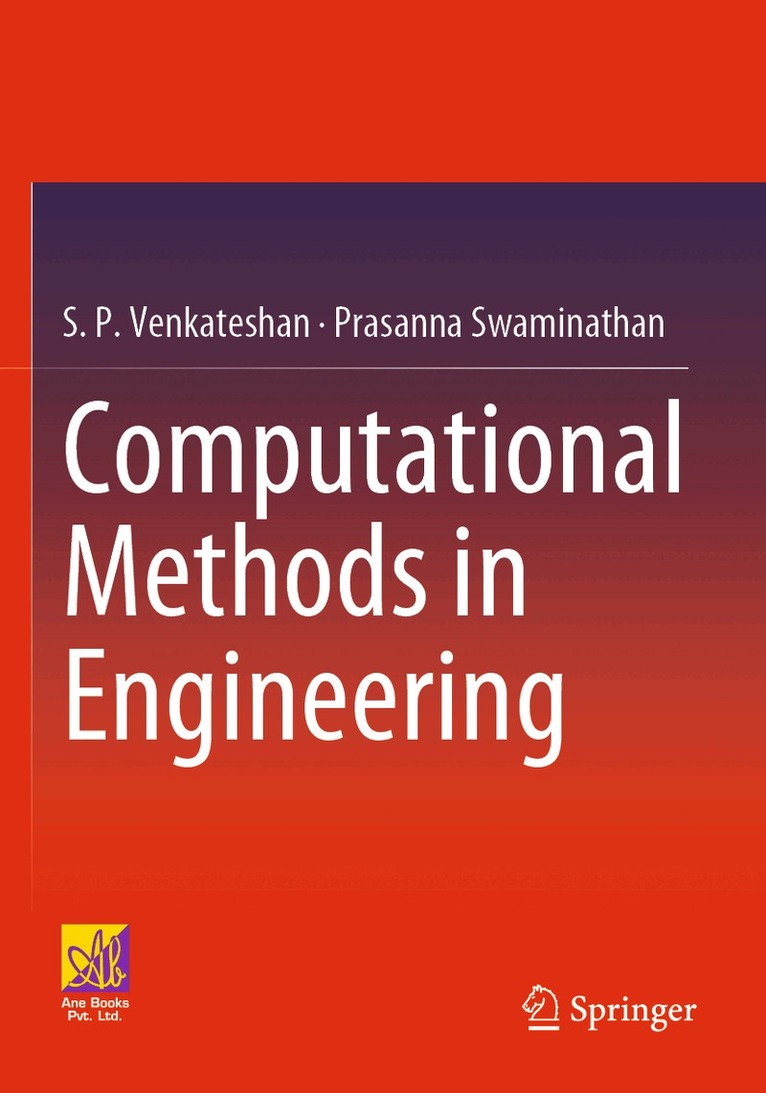
The book is designed to serve as a textbook for courses offered to graduate and upper-undergraduate students enrolled in mechanical engineering. The book attempts to make students with mathematical backgrounds comfortable with numerical methods. The book also serves as a handy reference for practicing engineers who are interested in applications. The book is written in an easy-to-understand manner, with the essence of each numerical method clearly stated. This makes it easy for professional engineers, students, and early career researchers to follow the material presented in the book. The structure of the book has been modeled accordingly. It is divided into four modules: i) solution of a system of equations and eigenvalues which includes linear equations, determining eigenvalues, and solution of nonlinear equations; ii) function approximations: interpolation, data fit, numerical differentiation, and numerical integration; iii) solution of ordinary differential equations—initial valueproblems and boundary value problems; and iv) solution of partial differential equations—parabolic, elliptic, and hyperbolic PDEs. Each section of the book includes exercises to reinforce the concepts, and problems have been added at the end of each chapter. Exercise problems may be solved by using computational tools such as scientific calculators, spreadsheet programs, and MATLAB codes. The detailed coverage and pedagogical tools make this an ideal textbook for students, early career researchers, and professionals.

E-bok
Engelska, 20231 741 kr
Läs direkt efter köp
The book is designed to serve as a textbook for courses offered to graduate and upper-undergraduate students enrolled in mechanical engineering. The book attempts to make students with mathematical backgrounds comfortable with numerical methods. The book also serves as a handy reference for practicing engineers who are interested in applications. The book is written in an easy-to-understand manner, with the essence of each numerical method clearly stated. This makes it easy for professional engineers, students, and early career researchers to follow the material presented in the book. The structure of the book has been modeled accordingly. It is divided into four modules: i) solution of a system of equations and eigenvalues which includes linear equations, determining eigenvalues, and solution of nonlinear equations; ii) function approximations: interpolation, data fit, numerical differentiation, and numerical integration; iii) solution of ordinary differential equations—initial valueproblems and boundary value problems; and iv) solution of partial differential equations—parabolic, elliptic, and hyperbolic PDEs. Each section of the book includes exercises to reinforce the concepts, and problems have been added at the end of each chapter. Exercise problems may be solved by using computational tools such as scientific calculators, spreadsheet programs, and MATLAB codes. The detailed coverage and pedagogical tools make this an ideal textbook for students, early career researchers, and professionals.
Engelska, 2023
648 kr
Skickas inom 5-8 vardagar
Häftad, Engelska, 2024
1 299 kr
Skickas inom 10-15 vardagar
The book is designed to serve as a textbook for courses offered to graduate and upper-undergraduate students enrolled in mechanical engineering. The book attempts to make students with mathematical backgrounds comfortable with numerical methods. The book also serves as a handy reference for practicing engineers who are interested in applications. The book is written in an easy-to-understand manner, with the essence of each numerical method clearly stated. This makes it easy for professional engineers, students, and early career researchers to follow the material presented in the book. The structure of the book has been modeled accordingly. It is divided into four modules: i) solution of a system of equations and eigenvalues which includes linear equations, determining eigenvalues, and solution of nonlinear equations; ii) function approximations: interpolation, data fit, numerical differentiation, and numerical integration; iii) solution of ordinary differential equations—initial valueproblems and boundary value problems; and iv) solution of partial differential equations—parabolic, elliptic, and hyperbolic PDEs. Each section of the book includes exercises to reinforce the concepts, and problems have been added at the end of each chapter. Exercise problems may be solved by using computational tools such as scientific calculators, spreadsheet programs, and MATLAB codes. The detailed coverage and pedagogical tools make this an ideal textbook for students, early career researchers, and professionals.