S. Peters – författare
Visar alla böcker från författaren S. Peters. Handla med fri frakt och snabb leverans.
10 produkter
National Systems of Innovation
Creating High Technology Industries
Av S. Peters
E-bok, 2006
1596 kr
Lägg i varukorg
This book draws together literature from the fields of strategy, management and innovation to examine the importance of a firm''s national base at a sectoral level in an era of globalization. By considering two very dynamic high-technology industries - semiconductors and liquid crystal displays, …
National Systems of Innovation
Creating High Technology Industries
Av S. Peters
Häftad, 2006
1128 kr
Lägg i varukorg
This book draws together literature from the fields of strategy, management and innovation to examine the importance of a firm's national base at a sectoral level in an era of globalization. By considering two very dynamic high-technology industries - semiconductors and liquid crystal displays, the …
National Systems of Innovation
Creating High Technology Industries
Av S. Peters
Inbunden, 2006
1128 kr
Lägg i varukorg
This book draws together literature from the fields of strategy, management and innovation to examine the importance of a firm's national base at a sectoral level in an era of globalization. By considering two very dynamic high-technology industries - semiconductors and liquid crystal displays, the …
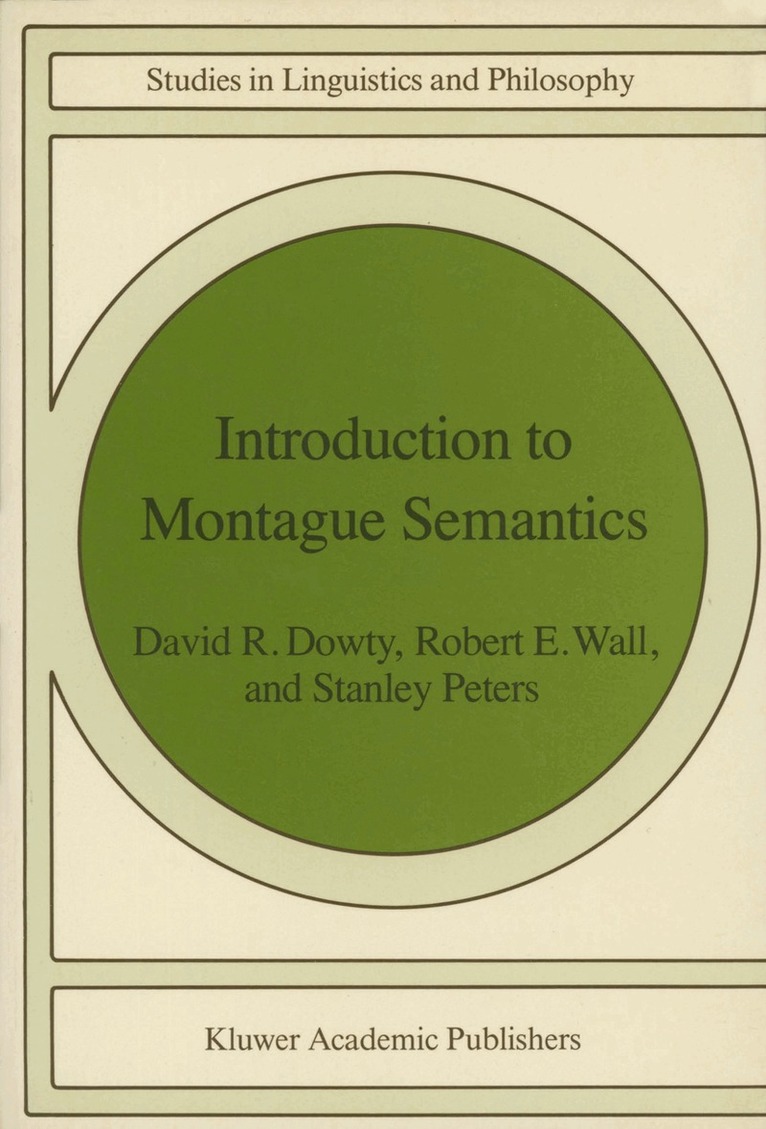
Introduction to Montague Semantics
Av D. R. Dowty, R. Wall m. fl.
Inbunden, 1980
2809 kr
Lägg i varukorg
In this book we hope to acquaint the reader with the fundamentals of truth conditional model-theoretic semantics, and in particular with a version of this developed by Richard Montague in a series of papers published during the 1960's and early 1970's. In many ways the paper 'The Proper Treatment …
Introduction to Montague Semantics
Av D. R. Dowty, R. Wall m. fl.
Häftad, 1980
3145 kr
Lägg i varukorg
In this book we hope to acquaint the reader with the fundamentals of truth conditional model-theoretic semantics, and in particular with a version of this developed by Richard Montague in a series of papers published during the 1960's and early 1970's. In many ways the paper 'The Proper Treatment …
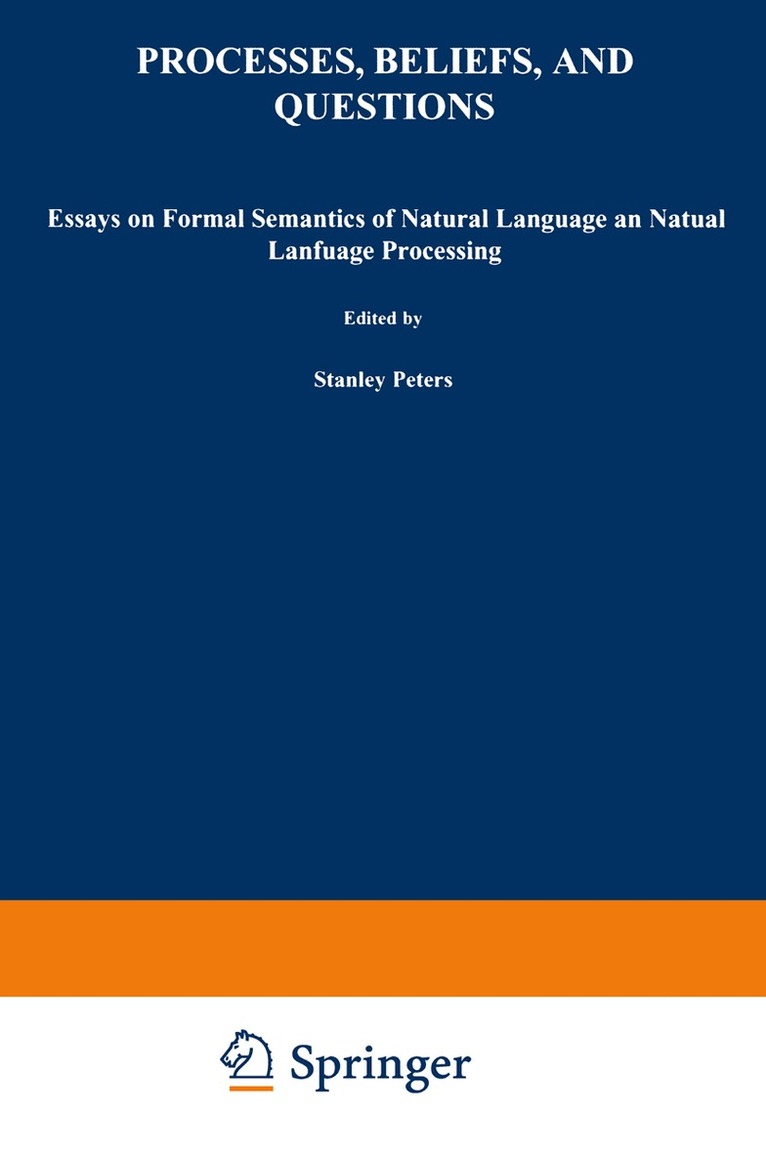
Processes, Beliefs, and Questions
Essays on Formal Semantics of Natural Language and Natural Language Processing
Inbunden, 1981
1095 kr
Lägg i varukorg
SECTION I In 1972, Donald Davison and Gilbert Hannan wrote in the introduction to the volume Semantics of Natural Language: "The success of linguistics in treating natural languages as formal ~yntactic systems has aroused the interest of a number of linguists in a parallel or related development of …
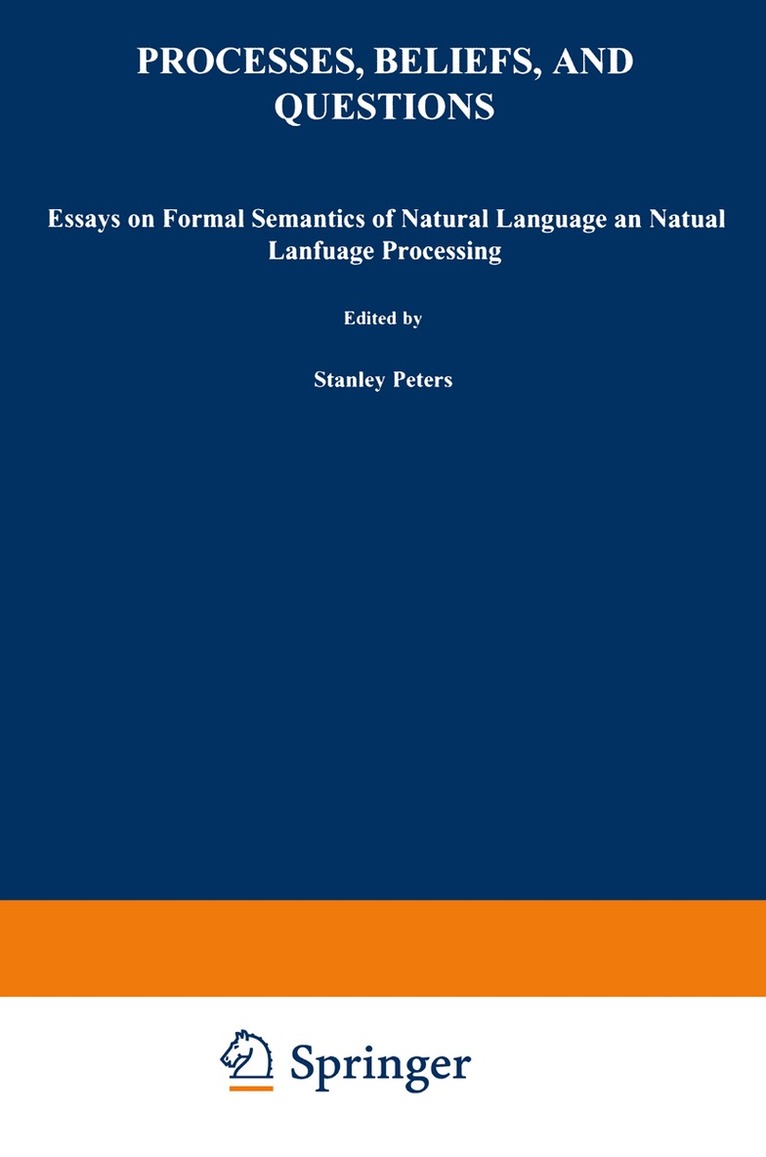
Processes, Beliefs, and Questions
Essays on Formal Semantics of Natural Language and Natural Language Processing
Häftad, 2010
1095 kr
Lägg i varukorg
SECTION I In 1972, Donald Davison and Gilbert Hannan wrote in the introduction to the volume Semantics of Natural Language: "The success of linguistics in treating natural languages as formal ~yntactic systems has aroused the interest of a number of linguists in a parallel or related development of …
Past Life Bleedthrough-A Collection of Poems Chronicling My Journey
Av S Peters
2025
200 kr
Lägg i varukorg
Introduction to Montague Semantics
E-bok, 2012
3684 kr
Lägg i varukorg
In this book we hope to acquaint the reader with the fundamentals of truth conditional model-theoretic semantics, and in particular with a version of this developed by Richard Montague in a series of papers published during the 1960''s and early 1970''s. In many ways the paper ''The Proper …
Processes, Beliefs, and Questions
Essays on Formal Semantics of Natural Language and Natural Language Processing
E-bok, 2012
1459 kr
Lägg i varukorg
SECTION I In 1972, Donald Davison and Gilbert Hannan wrote in the introduction to the volume Semantics of Natural Language: "The success of linguistics in treating natural languages as formal ~yntactic systems has aroused the interest of a number of linguists in a parallel or related development of …