Sabina Stan – författare
Visar alla böcker från författaren Sabina Stan. Handla med fri frakt och snabb leverans.
11 produkter
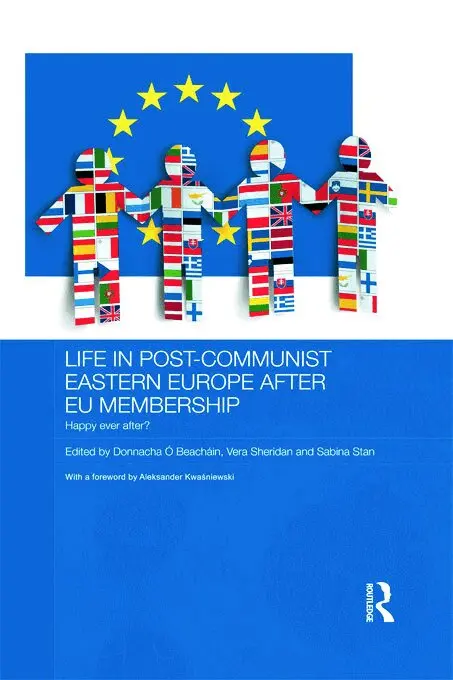
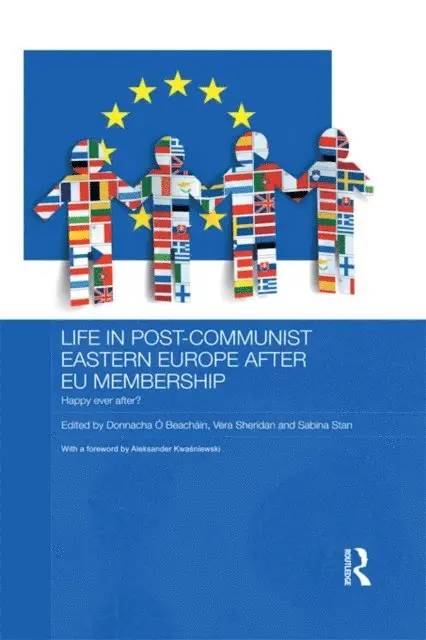
Life in Post-Communist Eastern Europe after EU Membership
Happy Ever After?
Av Donnacha O Beachain, Vera Sheridan m. fl.
Inbunden, 2012
2510 kr
Lägg i varukorg
This book examines how membership of the European Union has affected life in the ten former communist countries of Central and Eastern Europe that are now members of the European Union. It attempts to answer some fundamental questions: Was the reward of EU membership worth the sacrifices made? How …
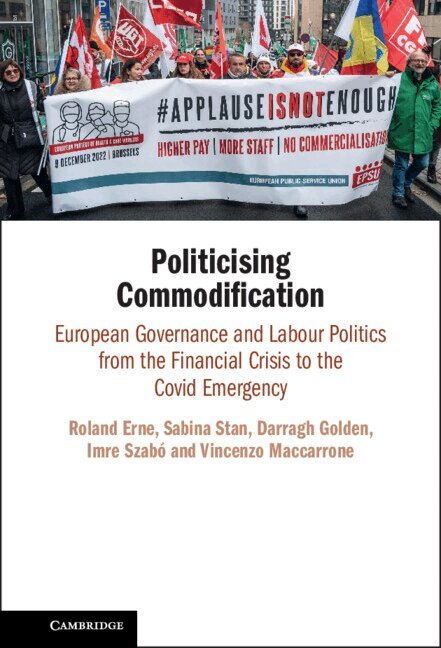
Politicising Commodification
European Governance and Labour Politics from the Financial Crisis to the Covid Emergency
Av Roland Erne, Sabina Stan m. fl.
Häftad, 2024
463 kr
Lägg i varukorg
This book examines the new economic governance (NEG) regime that the EU adopted after 2008. Its novel research design captures the supranational formulation of NEG prescriptions and their uneven deployment across countries (Germany, Italy, Ireland, Romania), policy areas (employment relations, …
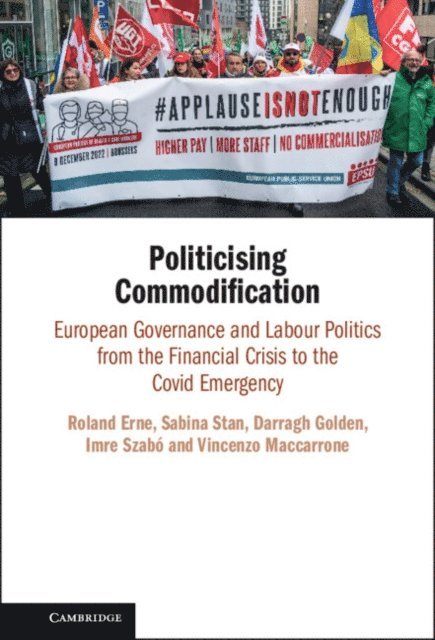
Politicising Commodification
European Governance and Labour Politics from the Financial Crisis to the Covid Emergency
Av Vincenzo Maccarrone, Imre Szabo m. fl.
E-bok, 2024
450 kr
Lägg i varukorg
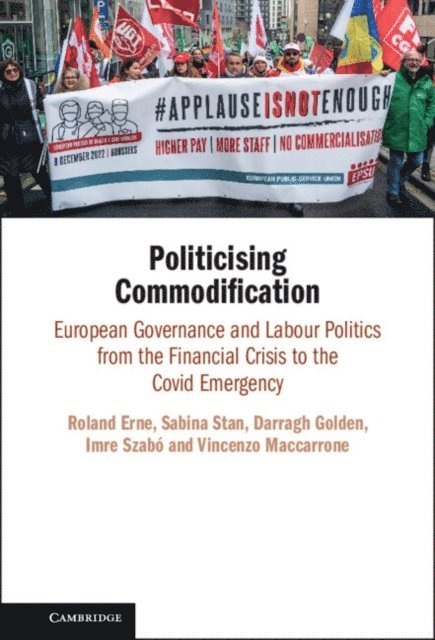
Politicising Commodification
European Governance and Labour Politics from the Financial Crisis to the Covid Emergency
Av Vincenzo Maccarrone, Imre Szabo m. fl.
E-bok, 2024
450 kr
Lägg i varukorg
Life in Post-Communist Eastern Europe after EU Membership
Happy Ever After?
Av Sabina Stan, Vera Sheridan m. fl.
E-bok, 2012
1082 kr
Lägg i varukorg
This book examines how membership of the European Union has affected life in the ten former communist countries of Eastern Europe that are now members of the European Union. For each country, political, economic and social changes are described and discussed, together with people’s perceptions of …
Life in Post-Communist Eastern Europe after EU Membership
Happy Ever After?
Av Sabina Stan, Vera Sheridan m. fl.
E-bok, 2012
1106 kr
Lägg i varukorg
This book examines how membership of the European Union has affected life in the ten former communist countries of Eastern Europe that are now members of the European Union. For each country, political, economic and social changes are described and discussed, together with people’s perceptions of …
Life in Post-Communist Eastern Europe after EU Membership
Happy Ever After?
Av Donnacha Ó Beacháin, Vera Sheridan m. fl.
Häftad, 2015
936 kr
Lägg i varukorg
This book examines how membership of the European Union has affected life in the ten former communist countries of Central and Eastern Europe that are now members of the European Union. It attempts to answer some fundamental questions: Was the reward of EU membership worth the sacrifices made? How …
Politicising Commodification
European Governance and Labour Politics from the Financial Crisis to the Covid Emergency
Av Roland Erne, Sabina Stan m. fl.
Inbunden, 2024
1363 kr
Lägg i varukorg
This book examines the new economic governance (NEG) regime that the EU adopted after 2008. Its novel research design captures the supranational formulation of NEG prescriptions and their uneven deployment across countries (Germany, Italy, Ireland, Romania), policy areas (employment relations, …
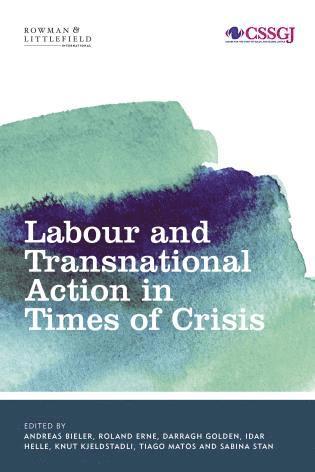
Labour and Transnational Action in Times of Crisis
Av Andreas Bieler, Roland Erne m. fl.
Inbunden, 2015
1983 kr
Lägg i varukorg
Processes of neoliberal globalization have put national trade unions under pressure as the transnational organization of production puts these labour movements in competition with each other. The global economic crisis has intensified these pressures further. And yet, economic and political …
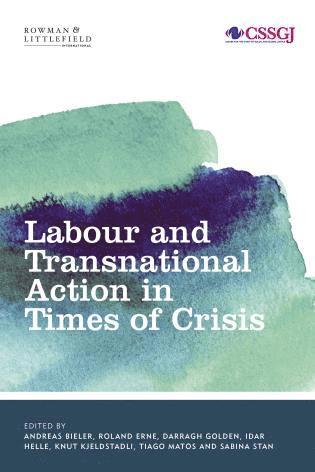
Labour and Transnational Action in Times of Crisis
Av Andreas Bieler, Roland Erne m. fl.
Häftad, 2015
713 kr
Lägg i varukorg
Processes of neoliberal globalization have put national trade unions under pressure as the transnational organization of production puts these labour movements in competition with each other. The global economic crisis has intensified these pressures further. And yet, economic and political …
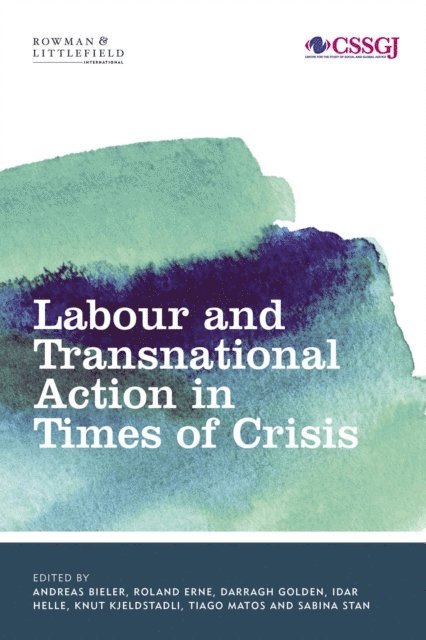
Labour and Transnational Action in Times of Crisis
Av Andreas Bieler, Roland Erne m. fl.
E-bok, 2015
779 kr
Lägg i varukorg
Processes of neoliberal globalization have put national trade unions under pressure as the transnational organization of production puts these labour movements in competition with each other. The global economic crisis has intensified these pressures further. And yet, economic and political …