Sabine Hake – författare
309 kr
Skickas inom 5-8 vardagar
367 kr
Skickas inom 5-8 vardagar
2 002 kr
Skickas inom 10-15 vardagar
577 kr
Skickas inom 10-15 vardagar
2 289 kr
Skickas inom 10-15 vardagar
574 kr
Skickas inom 10-15 vardagar
513 kr
Skickas inom 5-8 vardagar
513 kr
Skickas inom 5-8 vardagar
681 kr
Läs direkt efter köp
A collaborator with Warner Brothers and Paramount in the early days of sound film, the German film director Ernst Lubitsch (1892-1947) is famous for his sense of ironic detachment and for the eroticism he infused into such comedies as So This Is Paris and Trouble in Paradise. In a general introduction to his silent and early sound films (1914-1932) and in close readings of his comedies, Sabine Hake focuses on the visual strategies Lubitsch used to convey irony and analyzes his contribution to the rise of classical narrative cinema. Exploring Lubitsch''s depiction of femininity and the influence of his early German films on his entire career, she argues that his comedies represent an important outlet for dealing with sexual and cultural differences. The readings cover The Oyster Princess, The Doll, The Mountain Cat, Passion, Deception, So This Is Paris, Monte Carlo, and Trouble in Paradise, which are interpreted as part of an underlying process of negotiation between different modes of representation, narration, and spectatorship--a process that comprises the conditions of production in two different national cinemas and the ongoing changes in film technology. Drawing attention to Lubitsch''s previously neglected German films, this book presents the years until 1922 as the formative period in his career.
697 kr
Skickas inom 10-15 vardagar
251 kr
Läs direkt efter köp
The demise of the New German Cinema and the return of popular cinema since the 1990s have led to a renewed interest in the postwar years and the complicated relationship between East and West German cinema in particular. A survey of the 1950s, as offered here for the first time, is therefore long overdue. Moving beyond the contempt for "Papa''s Kino" and the nostalgia for the fifties found in much of the existing literature, this anthology explores new uncharted territories, traces hidden connections, discovers unknown treasures, and challenges conventional interpretations. Informed by cultural studies, gender studies, and the study of popular cinema, this anthology offers a more complete account by focusing on popular genres, famous stars, and dominant practices, by taking into account the complicated relationships between East vs. West German, German vs. European, and European vs. American cinemas; and by paying close attention to the economic and political conditions of film production and reception during this little-known period of German film history.
1 903 kr
Skickas inom 3-6 vardagar
324 kr
Läs direkt efter köp
In the last five years of the twentieth century, films by the second and third generation of the so-called German guest workers exploded onto the German film landscape. Self-confident, articulate, and dynamic, these films situate themselves in the global exchange of cinematic images, citing and rewriting American gangster narratives, Kung Fu action films, and paralleling other emergent European minority cinemas. This, the first book-length study on the topic, will function as an introduction to this emergent and growing cinema and offer a survey of important films and directors of the last two decades. In addition, it intervenes in the theoretical debates about Turkish German culture by engaging with different methodological approaches that originate in film studies.
Berlin Divided City, 1945-1989
499 kr
Skickas inom 3-6 vardagar
665 kr
Läs direkt efter köp
Convergence Media History explores the ways that digital convergence has radically changed the field of media history. Writing media history is no longer a matter of charting the historical development of an individual medium such as film or television. Instead, now that various media from blockbuster films to everyday computer use intersect regularly via convergence, scholars must find new ways to write media history across multiple media formats. This collection of eighteen new essays by leading media historians and scholars examines the issues today in writing media history and histories. Each essay addresses a single medium—including film, television, advertising, sound recording, new media, and more—and connects that specific medium’s history to larger issues for the field in writing multi-media or convergent histories. Among the volume’s topics are new media technologies and their impact on traditional approaches to media history; alternative accounts of film production and exhibition, with a special emphasis on film across multiple media platforms; the changing relationships between audiences, fans, and consumers within media culture; and the globalization of our media culture.
665 kr
Läs direkt efter köp
Convergence Media History explores the ways that digital convergence has radically changed the field of media history. Writing media history is no longer a matter of charting the historical development of an individual medium such as film or television. Instead, now that various media from blockbuster films to everyday computer use intersect regularly via convergence, scholars must find new ways to write media history across multiple media formats. This collection of eighteen new essays by leading media historians and scholars examines the issues today in writing media history and histories. Each essay addresses a single medium—including film, television, advertising, sound recording, new media, and more—and connects that specific medium’s history to larger issues for the field in writing multi-media or convergent histories. Among the volume’s topics are new media technologies and their impact on traditional approaches to media history; alternative accounts of film production and exhibition, with a special emphasis on film across multiple media platforms; the changing relationships between audiences, fans, and consumers within media culture; and the globalization of our media culture.
649 kr
Läs direkt efter köp
German National Cinema is the first comprehensive history of German film from its origins to the present. In this new edition, Sabine Hake discusses film-making in economic, political, social, and cultural terms, and considers the contribution of Germany''s most popular films to changing definitions of genre, authorship, and film form.
The book traces the central role of cinema in the nation’s turbulent history from the Wilhelmine Empire to the Berlin Republic, with special attention paid to the competing demands of film as art, entertainment, and propaganda. Hake also explores the centrality of genre films and the star system to the development of a filmic imaginary.
This fully revised and updated new edition will be required reading for everyone interested in German film and the history of modern Germany.
655 kr
Läs direkt efter köp
German National Cinema is the first comprehensive history of German film from its origins to the present. In this new edition, Sabine Hake discusses film-making in economic, political, social, and cultural terms, and considers the contribution of Germany''s most popular films to changing definitions of genre, authorship, and film form.
The book traces the central role of cinema in the nation’s turbulent history from the Wilhelmine Empire to the Berlin Republic, with special attention paid to the competing demands of film as art, entertainment, and propaganda. Hake also explores the centrality of genre films and the star system to the development of a filmic imaginary.
This fully revised and updated new edition will be required reading for everyone interested in German film and the history of modern Germany.
Turkish German Cinema in the New Millennium
Sites, Sounds, and Screens
588 kr
Skickas inom 3-6 vardagar
1 960 kr
Skickas inom 3-6 vardagar
360 kr
Skickas inom 3-6 vardagar
283 kr
Läs direkt efter köp
A great deal of attention continues to focus on Berlin’s cultural and political landscape after the fall of the Berlin Wall, but as yet, no single volume looks at the divided city through an interdisciplinary analysis. This volume examines how the city was conceived, perceived, and represented during the four decades preceding reunification and thereby offers a unique perspective on divided Berlin’s identities. German historians, art historians, architectural historians, and literary and cultural studies scholars explore the divisions and antagonisms that defined East and West Berlin; and by tracing the little studied similarities and extensive exchanges that occurred despite the presence of the Berlin Wall, they present an indispensible study on the politics and culture of the Cold War.
1 960 kr
Skickas inom 3-6 vardagar
Proletarian Dream
Socialism, Culture, and Emotion in Germany, 1863–1933
1 655 kr
Skickas inom 5-8 vardagar
1 668 kr
Läs direkt efter köp
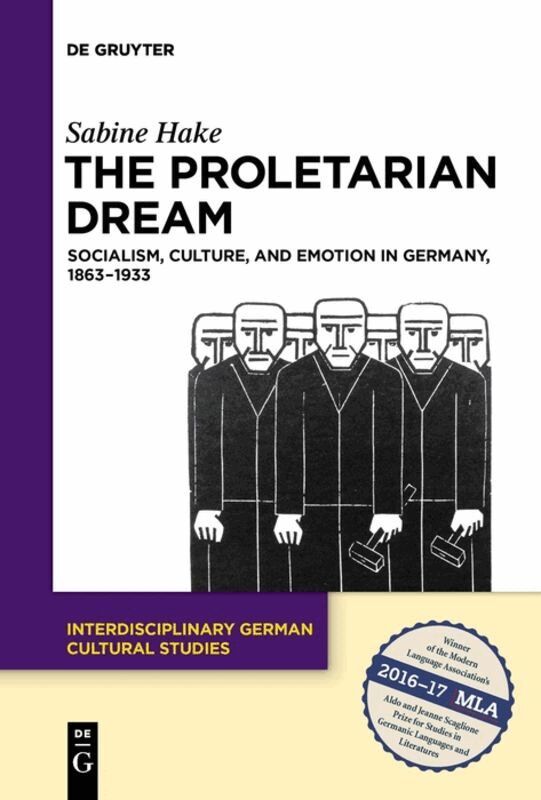
The proletariat never existed—but it had a profound effect on modern German culture and society. As the most radicalized part of the industrial working class, the proletariat embodied the critique of capitalism and the promise of socialism. But as a collective imaginary, the proletariat also inspired the fantasies, desires, and attachments necessary for transforming the working class into a historical subject and an emotional community. This book reconstructs this complicated and contradictory process through the countless treatises, essays, memoirs, novels, poems, songs, plays, paintings, photographs, and films produced in the name of the proletariat. The Proletarian Dream reads these forgotten archives as part of an elusive collective imaginary that modeled what it meant—and even more important, how it felt—to claim the name "proletarian" with pride, hope, and conviction. By emphasizing the formative role of the aesthetic, the eighteen case studies offer a new perspective on working-class culture as a oppositional culture. Such a new perspective is bound to shed new light on the politics of emotion during the main years of working-class mobilizations and as part of more recent populist movements and cultures of resentment.
Aldo and Jeanne Scaglione Prize for Studies in Germanic Languages and Literatures 2018
1 668 kr
Läs direkt efter köp
The proletariat never existed—but it had a profound effect on modern German culture and society. As the most radicalized part of the industrial working class, the proletariat embodied the critique of capitalism and the promise of socialism. But as a collective imaginary, the proletariat also inspired the fantasies, desires, and attachments necessary for transforming the working class into a historical subject and an emotional community. This book reconstructs this complicated and contradictory process through the countless treatises, essays, memoirs, novels, poems, songs, plays, paintings, photographs, and films produced in the name of the proletariat. The Proletarian Dream reads these forgotten archives as part of an elusive collective imaginary that modeled what it meant—and even more important, how it felt—to claim the name "proletarian" with pride, hope, and conviction. By emphasizing the formative role of the aesthetic, the eighteen case studies offer a new perspective on working-class culture as a oppositional culture. Such a new perspective is bound to shed new light on the politics of emotion during the main years of working-class mobilizations and as part of more recent populist movements and cultures of resentment.
Aldo and Jeanne Scaglione Prize for Studies in Germanic Languages and Literatures 2018
360 kr
Skickas inom 5-8 vardagar
1 304 kr
Skickas inom 5-8 vardagar
1 128 kr
Läs direkt efter köp
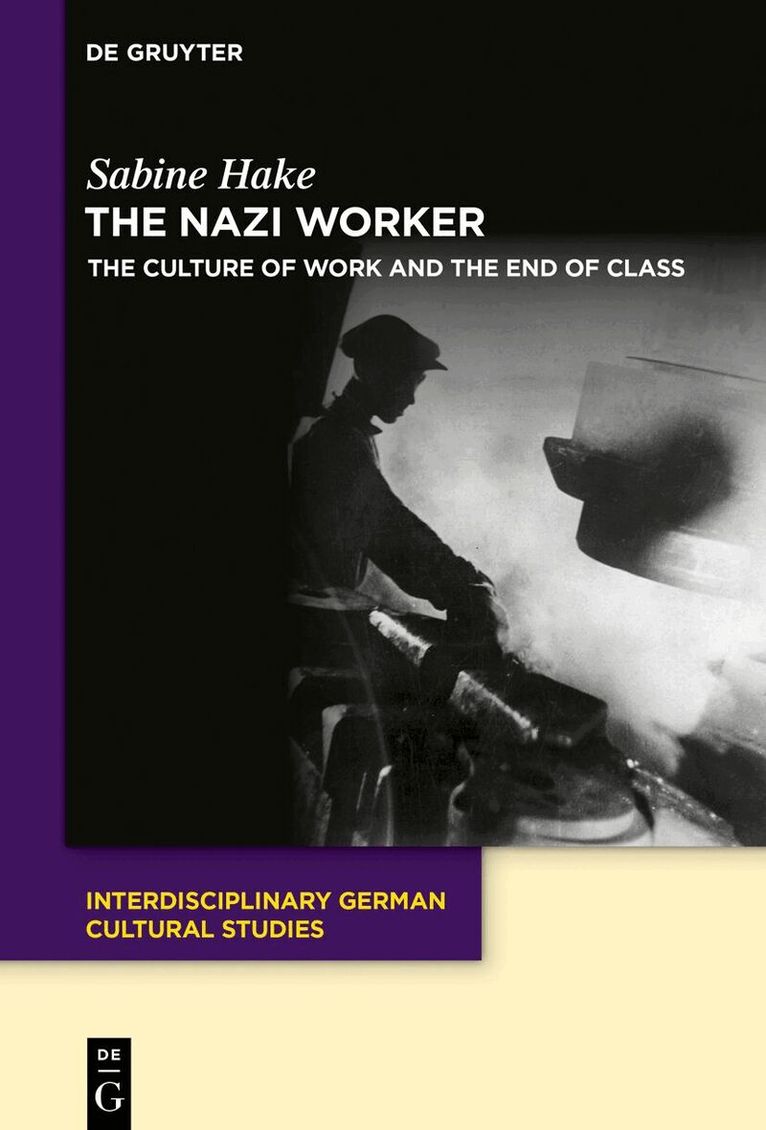
The Nazi Worker is the second in a three-volume project on the figure of the worker and, by extension, questions of class in twentieth-century German culture. It is based on extensive research in the archives and informed by recent debates on the politics of emotion, the end of class, and the future of work. In seven chapters, the book reconstructs the processes by which National Socialism appropriated aspects of working-class culture and socialist politics and translated class-based identifications into the racialized communitarianism of Volksgemeinschaft (folk community). Arbeitertum (workerdom), the operative term within these processes of appropriation, not only established a discursive framework for integrating proletarian legacies into the cult of the German worker. As a social imaginary, workerdom also modelled the work-related emotions (e.g., joy, pride) essential to the culture of work promoted by the German Labor Front. The contribution of images and stories in creating these new social imaginaries will be reconstructed through highly contextualized readings of the debates about workerdom, Nazi movement novels, worker’s poetry, workers’ sculpture, as well as industrial painting, photography, film, and design.
1 128 kr
Läs direkt efter köp
The Nazi Worker is the second in a three-volume project on the figure of the worker and, by extension, questions of class in twentieth-century German culture. It is based on extensive research in the archives and informed by recent debates on the politics of emotion, the end of class, and the future of work. In seven chapters, the book reconstructs the processes by which National Socialism appropriated aspects of working-class culture and socialist politics and translated class-based identifications into the racialized communitarianism of Volksgemeinschaft (folk community). Arbeitertum (workerdom), the operative term within these processes of appropriation, not only established a discursive framework for integrating proletarian legacies into the cult of the German worker. As a social imaginary, workerdom also modelled the work-related emotions (e.g., joy, pride) essential to the culture of work promoted by the German Labor Front. The contribution of images and stories in creating these new social imaginaries will be reconstructed through highly contextualized readings of the debates about workerdom, Nazi movement novels, worker’s poetry, workers’ sculpture, as well as industrial painting, photography, film, and design.