Sachiko Murata – författare
Visar alla böcker från författaren Sachiko Murata. Handla med fri frakt och snabb leverans.
5 produkter
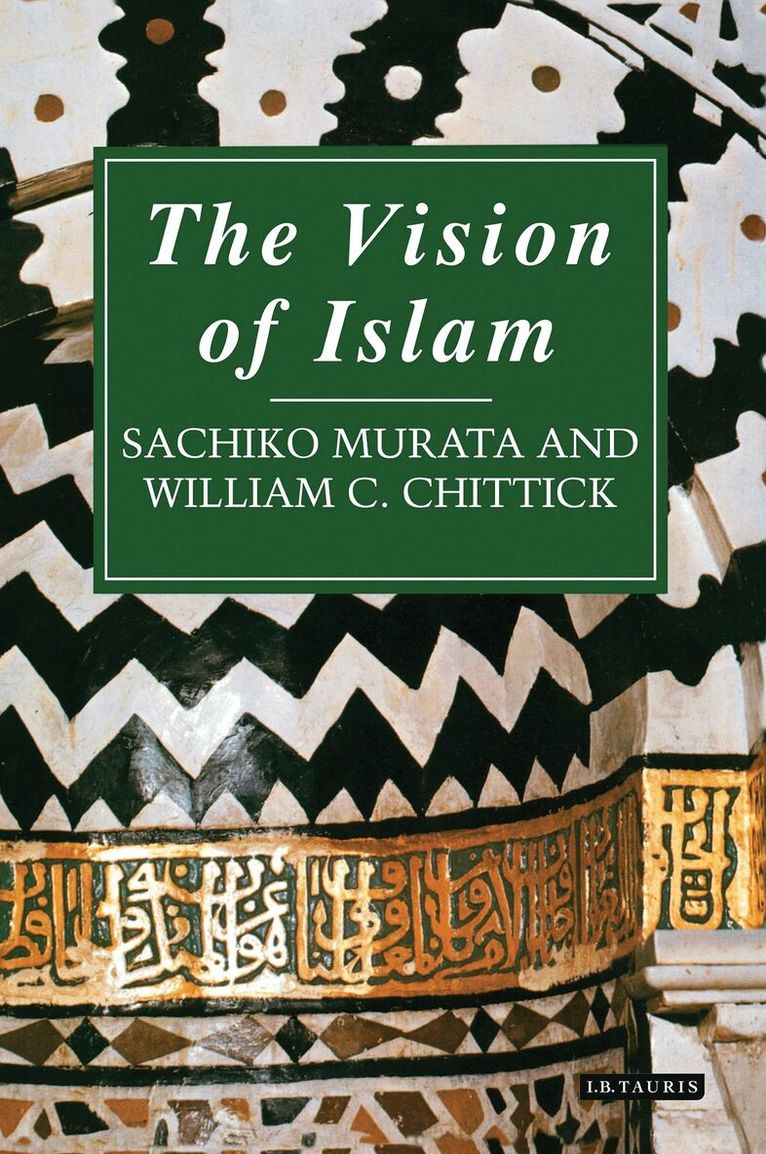
Vision of Islam
Av Sachiko Murata, William Chittick
Häftad, 2006
374 kr
Lägg i varukorg
This introduction to Islam for Western readers explores the fundamental religious beliefs held by Muslims for nearly 1400 years. It covers the four dimensions of Islam - practice, faith, spirituality and the Islamic view of history, as outlined in the Hadith of Gabriel. Interweaving teachings from …
Vision of Islam
Av Sachiko Murata, William Chittick
Häftad, 1995
347 kr
Lägg i varukorg
An exploration of the fundamental beliefs of Islam which covers the faith's four dimensions: practice, faith, spirituality and the Islamic view of history, as outlined in the Hadith of Gabriel. Interweaves teachings from the Quran, the sayings of the Prophet and the great authorities of Islam.
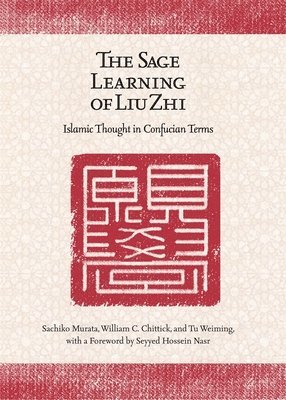
Sage Learning of Liu Zhi
Islamic Thought in Confucian Terms
Av Sachiko Murata, William C. Chittick m. fl.
Inbunden, 2009
520 kr
Lägg i varukorg
Liu Zhi (ca. 1670–1724) was one of the most important scholars of Islam in traditional China. His Tianfang xingli (Nature and Principle in Islam), the Chinese-language text translated here, focuses on the roots or principles of Islam. It was heavily influenced by several classic texts in the Sufi …
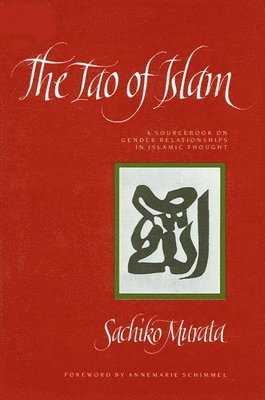
Tao of Islam
A Sourcebook on Gender Relationships in Islamic Thought
Häftad, 1992
5,0 utav 5 stjärnor. Totalt antal röster: (1)
435 kr
Lägg i varukorg
The Tao of Islam is a rich and diverse anthology of Islamic teachings on the nature of the relationships between God and the world, the world and the human being, and the human being and God. Focusing on gender symbolism, Sachiko Murata shows that Muslim authors frequently analyze the divine …
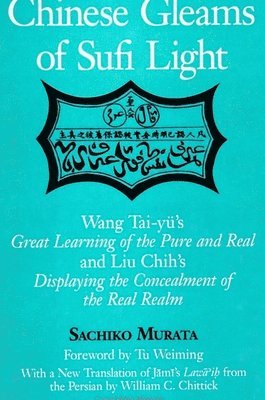
Chinese Gleams of Sufi Light
Wang Tai-yü's Great Learning of the Pure and Real and Liu Chih's Displaying the Concealment of the Real Realm. With a New Translation of Jāmī's Lawā'iḥ from the Persian by William C. Chittick
Häftad, 2000
5,0 utav 5 stjärnor. Totalt antal röster: (1)
463 kr
Lägg i varukorg
The first study in English of Islamic thought in China, this book shows that this tradition was informed by both Sufism and Neo-Confucianism; translations of two classic works are included.Chinese Gleams of Sufi Light investigates, for the first time in a Western language, the manner in which the …