Sadakat Kadri – författare
Visar alla böcker från författaren Sadakat Kadri. Handla med fri frakt och snabb leverans.
6 produkter
6 produkter
Häftad, Engelska, 2006
144 kr
Skickas inom 5-8 vardagar
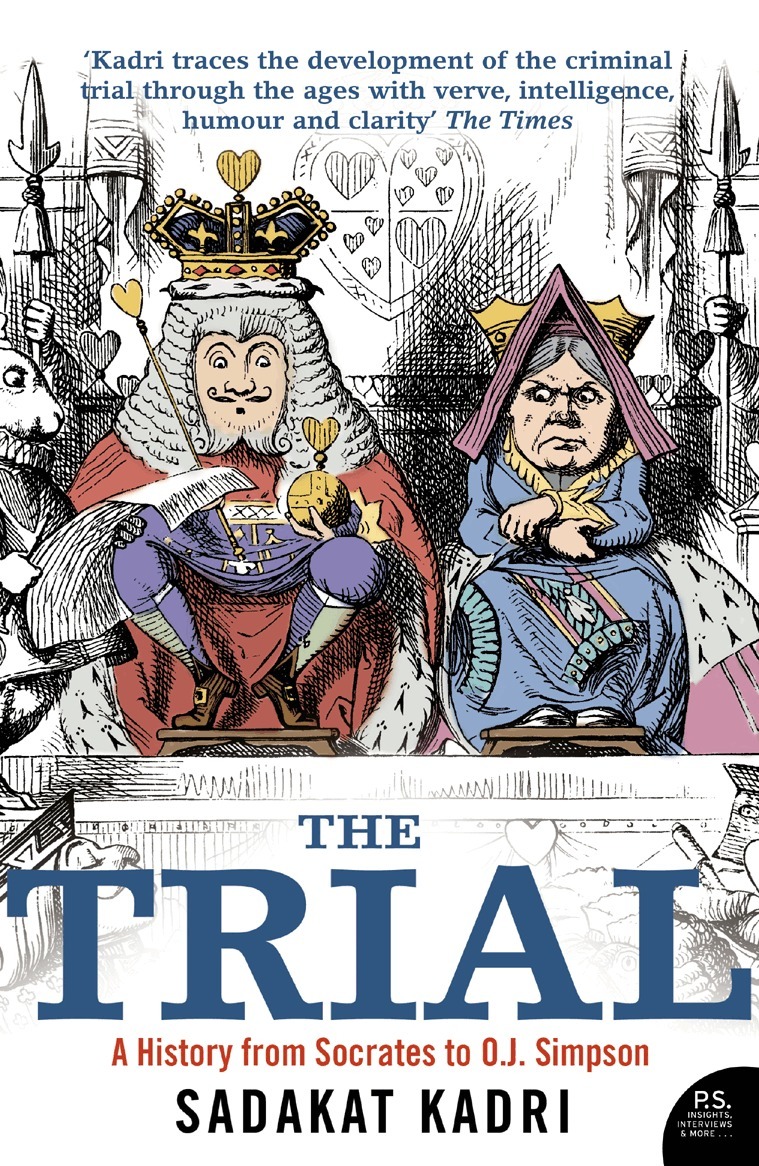
In an extraordinary history of the criminal trial, Sadakat Kadri shows with wit, legal insight and a travel writer’s eye for detail, how the irrationality of the past lives on in the legal systems of the present. A bold and brilliant debut from a prize-winning new writer.‘The Trial’ spans a vast distance in time, opening in the dread silence of the Egyptian Hall of the Dead and ending with the melodramas and hubbub of the 21st-century trial circus. Reconciliation and vengeance, secrecy and spectacle, superstition and reason all intertwine continually. The book crosses from the marbled courtrooms of Athens through the ordeal pits of Anglo-Saxon England, past the torture chambers of the Inquisition to the judicial theatres of 17th-century Salem, and from 1930s Moscow and post-war Nuremberg to the virtual courtrooms of modern Hollywood.Kadri shows throughout how the trial has always been concerned with doing more than guaranteeing fairness and holding human beings to account for their deliberate crimes. He recounts how insentient and irrational defendants from caterpillars to corpses were once summonsed to court, before being exiled for their failure to attend or sentenced to die again – and argues that the same urge to punish lives on in today's trials of children and the mentally ill. But although Justice’s sword has always been double-edged – as ready to destroy a community’s enemies as to defend its dreams of due process – the judicial contest also operates to enshrine some of the western world’s most cherished values. The show trials of Stalin's Soviet Union were shams, but Guantanamo Bay and Abu Ghraib are a reminder that a lack of a trial is equally unjust, and at a time when our constitutional landscape seems to be melting away, an appreciation of the criminal courtroom’s history is more necessary than ever. As the Labour government launches an almost annual attempt to truncate trial by jury, and as authorities on both sides of the Atlantic are indefinitely detaining people in the name of an endless war on terror, ‘The Trial’ could hardly be more timely.
E-bok
Engelska, 201197 kr
Läs direkt efter köp
In an extraordinary history of the criminal trial, Sadakat Kadri shows with wit, legal insight and a travel writer’s eye for detail, how the irrationality of the past lives on in the legal systems of the present. A bold and brilliant debut from a prize-winning writer.`The Trial’ spans a vast distance in time, opening in the dread silence of the Egyptian Hall of the Dead and ending with the melodramas and hubbub of the 21st-century trial circus. Reconciliation and vengeance, secrecy and spectacle, superstition and reason all intertwine continually. The book crosses from the marbled courtrooms of Athens through the ordeal pits of Anglo-Saxon England, past the torture chambers of the Inquisition to the judicial theatres of 17th-century Salem, and from 1930s Moscow and post-war Nuremberg to the virtual courtrooms of modern Hollywood.Kadri shows throughout how the trial has always been concerned with doing more than guaranteeing fairness and holding human beings to account for their deliberate crimes. He recounts how insentient and irrational defendants from caterpillars to corpses were once summonsed to court, before being exiled for their failure to attend or sentenced to die again – and argues that the same urge to punish lives on in today's trials of children and the mentally ill. But although Justice’s sword has always been double-edged – as ready to destroy a community’s enemies as to defend its dreams of due process – the judicial contest also operates to enshrine some of the western world’s most cherished values. The show trials of Stalin's Soviet Union were shams, but Guantanamo Bay and Abu Ghraib are a reminder that a lack of a trial is equally unjust, and at a time when our constitutional landscape seems to be melting away, an appreciation of the criminal courtroom’s history is more necessary than ever. As the Labour government launches an almost annual attempt to truncate trial by jury, and as authorities on both sides of the Atlantic are indefinitely detaining people in the name of an endless war on terror, `The Trial’ could hardly be more timely.Note that it has not been possible to include the same picture content that appeared in the original print version.
E-bok
Engelska, 2007214 kr
Läs direkt efter köp
For as long as accuser and accused have faced each other in public, criminal trials have been establishing far more than who did what to whom–and in this fascinating book, Sadakat Kadri surveys four thousand years of courtroom drama. A brilliantly engaging writer, Kadri journeys from the silence of ancient Egypt’s Hall of the Dead to the clamor of twenty-first-century Hollywood to show how emotion and fear have inspired Western notions of justice–and the extent to which they still riddle its trials today. He explains, for example, how the jury emerged in medieval England from trials by fire and water, in which validations of vengeance were presumed to be divinely supervised, and how delusions identical to those that once sent witches to the stake were revived as accusations of Satanic child abuse during the 1980s. Lifting the lid on a particularly bizarre niche of legal history, Kadri tells how European lawyers once prosecuted animals, objects, and corpses–and argues that the same instinctive urge to punish is still apparent when a child or mentally ill defendant is accused of sufficiently heinous crimes.But Kadri’s history is about aspiration as well as ignorance. He shows how principles such as the right to silence and the right to confront witnesses, hallmarks of due process guaranteed by the U.S. Constitution, were derived from the Bible by twelfth-century monks. He tells of show trials from Tudor England to Stalin’s Soviet Union, but contends that “no-trials,” in Guantánamo Bay and elsewhere, are just as repugnant to Western traditions of justice and fairness. With governments everywhere eroding legal protections in the name of an indefinite war on terror, Kadri’s analysis could hardly be timelier.At once encyclopedic and entertaining, comprehensive and colorful, The Trial rewards curiosity and an appreciation of the absurd but tackles as well questions that are profound. Who has the right to judge, and why? What did past civilizations hope to achieve through scapegoats and sacrifices–and to what extent are defendants still made to bear the sins of society at large? Kadri addresses such themes through scores of meticulously researched stories, all told with the verve and wit that won him one of Britain’s most prestigious travel-writing awards–and in doing so, he has created a masterpiece of popular history.From the Hardcover edition.
Häftad, Engelska, 2013
303 kr
Skickas inom 3-6 vardagar
E-bok
Engelska, 2012140 kr
Läs direkt efter köp
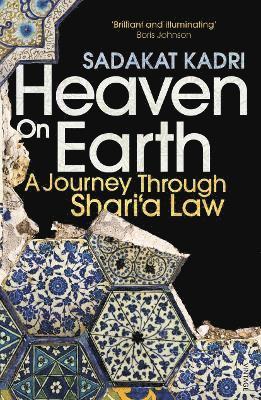
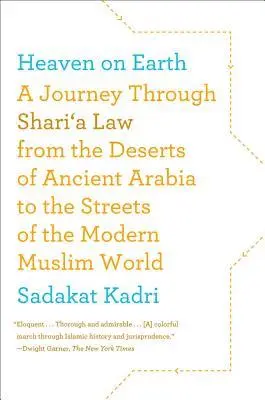
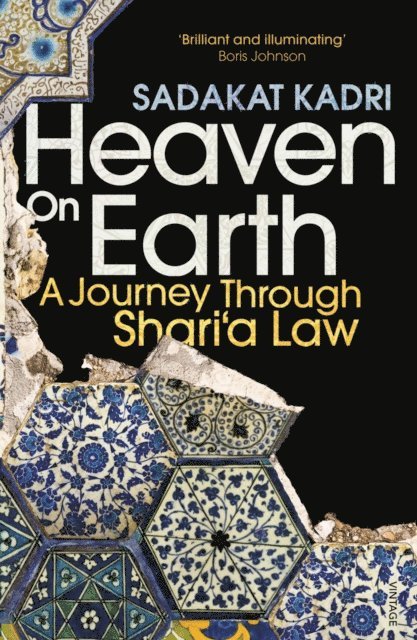
This book is important because it is:Unique. Heaven on Earth offers a critique of extremism that is human rights-based and entertaining – combining the comparative approach of Karen Armstrong and the immediacy of Ed Husain (The Islamist) with storytelling. Timely. At a time of veil bans, Qur’an burnings and English Defence League protests, Kadri voices a liberal view of Islamic history and shows Muslims working against repression. This book explains up-to-the-minute brutalities.Epic. Interviews, anecdotes, personal reflection and analysis are set against a narrative that sweeps from seventh-century Mecca to the war in Afghanistan. Civilisations are evoked via the vivid lives of caliphs, mystics, and travellers. Legal changes are described through the feuds, courtroom dramas, conquests and cataclysms that have left their mark on modern Islamic law. First-hand. On the road for five months, Kadri travelled through Iran just before the June 2009 election protests, and took part in a human rights conference there with ayatollahs and academics. Eye-opening. This book goes beyond the explosive headline issues (criminal justice, women, jihad, religious freedom) to reveal the stranger ones: genie exorcisms; the legal consequences of premature ejaculation; online fatwa advice; the sharia approach to Facebook and Qur’anic mobile phone ringtones, etc.Bold. Heaven on Earth primarily targets religious extremism, but also cuts anti-Muslim panic down to size.
E-bok
Tyska, 2014283 kr
Läs direkt efter köp
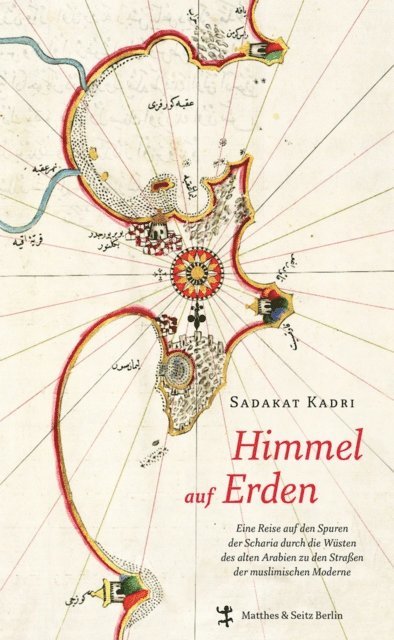
Ein Streifzug durch 1400 Jahre IslamMehr als eine Milliarde Menschen leben heute in Rechtssystemen, die sich auf die Scharia berufen. In den westlichen Medien zum Schreckgespenst und Nährboden für islamistischen Terror erklärt, breitet sich ihr Geltungsgebiet ungebrochen weiter aus. Doch was genau verbirgt sich hinter dem Angstbegriff "Scharia"? Der Rechtshistoriker und mit Preisen ausgezeichnete Reiseautor und Journalist Sadakat Kadri nimmt uns in diesem lebendig und spannend erzählten Buch mit auf eine Reise durch mehr als 1400 Jahre Geschichte, Hunderte von Überlieferungen und sieben islamische Länder. Mit dem besonderen Blick für die Absurditäten der Geschichte, einzelne Schicksale und große Zusammenhänge führt er in die Scharia ein, schildert ihre Ursprünge, Funktionsweisen und Veränderungen, erzählt dabei aber auch umfassend die Geschichte des Islam. Nicht zuletzt stellt Kadri die Frage nach Recht und Gerechtigkeit, die stets immer weniger von denen abhängen, die sie schreiben als von denen, die sie anwenden.