Sadruddin Benkadda - Böcker
Visar alla böcker från författaren Sadruddin Benkadda. Handla med fri frakt och snabb leverans.
5 produkter
5 produkter
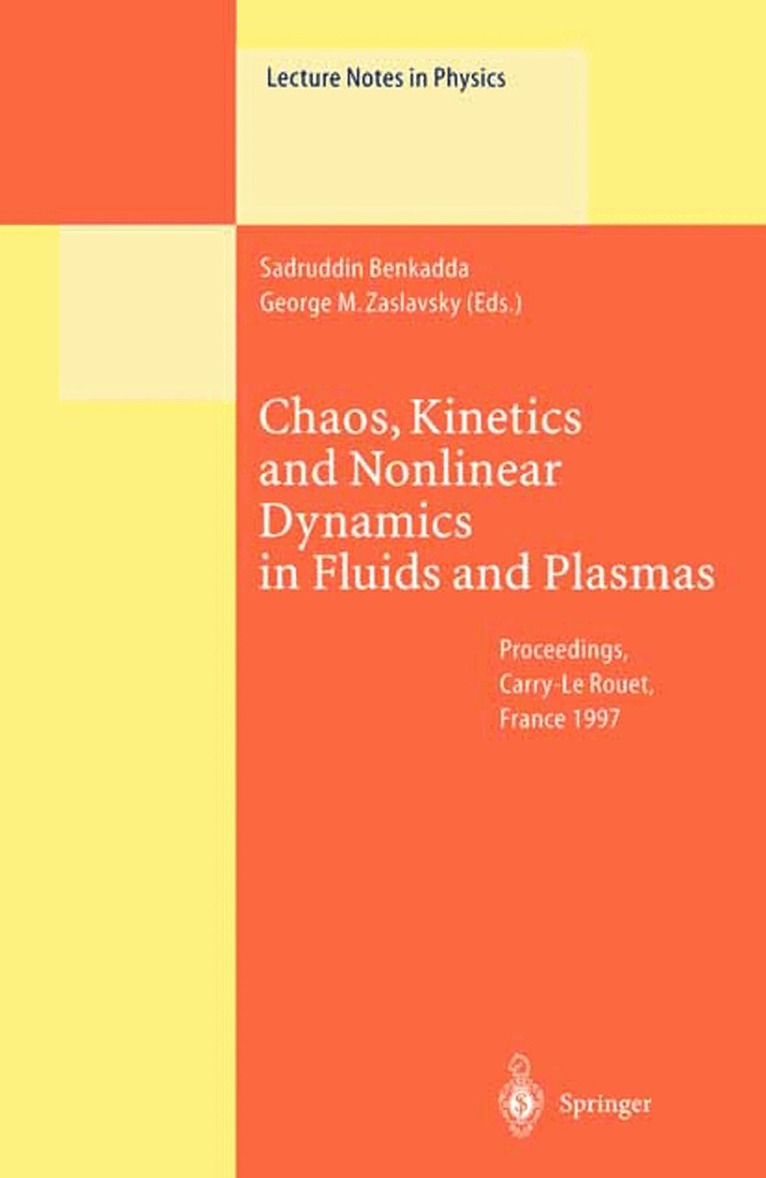
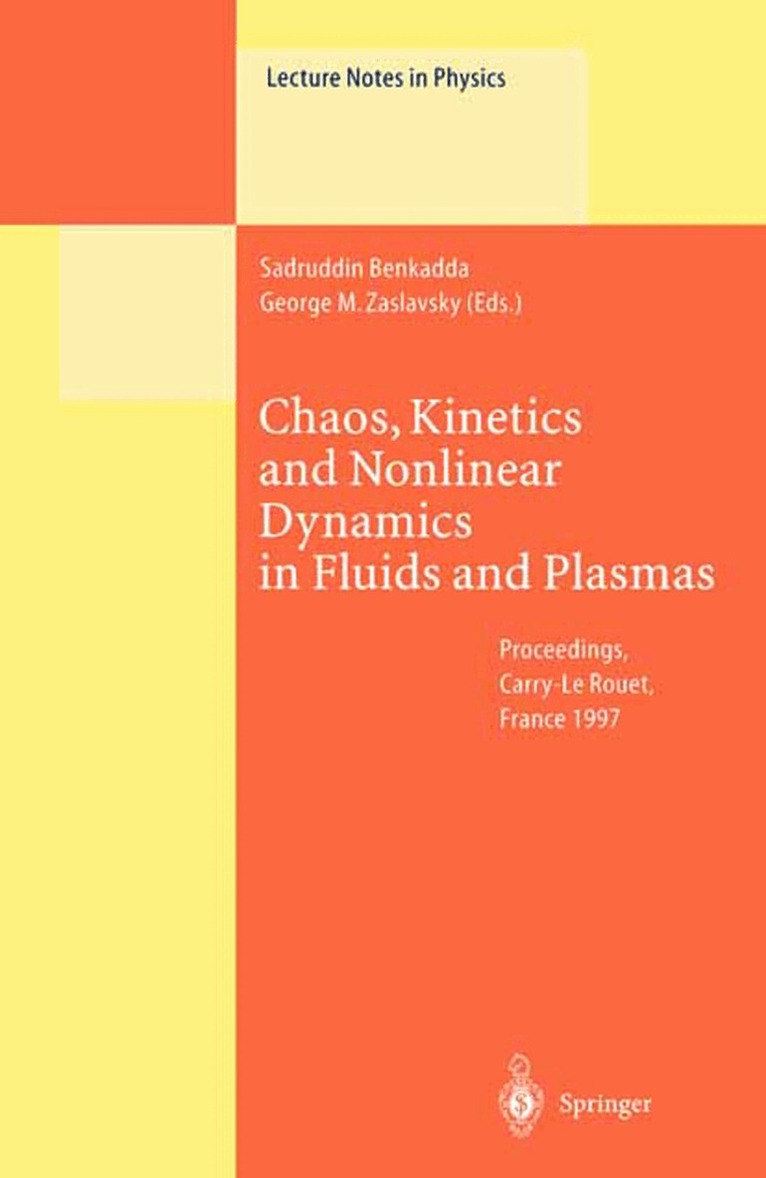
Chaos, Kinetics and Nonlinear Dynamics in Fluids and Plasmas
Proceedings of a Workshop Held in Carry-Le Rouet, France, 16–21 June 1997
Inbunden, Engelska, 1998
536 kr
Skickas inom 10-15 vardagar
Over the last few years it has become apparent that fluid turbulence shares many common features with plasma turbulence, such as coherent structures and self-organization phenomena, passive scalar transport and anomalous diffusion. This book gathers very high level, current papers on these subjects. It is intended for scientists and researchers, lecturers and graduate students because of the review style of the papers.
Chaos, Kinetics and Nonlinear Dynamics in Fluids and Plasmas
Proceedings of a Workshop Held in Carry-Le Rouet, France, 16–21 June 1997
Häftad, Engelska, 2013
536 kr
Skickas inom 10-15 vardagar
Over the last few years it has become apparent that fluid turbulence shares many common features with plasma turbulence, such as coherent structures and self-organization phenomena, passive scalar transport and anomalous diffusion. This book gathers very high level, current papers on these subjects. It is intended for scientists and researchers, lecturers and graduate students because of the review style of the papers.
2 341 kr
Tillfälligt slut
This workshop gathered experts in plasma physics, nonlinear phenomena and mathematics. It aimed at enabling theoreticians and experimentalists in plasma turbulence to relate electromagnetic fluctuations to transport processes. It may lead to the development of new diagnostics and new methods for signal processing.
Del 9 - Advanced Series in Nonlinear Dynamics
Transport, Chaos And Plasma Physics 2
Inbunden, Engelska, 1996
2 513 kr
Tillfälligt slut
Since the early developments of "nonlinear science", plasma physics played a major role in its evolution: solitons, hamiltonian chaos, distinction between absolute and convective instabilities, and dynamics of coherent structures in turbulence. Understanding transport in plasmas is important for fusion devices but also for fundamental astrophysics, for fluid mechanics, for theoretical chemistry and engineering, and plasma processing in engineering.This second workshop gathered experts in plasma physics, nonlinear phenomena and mathematics. It aimed at enabling theoreticians, numericians and experimentalists in plasma turbulence to relate electromagnetic fluctuations, modes of self-organisation and transport processes. It may lead to developing new diagnostics and new methods for signal processing.
1 378 kr
Skickas inom 5-8 vardagar
The promise of a vast and clean source of thermal power drove physics research for over fifty years and has finally come to collimation with the international consortium led by the European Union and Japan, with an agreement from seven countries to build a definitive test of fusion power in ITER. It happened because scientists since the Manhattan project have envisioned controlled nuclear fusion in obtaining energy with no carbon dioxide emissions and no toxic nuclear waste products.This large toroidal magnetic confinement ITER machine is described from confinement process to advanced physics of plasma-wall interactions, where pulses erupt from core plasma blistering the machine walls. Emissions from the walls reduce the core temperature which must remain ten times hotter than the 15 million degree core solar temperature to maintain ITER fusion power. The huge temperature gradient from core to wall that drives intense plasma turbulence is described in detail.Also explained are the methods designed to limit the growth of small magnetic islands, the growth of edge localized plasma plumes and the solid state physics limits of the stainless steel walls of the confinement vessel from the burning plasma. Designs of the wall coatings and the special "exhaust pipe" for spent hot plasma are provided in two chapters. And the issues associated with high-energy neutrons — about 10 times higher than in fission reactions — and how they are managed in ITER, are detailed.