Sahana Udupa - Böcker
Visar alla böcker från författaren Sahana Udupa. Handla med fri frakt och snabb leverans.
9 produkter
9 produkter
192 kr
Skickas inom 7-10 vardagar
The euphoria that has accompanied the birth and expansion of the internet as a "liberation technology" is increasingly eclipsed by an explosion of vitriolic language on a global scale.Digital Hate: The Global Conjuncture of Extreme Speech provides the first distinctly global and interdisciplinary perspective on hateful language online. Moving beyond Euro-American allegations of "fake news," contributors draw attention to local idioms and practices and explore the profound implications for how community is imagined, enacted, and brutally enforced around the world. With a cross-cultural framework nuanced by ethnography and field-based research, the volume investigates a wide range of cases—from anti-immigrant memes targeted at Bolivians in Chile to trolls serving the ruling AK Party in Turkey—to ask how the potential of extreme speech to talk back to authorities has come under attack by diverse forms of digital hate cultures.Offering a much-needed global perspective on the "dark side" of the internet, Digital Hate is a timely and critical look at the raging debates around online media's failed promises.
638 kr
Skickas inom 10-15 vardagar
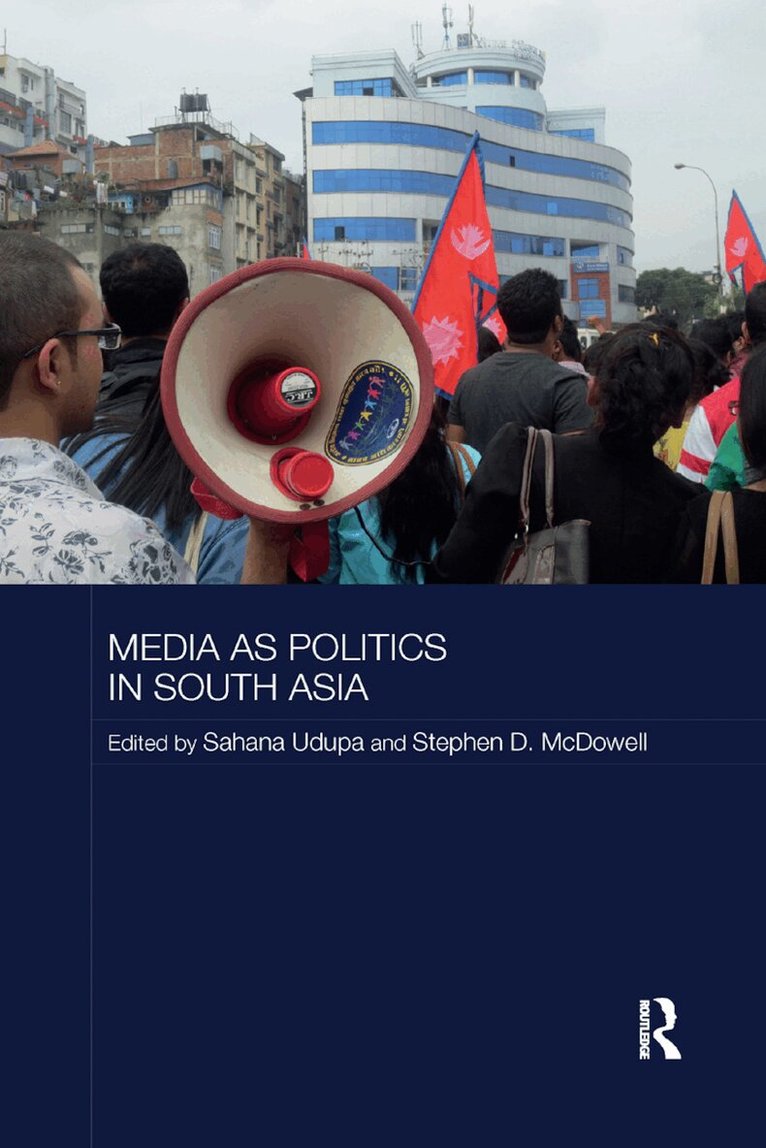
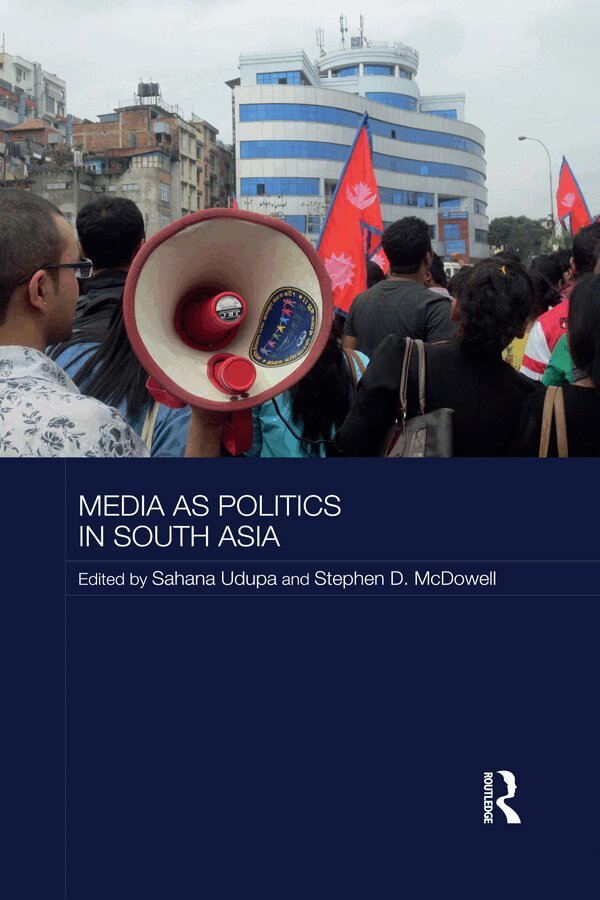
The dramatic expansion of the media and communications sector since the 1990s has brought South Asia on the global scene as a major center for media production and consumption. This book is the first overview of media expansion and its political ramifications in South Asia during these years of economic reforms. From the puzzling liberalization of media under military dictatorship in Pakistan to the brutal killings of journalists in Sri Lanka, and the growing influence of social media in riots and political protests in India, Nepal and Bangladesh, the chapters analyse some of the most important developments in the media fields of contemporary South Asia. Attentive to colonial histories as well as connections within and beyond South Asia in the age of globalization, the chapters combine theoretically grounded studies with original empirical research to unravel the dynamics of media as politics. The chapters are organized around the three frames of participation, control and friction. They bring to the fore the double edged nature of publicity and containment inherent in media, thereby advancing postcolonial perspectives on the massive media transformation underway in South Asia and the global South more broadly. For the first time bringing together the cultural, regulatory and social aspects of media expansion in a single perspective, this interdisciplinary book fills the need for overview and analytical studies on South Asian media.
1 245 kr
Skickas inom 7-10 vardagar
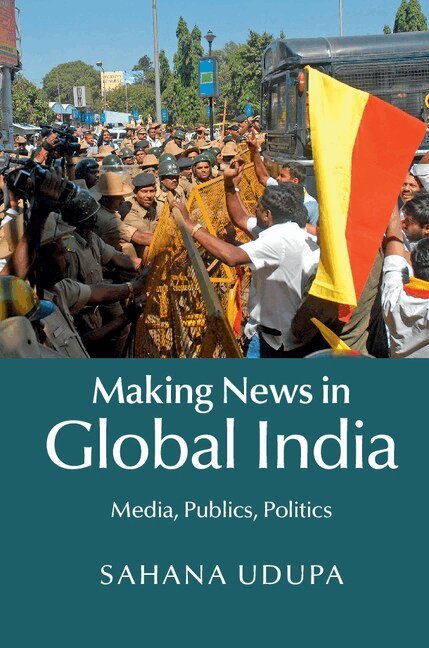
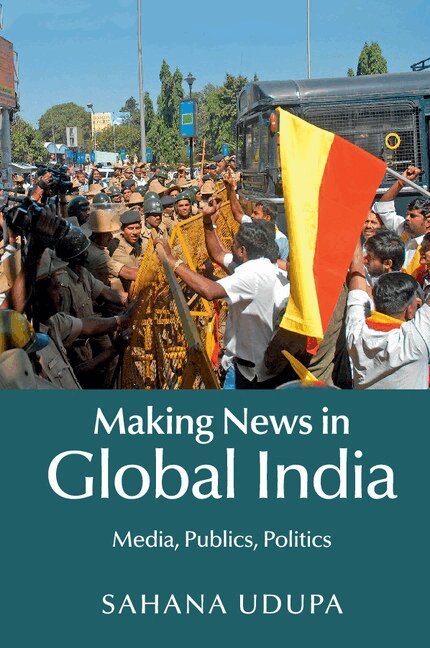
In the decades following India's opening to foreign capital, the city of Bangalore emerged, quite unexpectedly, as the outsourcing hub for the global technology industry and the aspirational global city of liberalizing India. Through an ethnography of English and Kannada print news media in Bangalore, this ambitious and innovative new study reveals how the expanding private news culture played a critical role in shaping urban transformation in India, when the allegedly public profession of journalism became both an object and agent of global urbanization. Building on extensive fieldwork carried out with the Times of India group, the largest media house in India, between 2008 and 2012, Sahana Udupa argues that the class project of the 'global city' news discourse came into striking conflict with the cultural logics of regional language and caste practices. Advancing new theoretical concepts, Making News in Global India takes arguments in media scholarship beyond the dichotomy of public good and private accumulation.
428 kr
Skickas inom 7-10 vardagar
In the decades following India's opening to foreign capital, the city of Bangalore emerged, quite unexpectedly, as the outsourcing hub for the global technology industry and the aspirational global city of liberalizing India. Through an ethnography of English and Kannada print news media in Bangalore, this ambitious and innovative new study reveals how the expanding private news culture played a critical role in shaping urban transformation in India, when the allegedly public profession of journalism became both an object and agent of global urbanization. Building on extensive fieldwork carried out with the Times of India group, the largest media house in India, between 2008 and 2012, Sahana Udupa argues that the class project of the 'global city' news discourse came into striking conflict with the cultural logics of regional language and caste practices. Advancing new theoretical concepts, Making News in Global India takes arguments in media scholarship beyond the dichotomy of public good and private accumulation.
2 098 kr
Skickas inom 10-15 vardagar
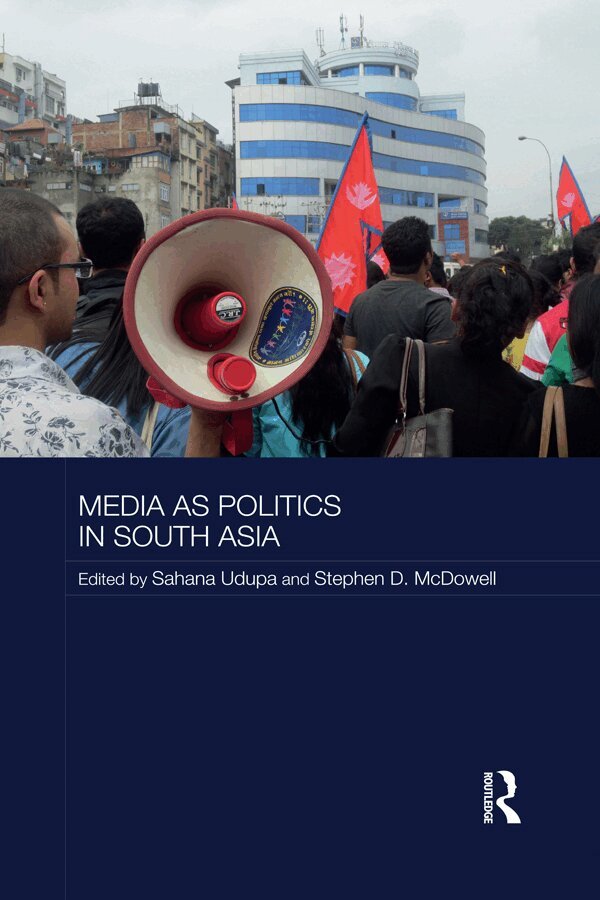
The dramatic expansion of the media and communications sector since the 1990s has brought South Asia on the global scene as a major center for media production and consumption. This book is the first overview of media expansion and its political ramifications in South Asia during these years of economic reforms. From the puzzling liberalization of media under military dictatorship in Pakistan to the brutal killings of journalists in Sri Lanka, and the growing influence of social media in riots and political protests in India, Nepal and Bangladesh, the chapters analyse some of the most important developments in the media fields of contemporary South Asia. Attentive to colonial histories as well as connections within and beyond South Asia in the age of globalization, the chapters combine theoretically grounded studies with original empirical research to unravel the dynamics of media as politics. The chapters are organized around the three frames of participation, control and friction. They bring to the fore the double edged nature of publicity and containment inherent in media, thereby advancing postcolonial perspectives on the massive media transformation underway in South Asia and the global South more broadly. For the first time bringing together the cultural, regulatory and social aspects of media expansion in a single perspective, this interdisciplinary book fills the need for overview and analytical studies on South Asian media.
Digital Unsettling
Decoloniality and Dispossession in the Age of Social Media
Inbunden, Engelska, 2023
959 kr
Skickas inom 10-15 vardagar
How digital networks are positioned within the enduring structures of colonialityThe revolutionary aspirations that fueled decolonization circulated on paper—as pamphlets, leaflets, handbills, and brochures. Now—as evidenced by movements from the Arab Spring to Black Lives Matter—revolutions, protests, and political dissidence are profoundly shaped by information circulating through digital networks. Digital Unsettling is a critical exploration of digitalization that puts contemporary "decolonizing" movements into conversation with theorizations of digital communication. Sahana Udupa and Ethiraj Gabriel Dattatreyan interrogate the forms, forces, and processes that have reinforced neocolonial relations within contemporary digital environments, at a time when digital networks—and the agendas and actions they proffer—have unsettled entrenched hierarchies in unforeseen ways. Digital Unsettling examines events—the toppling of statues in the UK, the proliferation of #BLM activism globally, the rise of Hindu nationalists in North America, the trolling of academics, among others—and how they circulated online and across national boundaries. In doing so, Udupa and Dattatreyan demonstrate how the internet has become the key site for an invigorated anticolonial internationalism, but has simultaneously augmented conditions of racial hierarchy within nations, in the international order, and in the liminal spaces that shape human migration and the lives of those that are on the move. Digital Unsettling establishes a critical framework for placing digitalization within the longue durée of coloniality, while also revealing the complex ways in which the internet is entwined with persistent global calls for decolonization.
324 kr
Skickas inom 7-10 vardagar
How digital networks are positioned within the enduring structures of colonialityThe revolutionary aspirations that fueled decolonization circulated on paper—as pamphlets, leaflets, handbills, and brochures. Now—as evidenced by movements from the Arab Spring to Black Lives Matter—revolutions, protests, and political dissidence are profoundly shaped by information circulating through digital networks. Digital Unsettling is a critical exploration of digitalization that puts contemporary "decolonizing" movements into conversation with theorizations of digital communication. Sahana Udupa and Ethiraj Gabriel Dattatreyan interrogate the forms, forces, and processes that have reinforced neocolonial relations within contemporary digital environments, at a time when digital networks—and the agendas and actions they proffer—have unsettled entrenched hierarchies in unforeseen ways. Digital Unsettling examines events—the toppling of statues in the UK, the proliferation of #BLM activism globally, the rise of Hindu nationalists in North America, the trolling of academics, among others—and how they circulated online and across national boundaries. In doing so, Udupa and Dattatreyan demonstrate how the internet has become the key site for an invigorated anticolonial internationalism, but has simultaneously augmented conditions of racial hierarchy within nations, in the international order, and in the liminal spaces that shape human migration and the lives of those that are on the move. Digital Unsettling establishes a critical framework for placing digitalization within the longue durée of coloniality, while also revealing the complex ways in which the internet is entwined with persistent global calls for decolonization.
959 kr
Skickas inom 10-15 vardagar
A global analysis of the vastly popular instant messaging serviceKnown by the popular nickname "ZapZap" in Brazil and synonymous with the Internet across Africa and South Asia, WhatsApp has emerged as a major means of communication for millions of people around the world. Unlike social media platforms such as Twitter and Facebook, WhatsApp offers a closed, encrypted communication architecture that ostensibly limits the reach and exposure of shared content. While recent scholarship has drawn attention to the risks it poses to democratic systems and marginalized communities, WhatsApp in the World is the first study to offer a systematic global view of an encrypted instant messaging service. Rather than taking the technical feature of "encryption" at face value, the volume proposes the conceptual framework of "lived encryptions" to highlight the different, often contradictory, formations around encrypted messaging, as evidenced in the way the promised confidentiality of encrypted messaging is upturned completely when surveilling states seize the phones from suspected dissenters to download the data, or how seemingly closed group communication is channelized to "broadcast" top-down political messages.WhatsApp in the World features field-based and multidisciplinary research, including contributions from practitioners at leading fact-checking institutions on how encrypted instant messaging services play a critical role in shaping extreme speech and disinformation ecosystems in different regions of the world. From election manipulations in South Africa and Nigeria to Russian diaspora activism in Europe to WhatsApp use as an everyday infrastructure in Brazilian favelas and among nationalists in India, this volume demonstrates how many core features of WhatsApp—from disappearing messages and quick forwards to group chats and calls—allow for the amplification of disinformation and extreme speech. Highlighting complex political dynamics on the ground, it also introduces the significant methodological challenges of studying encrypted messaging services, providing critical pathways to address issues around ethical and technical issues of data protection, privacy, and confidentiality.
322 kr
Skickas
A global analysis of the vastly popular instant messaging serviceKnown by the popular nickname "ZapZap" in Brazil and synonymous with the Internet across Africa and South Asia, WhatsApp has emerged as a major means of communication for millions of people around the world. Unlike social media platforms such as Twitter and Facebook, WhatsApp offers a closed, encrypted communication architecture that ostensibly limits the reach and exposure of shared content. While recent scholarship has drawn attention to the risks it poses to democratic systems and marginalized communities, WhatsApp in the World is the first study to offer a systematic global view of an encrypted instant messaging service. Rather than taking the technical feature of "encryption" at face value, the volume proposes the conceptual framework of "lived encryptions" to highlight the different, often contradictory, formations around encrypted messaging, as evidenced in the way the promised confidentiality of encrypted messaging is upturned completely when surveilling states seize the phones from suspected dissenters to download the data, or how seemingly closed group communication is channelized to "broadcast" top-down political messages.WhatsApp in the World features field-based and multidisciplinary research, including contributions from practitioners at leading fact-checking institutions on how encrypted instant messaging services play a critical role in shaping extreme speech and disinformation ecosystems in different regions of the world. From election manipulations in South Africa and Nigeria to Russian diaspora activism in Europe to WhatsApp use as an everyday infrastructure in Brazilian favelas and among nationalists in India, this volume demonstrates how many core features of WhatsApp—from disappearing messages and quick forwards to group chats and calls—allow for the amplification of disinformation and extreme speech. Highlighting complex political dynamics on the ground, it also introduces the significant methodological challenges of studying encrypted messaging services, providing critical pathways to address issues around ethical and technical issues of data protection, privacy, and confidentiality.