Salem Al-Naemi – författare
Visar alla böcker från författaren Salem Al-Naemi. Handla med fri frakt och snabb leverans.
3 produkter
3 produkter
Inbunden, Engelska, 2024
2 410 kr
Skickas inom 10-15 vardagar
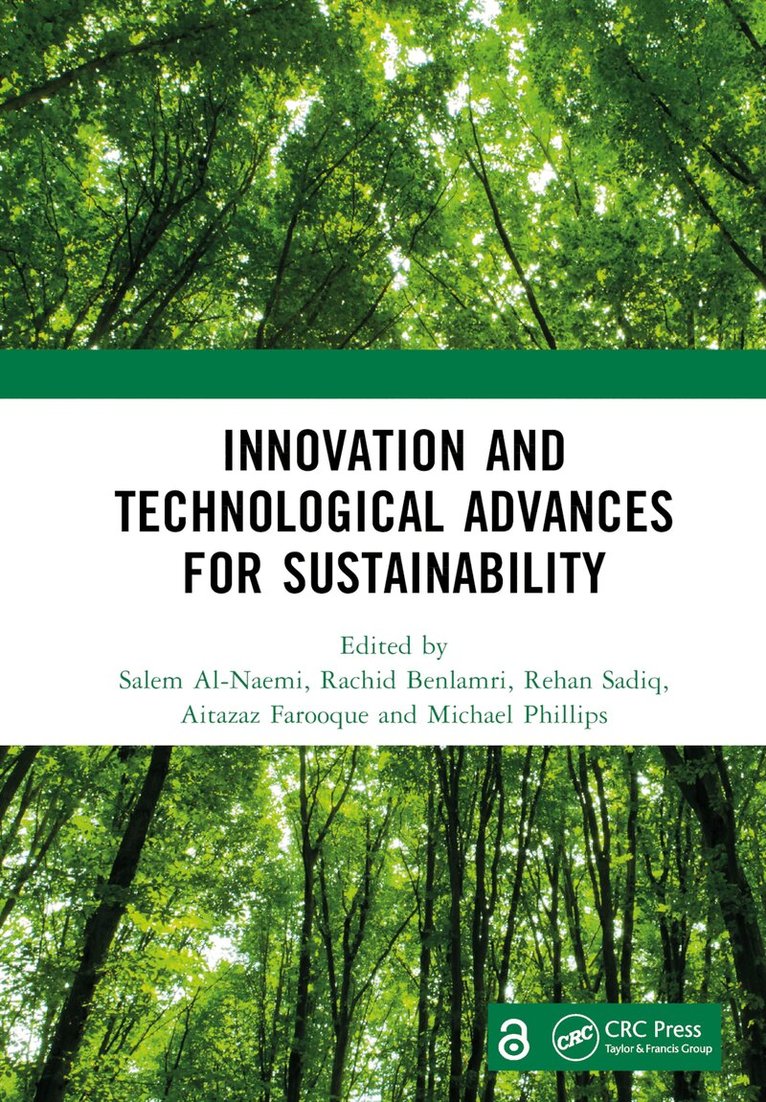
The proceedings publication of the International Conference on Innovation and Technological Advances for Sustainability (ITAS 2023) captures the essence of a dynamic international forum dedicated to advancing the United Nations Sustainable Development Goals (UN-SDGs). It serves as a comprehensive repository of cutting-edge research, innovative strategies, and transformative tools discussed by a diverse community of participants, including researchers, academics, students, policymakers, industry leaders, and government officials. Encompassing local, regional, and international perspectives, the proceedings delve into critical global issues such as food security, environmental preservation, energy sustainability, economic resilience, and the role of digital technologies in fostering sustainable development. This book emphasizes showcasing national and international accomplishments, fostering global collaborations, exploring future challenges and opportunities, introducing state-of-the-art technologies, and providing policy recommendations for building a sustainable society. It acts as a bridge between research and practice, promoting the dissemination of knowledge that will contribute to the achievement of UN-SDGs.
2 929 kr
Skickas inom 10-15 vardagar
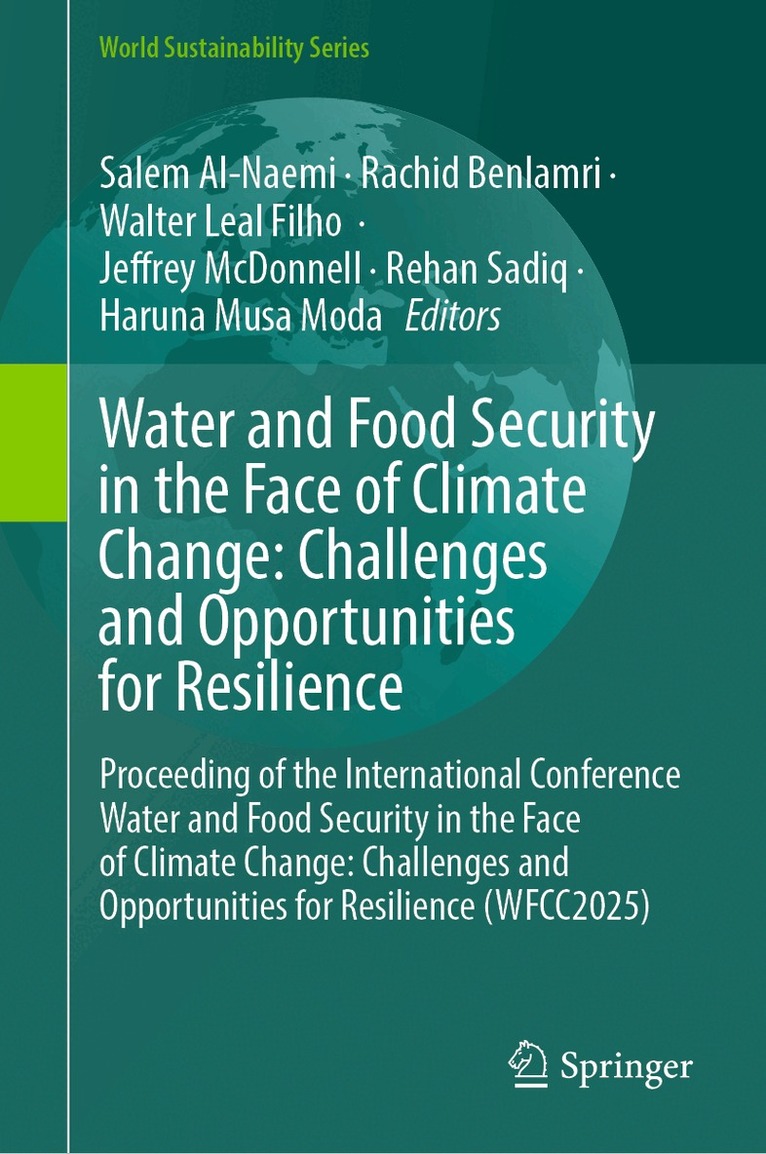
This book addresses critical issues that align seamlessly with sustainability strategies. Extreme weather events, including increasingly frequent and severe droughts and floods, are now a global reality. Climate change poses a significant threat to both water and food security, driven by the rising temperatures that intensify the demand for water in crop cultivation. This crisis is further exacerbated by declining river runoff, reduced aquifer recharge, diminished inflows, heightened salinity, and rising sea levels, all of which present formidable challenges to water management. Consequently, the livelihoods of rural communities and the food security of urban populations are in imminent danger due to water-related impacts stemming primarily from climate variability. The implementation of sustainable adaptation measures to address climate variability and promote enhanced land and water management practices has vast potential for fortifying resilience in both water and food security challenges. Therefore, the pivotal step in crafting policies to tackle these challenges lies in comprehensively assessing the impact of climate change on water resources and agricultural systems. Closely aligning these policies will not only enhance the resilience of agricultural systems against future impacts but also contribute significantly to the meeting of the United Nations Sustainable Development Goals (SDGs).To empower water resource management services for the future demands, it is imperative that we re-evaluate existing approaches to managing, mobilizing, and safeguarding this finite resource in the arid and semi-arid regions. This calls for the introduction of innovative technologies that facilitate integrated resource management and prevention. It is a premier platform for academics, researchers, students, policymakers, and stakeholders from government, industry, and society to explore pioneering ideas, techniques, and tools aimed at addressing the global impacts of climate change while concurrently reinforcing resilience in water and food security.
3 157 kr
Läs direkt efter köp
This book addresses critical issues that align seamlessly with sustainability strategies. Extreme weather events, including increasingly frequent and severe droughts and floods, are now a global reality. Climate change poses a significant threat to both water and food security, driven by the rising temperatures that intensify the demand for water in crop cultivation. This crisis is further exacerbated by declining river runoff, reduced aquifer recharge, diminished inflows, heightened salinity, and rising sea levels, all of which present formidable challenges to water management. Consequently, the livelihoods of rural communities and the food security of urban populations are in imminent danger due to water-related impacts stemming primarily from climate variability. The implementation of sustainable adaptation measures to address climate variability and promote enhanced land and water management practices has vast potential for fortifying resilience in both water and food security challenges. Therefore, the pivotal step in crafting policies to tackle these challenges lies in comprehensively assessing the impact of climate change on water resources and agricultural systems. Closely aligning these policies will not only enhance the resilience of agricultural systems against future impacts but also contribute significantly to the meeting of the United Nations Sustainable Development Goals (SDGs).To empower water resource management services for the future demands, it is imperative that we re-evaluate existing approaches to managing, mobilizing, and safeguarding this finite resource in the arid and semi-arid regions. This calls for the introduction of innovative technologies that facilitate integrated resource management and prevention. It is a premier platform for academics, researchers, students, policymakers, and stakeholders from government, industry, and society to explore pioneering ideas, techniques, and tools aimed at addressing the global impacts of climate change while concurrently reinforcing resilience in water and food security.