Sally Fincher – författare
Visar alla böcker från författaren Sally Fincher. Handla med fri frakt och snabb leverans.
11 produkter
Studying Programming
E-bok, 2006
500 kr
Lägg i varukorg
We''ve written this book to support students in studying programming. It is not a text to teach any particular programming language, but to be used alongside such a book, or in conjunction with a taught course. In Studying Programming we concentrate on what other books consider too ''obvious'' or …
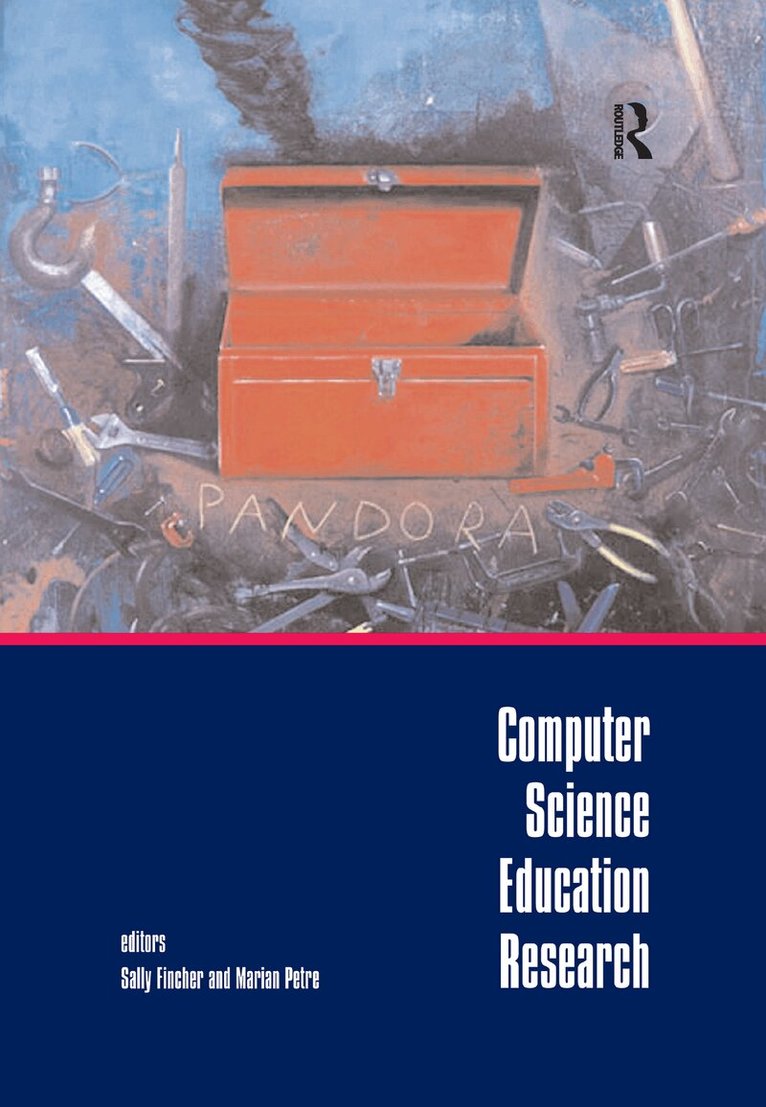
Computer Science Education Research
Av Sally Fincher, Marian Petre
Häftad, 2020
785 kr
Lägg i varukorg
This book provides an overview of how to approach computer science education research from a pragmatic perspective. It represents the diversity of traditions and approaches inherent in this interdisciplinary area, while also providing a structure within which to make sense of that diversity. It …
Computer Science Education Research
Av Marian Petre, Sally Fincher
E-bok, 2005
926 kr
Lägg i varukorg
This book provides an overview of how to approach computer science education research from a pragmatic perspective. It represents the diversity of traditions and approaches inherent in this interdisciplinary area, while also providing a structure within which to make sense of that diversity. It …
Studying Programming
E-bok, 2006
484 kr
Lägg i varukorg
We''ve written this book to support students in studying programming. It is not a text to teach any particular programming language, but to be used alongside such a book, or in conjunction with a taught course. In Studying Programming we concentrate on what other books consider too ''obvious'' or …
Studying Programming
Häftad, 2006
461 kr
Lägg i varukorg
We've written this book to support students in studying programming. It is not a text to teach any particular programming language, but to be used alongside such a book, or in conjunction with a taught course. In Studying Programming we concentrate on what other books consider too 'obvious' or too …
Computer Science Project Work
Principles and Pragmatics
Av Martyn Clark, Marian Petre m. fl.
E-bok, 2013
1502 kr
Lägg i varukorg
Computer Science Project Work: Principles and Pragmatics is essential reading for lecturers and course designers who want to improve their handling of project work on specific courses, and deans and department heads who are interested in strategic issues and comparative practices. It explores …
Computer Science Education Research
Av Marian Petre, Sally Fincher
E-bok, 2005
906 kr
Lägg i varukorg
This book provides an overview of how to approach computer science education research from a pragmatic perspective. It represents the diversity of traditions and approaches inherent in this interdisciplinary area, while also providing a structure within which to make sense of that diversity. It …
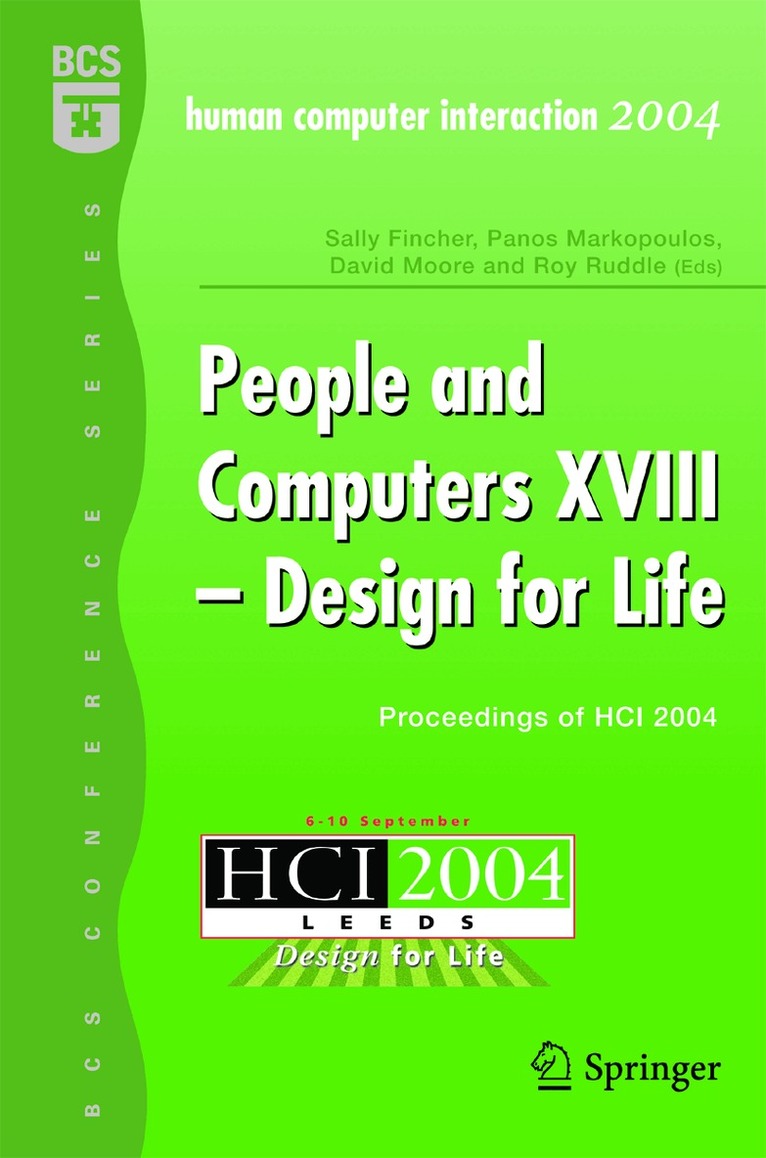
People and Computers XVIII - Design for Life
Proceedings of HCI 2004
Av Roy Ruddle, David Moore m. fl.
E-bok, 2007
3013 kr
Lägg i varukorg
The eighteenth annual British HCI Conference chose as its theme Design for Life. ''Life'' has many facets, from work (of course, or should we say inevitably!) to travel, fun and other forms of leisure. We selected 23 full papers out of 63 submitted, which covered our interaction with computer …
Computer Science Project Work
Principles and Pragmatics
Av Sally Fincher, Marian Petre m. fl.
Häftad, 2011
1133 kr
Lägg i varukorg
Computer Science Project Work: Principles and Pragmatics is essential reading for lecturers and course designers who want to improve their handling of project work on specific courses, and deans and department heads who are interested in strategic issues and comparative practices. It explores …
Computer Science Project Work
Principles and Pragmatics
Av Sally Fincher, Marian Petre m. fl.
Inbunden, 2001
1133 kr
Lägg i varukorg
Computer Science Project Work: Principles and Pragmatics is essential reading for lecturers and course designers who want to improve their handling of project work on specific courses, and deans and department heads who are interested in strategic issues and comparative practices. It explores …
People and Computers XVIII - Design for Life
Proceedings of HCI 2004
Av Sally Fincher, Panos Markpoulos m. fl.
Häftad, 2004
2263 kr
Lägg i varukorg
The eighteenth annual British HCI Conference chose as its theme Design for Life. 'Life' has many facets, from work (of course, or should we say inevitably!) to travel, fun and other forms of leisure. We selected 23 full papers out of 63 submitted, which covered our interaction with computer systems …