
Sally Francis – författare
Visar alla böcker från författaren . Handla med fri frakt och snabb leverans.
6 produkter
6 produkter

E-bok
Engelska165 kr
Läs direkt efter köp
Häftad, Engelska
480 kr
Skickas inom 3-6 vardagar
Häftad, Engelska, 2023
286 kr
Skickas inom 5-8 vardagar
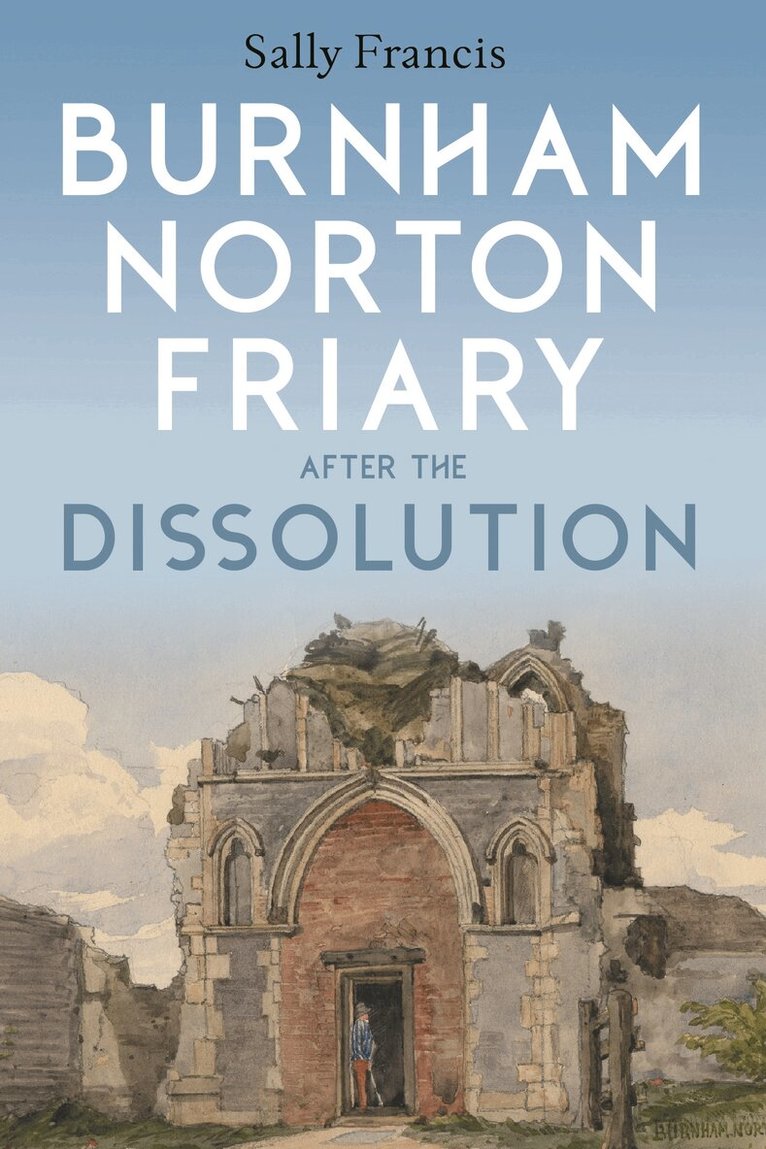
The story of the fate of a small Norfolk priory after its dissolution by Henry VIII in 1538 shows how both its medieval and modern history can be recovered by archival and physical research.Burnham Norton Friary, one of the first Carmelite houses founded in England (1242-47), was dissolved in 1538. Its remains comprise the restored gatehouse, west gable of the church rebuilt as a barn, Friary Cottage and an open space which was once the precinct. The post-Dissolution history of monastic sites has generally not been well studied. At Norton, nothing was known of its owners between 1561 and 1914, what relationships, if any, they had, or how they used the site. The fate of the Friary buildings was poorly understood and details of the gatehouse restoration unknown. In this pioneering study, Sally Francis uses both modern archival research and a survey of local houses to recover the history and something of the architecture of the friary. Between 1538 and 1848 the church became a barn and the rest of the site was used as a farmstead. In 1848, its owner restored the gatehouse (1848/9), saving it from dereliction, but cleared away the farm buildings to turn the site into an 'Antiquarian relic.' Studying the post-Dissolution history of the site has been a valuable exercise. It not only allows that phase of the site to be understood, it also illuminates aspects of the site's earlier history, which, given the loss of the Friary's own archives, could not otherwise be studied.
Häftad, Engelska, 2023
585 kr
Skickas inom 5-8 vardagar
E-bok
Engelska, 202363 kr
Läs direkt efter köp
This books’ title reflects the belief that the Earth and all her inhabitants are Ascending.It documents the spiritual evolution of human kind from the earliest ancestors of differing cultures around the world, the legacy they have left us from their own understanding of nature and what they learned in order to survive on Earth.Our ancestors, from thousands of years ago not only had an intense interest in their environment and nature, but also in the night sky and Astrology. The book shares insights about how this helped them to predict the Ascension of Earth, the Dawning of the Age of Aquarius and the Spiritual Awakening this would bring.The chapters of this book also help us to explore the metaphysics of illness, our personal development through understanding ourselves and our ability to connect with the Universal Principals and use them in order to co-create the life we desire. If you have ever asked questions such as •Who am I and Why am I here? •What is my life path?•Do I understand unconditional love of self?•Why do I look to others for approval? •why I am my own worst critic?Then this book is for you.
Inbunden, Engelska, 2020
3 109 kr
Skickas inom 5-8 vardagar
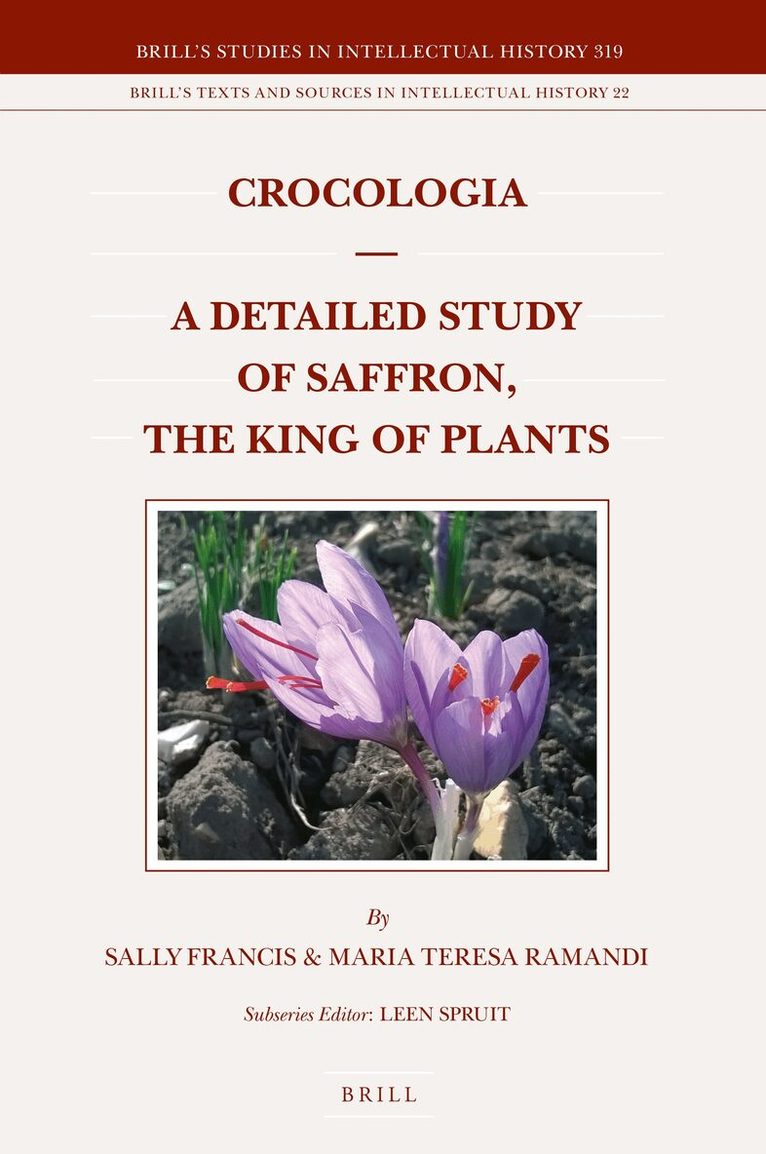
In Crocologia – A Detailed Study of Saffron, the King of Plants, Sally Francis and Maria Teresa Ramandi present the first translation into English of Johann Ferdinand Hertodt’s seminal 1671 work Crocologia, a book uniquely devoted to the medical uses of saffron. Hertodt discusses saffron’s origin, related species, cultivation, selection, properties and lists all its pharmaceutical preparations. Hertodt then journeys through diseases of the human body, presenting saffron-containing formulae for their treatment. The two authors complement the translation with a biography of Hertodt, and detail saffron’s botany, current production, uses, its changing reputation as a drug, and review findings from new medical research. There is a full Glossary, and translation of a contemporary animadversion of Crocologia by Hertodt’s rival, Wenzel Maximilian Ardensbach.