
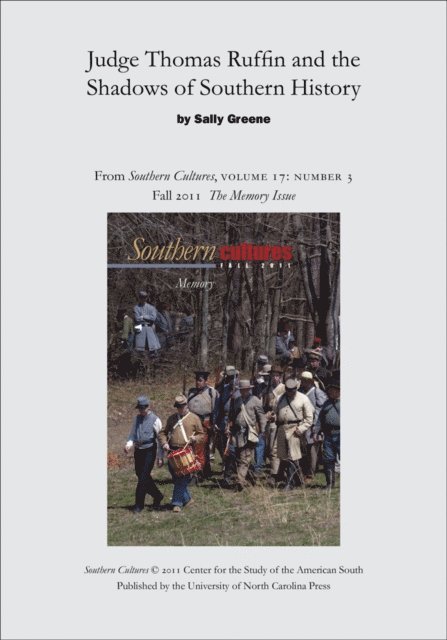
Judge Thomas Ruffin and the Shadows of Southern Historyby Sally GreeneNorth Carolina''s State Capitol still houses a statue to one of southern history''s most notorious pro-slave-owner judges. Why?"Ruffin was ideologically sympathetic to the Confederate cause and remained so to his death. ''The power of the master must be absolute,'' Ruffin wrote in State v. Mann (1829), ''to render the submission of the slave perfect.'' State v. Mann became the most notorious opinion in the entire body of slavery law."
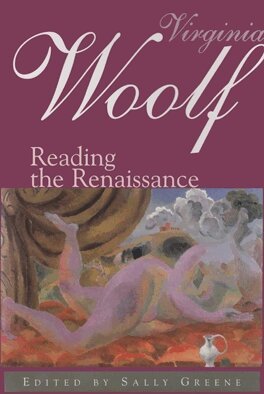
The story of "Shakespeare's sister" that Virginia Woolf tells in A Room of One's Own has sparked interest in the question of the place of the woman writer in the Renaissance. By now, the process of recovering lost voices of early modern women is well under way. But Woolf's engagement with the Renaissance went deeper than that question indicates, as important as it was. Her writing reveals a lifelong conversation with the literature of the sixteenth and seventeenth centuries, from the travel narratives of Hakluyt to the works of Donne, Milton, Montaigne, and of course Shakespeare.The first collection of essays to explore Woolf's Renaissance, Virginia Woolf: Reading the Renaissance reflects an important interdisciplinary development: contributors include Renaissance as well as twentieth–century specialists. Part of a larger movement to explore the intellectual currents shaping our literary and cultural inheritance, these essays speak to a community of readers that includes, in addition to Woolf and Renaissance scholars, anyone interested in the deep roots of modernism, women's studies, or literary history itself.
Judge Thomas Ruffin and the Shadows of Southern Historyby Sally GreeneNorth Carolina''s State Capitol still houses a statue to one of southern history''s most notorious pro-slave-owner judges. Why?"Ruffin was ideologically sympathetic to the Confederate cause and remained so to his death. ''The power of the master must be absolute,'' Ruffin wrote in State v. Mann (1829), ''to render the submission of the slave perfect.'' State v. Mann became the most notorious opinion in the entire body of slavery law."
The story of "Shakespeare's sister" that Virginia Woolf tells in A Room of One's Own has sparked interest in the question of the place of the woman writer in the Renaissance. By now, the process of recovering lost voices of early modern women is well under way. But Woolf's engagement with the Renaissance went deeper than that question indicates, as important as it was. Her writing reveals a lifelong conversation with the literature of the sixteenth and seventeenth centuries, from the travel narratives of Hakluyt to the works of Donne, Milton, Montaigne, and of course Shakespeare.The first collection of essays to explore Woolf's Renaissance, Virginia Woolf: Reading the Renaissance reflects an important interdisciplinary development: contributors include Renaissance as well as twentieth–century specialists. Part of a larger movement to explore the intellectual currents shaping our literary and cultural inheritance, these essays speak to a community of readers that includes, in addition to Woolf and Renaissance scholars, anyone interested in the deep roots of modernism, women's studies, or literary history itself.