Sally P. Mendoza – författare
Visar alla böcker från författaren Sally P. Mendoza. Handla med fri frakt och snabb leverans.
3 produkter
3 produkter
Inbunden, Engelska, 1984
682 kr
Skickas inom 10-15 vardagar
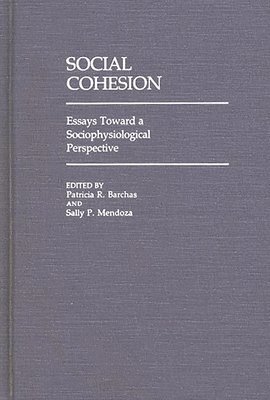
Social cohesion is the outcome of the social and physiological processes through which individuals become linked into social systems. These linkages, as they occur in social relationships and are found in small group interactions, are the common focus of this collection of essays. The volume begins with an exploration of social relationships as regulators of physiology and behavior. Other essays investigate issues such as dominance, ideological constraints on evolutionary theory, social cohesion in dyadic groups, social relationships as determinants of emotion and physiology, biosociology and stratification in the works of Emile Durkheim, and the phenomenon of hemispheric lateralization of function in relation to social comparison processes and social roles.

Inbunden, Engelska, 1993
1 042 kr
Tillfälligt slut
This book examines conflict as a normal and recurrent feature of primate social life, emphasizing that the study of aggression and social conflict is important to understanding the basic processes that contribute to social order. The authors go well beyond the usual view which tends to equate social conflict with fights over food, mates, or social supremacy, and analyze the diverse manifestations and significance of conflict in a variety of case studies. Contributors are scientists with field and laboratory experience in anthropology, behavioral endocrinology, ethology, and psychology. Utilizing the growing body of research on life-span development in primatology, the authors offer more extensive analyses of the complexity of primate social relationships.
Häftad, Engelska, 1993
410 kr
Tillfälligt slut
This book examines conflict as a normal and recurrent feature of primate social life, emphasizing that the study of aggression and social conflict is important to understanding the basic processes that contribute to social order. The authors go well beyond the usual view which tends to equate social conflict with fights over food, mates, or social supremacy, and analyze the diverse manifestations and significance of conflict in a variety of case studies. Contributors are scientists with field and laboratory experience in anthropology, behavioral endocrinology, ethology, and psychology. Utilizing the growing body of research on life-span development in primatology, the authors offer more extensive analyses of the complexity of primate social relationships.