Sally W. Stoecker – författare
Visar alla böcker från författaren . Handla med fri frakt och snabb leverans.
5 produkter
5 produkter
Inbunden, Engelska, 2005
701 kr
Skickas inom 10-15 vardagar
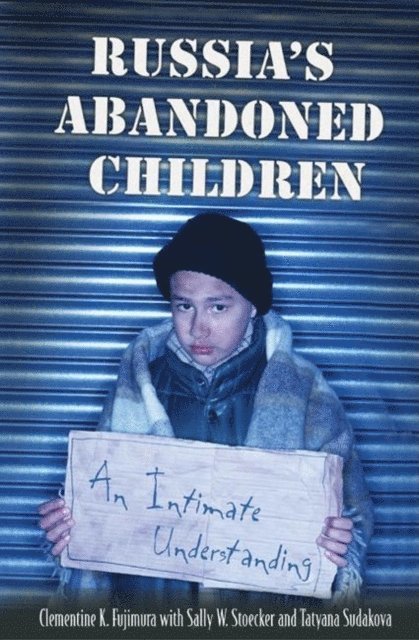
Fujimura takes us across history and into Russian society, its orphanages and shelters, and along the streets of the nation to see how abandoned children are stigmatized and shunned. Readers come to understand how and why these children, left orphans by death or by choice, form their own culture to find power and to survive. This pioneering work on child abandonment looks at Russian society from a new angle: from the perspectives of abandoned youngsters and their caretakers. Based on direct observation of and interviews with abandoned children, this work shows why any effort to rescue these children calls for a deep understanding of Russian culture, and why any effort to address abandonment in Russia calls for a joint effort between psychologists, social workers, and the children themselves.Researcher Fujimura takes us across history, into Russian society, its orphanages and shelters, and along the streets of the nation to see how abandoned children are stigmatized and shunned. We also come to understand how and why these children, left orphans by death or by choice, form their own culture to find power and to survive. This pioneering work on child abandonment looks at Russian society from a new angle: from the perspectives of abandoned youngsters and their caretakers. Based on direct observation of and interviews with abandoned children, this work shows why any effort to rescue these children calls for a deep understanding of Russian culture, and why any effort to affect abandonment in Russia calls for a joint effort between psychologists, social workers, and the children themselves.
E-bok
PDF, Engelska, 2005757 kr
Läs direkt efter köp
Fujimura takes us across history and into Russian society, its orphanages and shelters, and along the streets of the nation to see how abandoned children are stigmatized and shunned. Readers come to understand how and why these children, left orphans by death or by choice, form their own culture to find power and to survive. This pioneering work on child abandonment looks at Russian society from a new angle: from the perspectives of abandoned youngsters and their caretakers. Based on direct observation of and interviews with abandoned children, this work shows why any effort to rescue these children calls for a deep understanding of Russian culture, and why any effort to address abandonment in Russia calls for a joint effort between psychologists, social workers, and the children themselves.Researcher Fujimura takes us across history, into Russian society, its orphanages and shelters, and along the streets of the nation to see how abandoned children are stigmatized and shunned. We also come to understand how and why these children, left orphans by death or by choice, form their own culture to find power and to survive. This pioneering work on child abandonment looks at Russian society from a new angle: from the perspectives of abandoned youngsters and their caretakers. Based on direct observation of and interviews with abandoned children, this work shows why any effort to rescue these children calls for a deep understanding of Russian culture, and why any effort to affect abandonment in Russia calls for a joint effort between psychologists, social workers, and the children themselves.
Inbunden, Engelska, 2019
2 417 kr
Skickas inom 10-15 vardagar
This innovative study examines the early years of the Red Army as it developed from a revolutionary partisan force into a modern, professional institution under the leadership of Mikhail Tukhachevsky, an important and controversial figure in the politics of the Stalin period. Sally Stoecker combines her institutional analysis of the formative perio
E-bok
PDF, Engelska, 2018910 kr
Läs direkt efter köp
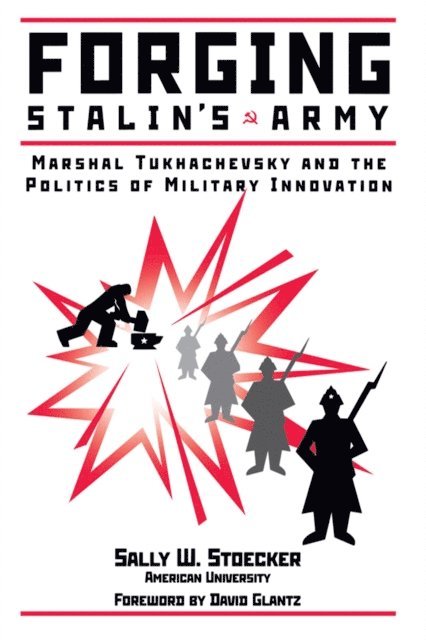
This innovative study examines the early years of the Red Army as it developed from a revolutionary partisan force into a modern, professional institution under the leadership of Mikhail Tukhachevsky, an important and controversial figure in the politics of the Stalin period. Sally Stoecker combines her institutional analysis of the formative period of the Soviet military with an astute look at the person and political maneuvers of Marshal Tukhachevsky and his complex relationship with Stalin, which eventually led to his spectacular downfall and execution in the Great Terror of the late 1930s. }This innovative study examines the early years of the Red Army as it developed from a revolutionary partisan force into a modern, professional institution under the leadership of Mikhail Tukhachevsky, an important and controversial figure in the politics of the Stalin period. Sally Stoecker combi nes her institutional analysis of the formative period of the Soviet military with an astute look at the person and political maneuvers of Marshal Tukhachevsky and his complex relationship with Stalin, which eventually led to his spectacular downfall and execution in the Great Terror of the late 1930s.Based on newly available archival materials, the book will be welcomed not only by military historians but also by Russian historians for the light it sheds on a vital area of Soviet political history. }
E-bok
Engelska, 2018875 kr
Läs direkt efter köp
This innovative study examines the early years of the Red Army as it developed from a revolutionary partisan force into a modern, professional institution under the leadership of Mikhail Tukhachevsky, an important and controversial figure in the politics of the Stalin period. Sally Stoecker combines her institutional analysis of the formative period of the Soviet military with an astute look at the person and political maneuvers of Marshal Tukhachevsky and his complex relationship with Stalin, which eventually led to his spectacular downfall and execution in the Great Terror of the late 1930s. }This innovative study examines the early years of the Red Army as it developed from a revolutionary partisan force into a modern, professional institution under the leadership of Mikhail Tukhachevsky, an important and controversial figure in the politics of the Stalin period. Sally Stoecker combi nes her institutional analysis of the formative period of the Soviet military with an astute look at the person and political maneuvers of Marshal Tukhachevsky and his complex relationship with Stalin, which eventually led to his spectacular downfall and execution in the Great Terror of the late 1930s.Based on newly available archival materials, the book will be welcomed not only by military historians but also by Russian historians for the light it sheds on a vital area of Soviet political history. }