Samiran Ghosh – författare
Visar alla böcker från författaren Samiran Ghosh. Handla med fri frakt och snabb leverans.
3 produkter
3 produkter
Häftad, Engelska, 2019
942 kr
Skickas inom 10-15 vardagar
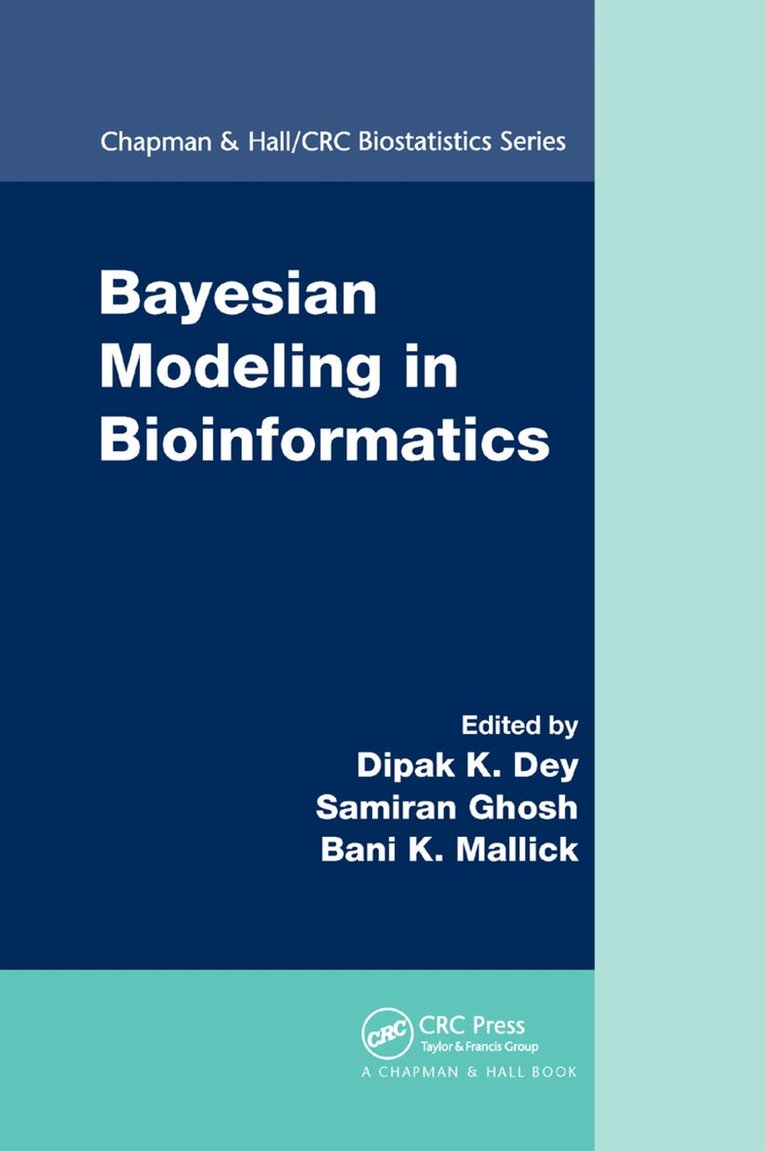
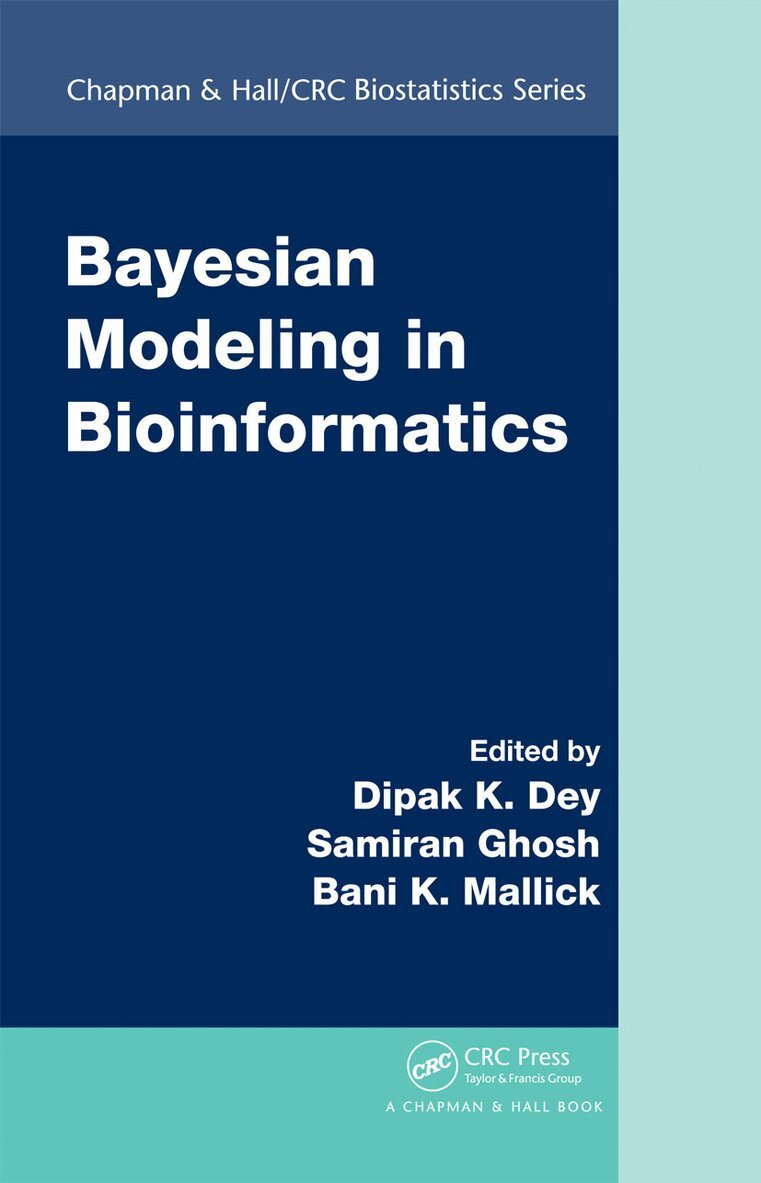
Bayesian Modeling in Bioinformatics discusses the development and application of Bayesian statistical methods for the analysis of high-throughput bioinformatics data arising from problems in molecular and structural biology and disease-related medical research, such as cancer. It presents a broad overview of statistical inference, clustering, and classification problems in two main high-throughput platforms: microarray gene expression and phylogenic analysis.The book explores Bayesian techniques and models for detecting differentially expressed genes, classifying differential gene expression, and identifying biomarkers. It develops novel Bayesian nonparametric approaches for bioinformatics problems, measurement error and survival models for cDNA microarrays, a Bayesian hidden Markov modeling approach for CGH array data, Bayesian approaches for phylogenic analysis, sparsity priors for protein-protein interaction predictions, and Bayesian networks for gene expression data. The text also describes applications of mode-oriented stochastic search algorithms, in vitro to in vivo factor profiling, proportional hazards regression using Bayesian kernel machines, and QTL mapping.Focusing on design, statistical inference, and data analysis from a Bayesian perspective, this volume explores statistical challenges in bioinformatics data analysis and modeling and offers solutions to these problems. It encourages readers to draw on the evolving technologies and promote statistical development in this area of bioinformatics.
Inbunden, Engelska, 2010
2 138 kr
Skickas inom 10-15 vardagar
Bayesian Modeling in Bioinformatics discusses the development and application of Bayesian statistical methods for the analysis of high-throughput bioinformatics data arising from problems in molecular and structural biology and disease-related medical research, such as cancer. It presents a broad overview of statistical inference, clustering, and classification problems in two main high-throughput platforms: microarray gene expression and phylogenic analysis.The book explores Bayesian techniques and models for detecting differentially expressed genes, classifying differential gene expression, and identifying biomarkers. It develops novel Bayesian nonparametric approaches for bioinformatics problems, measurement error and survival models for cDNA microarrays, a Bayesian hidden Markov modeling approach for CGH array data, Bayesian approaches for phylogenic analysis, sparsity priors for protein-protein interaction predictions, and Bayesian networks for gene expression data. The text also describes applications of mode-oriented stochastic search algorithms, in vitro to in vivo factor profiling, proportional hazards regression using Bayesian kernel machines, and QTL mapping.Focusing on design, statistical inference, and data analysis from a Bayesian perspective, this volume explores statistical challenges in bioinformatics data analysis and modeling and offers solutions to these problems. It encourages readers to draw on the evolving technologies and promote statistical development in this area of bioinformatics.
Inbunden, Engelska, 2026
2 377 kr
Kommande
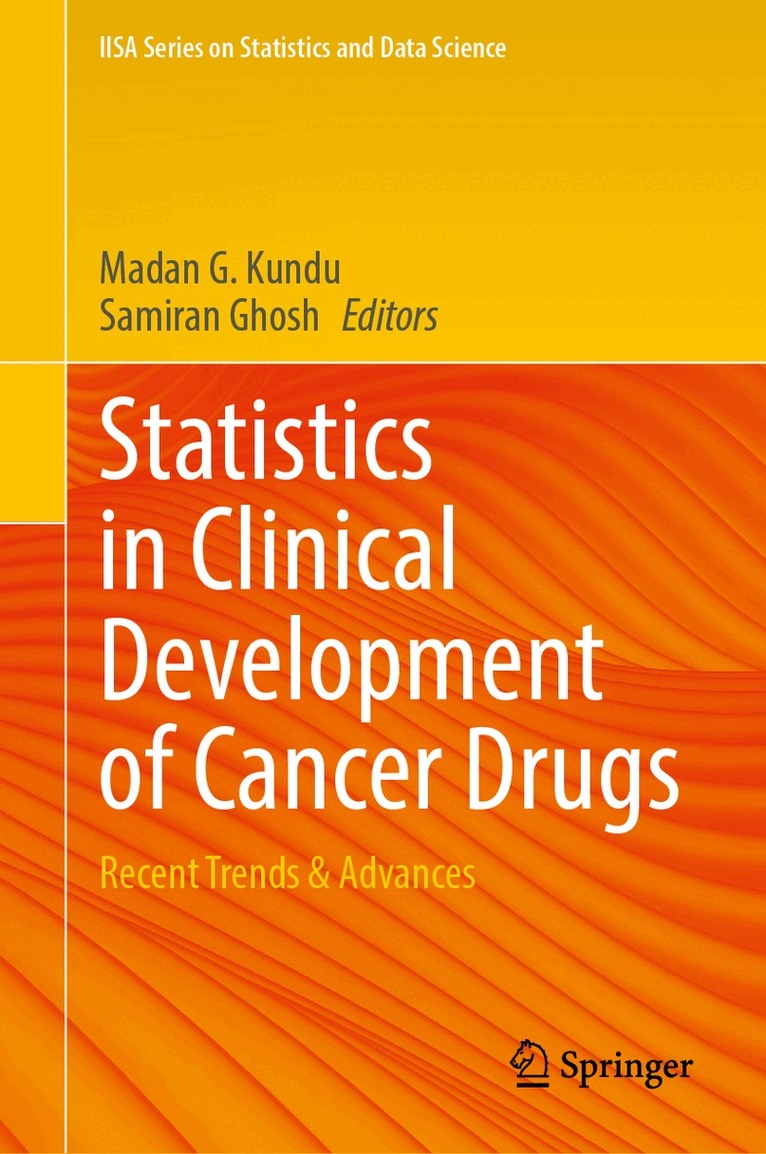
Cancer clinical trials have become increasingly complex, requiring statistical methodologies that are both rigorous and flexible across diverse study designs. This book provides a comprehensive and practice-oriented overview of the statistical methods underpinning modern oncology drug development, covering the full continuum from early-phase studies through confirmatory trials and regulatory submission.Organized by development phase, the text presents principled approaches to dose-escalation and dose-optimization, proof-of-concept decision-making, and master protocol designs. It further details methodologies for late-stage trials, including sample size determination, group-sequential monitoring, time-to-event analysis, multiplicity adjustment, and adaptive designs, with particular attention to challenges such as delayed treatment effects.In addition to confirmatory trial methodology, the book addresses advanced analytical topics, including subgroup evaluation, treatment switching, multi-phase treatment strategies, and bias adjustment techniques. Contemporary issues in oncology research—such as the estimand framework, real-world evidence, seamless and platform trials, and emerging applications of artificial intelligence and machine learning—are also discussed.Accessible yet rigorous, this book is an essential resource for biostatisticians, clinical researchers, and graduate students who want to design smarter trials, make better decisions, and accelerate the development of life-saving cancer therapies.