Samuel McCormick - Böcker
Visar alla böcker från författaren Samuel McCormick. Handla med fri frakt och snabb leverans.
3 produkter
3 produkter
989 kr
Skickas inom 7-10 vardagar
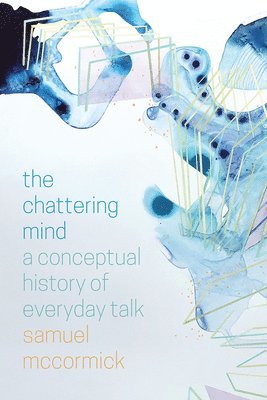
From Plato's contempt for "the madness of the multitude" to Kant's lament for "the great unthinking mass," the history of Western thought is riddled with disdain for ordinary collective life. But it was not until Kierkegaard developed the term "chatter" that this disdain began to focus on the ordinary communicative practiceswhich sustain this form of human togetherness.The Chattering Mind explores the intellectual tradition inaugurated by Kierkegaard's work, tracing the conceptual history of everyday talk from his formative account of chatter to Heidegger's recuperative discussion of "idle talk" to Lacan's culminating treatment of "empty speech"--and ultimately into our digital present, where small talk on various social media platforms now yields big data for tech-savvy entrepreneurs.In this sense, The Chattering Mind is less a history of ideas than a book in search of a usable past. It is a study of how the modern world became anxious about everyday talk, figured in terms of the intellectual elites who piqued this anxiety, and written with an eye toward recent dilemmas of digital communication and culture. By explaining how a quintessentially unproblematic form of human communication became a communication problem in itself, McCormick shows how its conceptual history is essential to our understanding of media and communication today.
306 kr
Skickas inom 7-10 vardagar
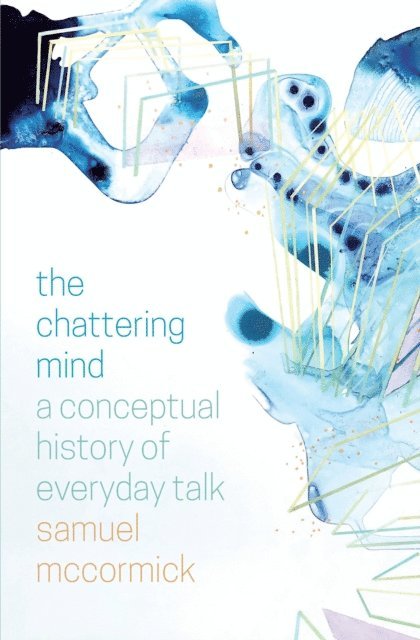
From Plato's contempt for "the madness of the multitude" to Kant's lament for "the great unthinking mass," the history of Western thought is riddled with disdain for ordinary collective life. But it was not until Kierkegaard developed the term "chatter" that this disdain began to focus on the ordinary communicative practiceswhich sustain this form of human togetherness.The Chattering Mind explores the intellectual tradition inaugurated by Kierkegaard's work, tracing the conceptual history of everyday talk from his formative account of chatter to Heidegger's recuperative discussion of "idle talk" to Lacan's culminating treatment of "empty speech"--and ultimately into our digital present, where small talk on various social media platforms now yields big data for tech-savvy entrepreneurs.In this sense, The Chattering Mind is less a history of ideas than a book in search of a usable past. It is a study of how the modern world became anxious about everyday talk, figured in terms of the intellectual elites who piqued this anxiety, and written with an eye toward recent dilemmas of digital communication and culture. By explaining how a quintessentially unproblematic form of human communication became a communication problem in itself, McCormick shows how its conceptual history is essential to our understanding of media and communication today.
Del 2 - Rhetoric and Democratic Deliberation
Letters to Power
Public Advocacy Without Public Intellectuals
Häftad, Engelska, 2013
345 kr
Skickas inom 5-8 vardagar
Although the scarcity of public intellectuals among today’s academic professionals is certainly a cause for concern, it also serves as a challenge to explore alternative, more subtle forms of political intelligence. Letters to Power accepts this challenge, guiding readers through ancient, medieval, and modern traditions of learned advocacy in search of persuasive techniques, resistant practices, and ethical sensibilities for use in contemporary democratic public culture. At the center of this book are the political epistles of four renowned scholars: the Roman Stoic Seneca the Younger, the late-medieval feminist Christine de Pizan, the key Enlightenment thinker Immanuel Kant, and the Christian anti-philosopher Søren Kierkegaard. Anticipating much of today’s online advocacy, their letter-writing helps would-be intellectuals understand the economy of personal and public address at work in contemporary relations of power, suggesting that the art of lettered protest, like letter-writing itself, involves appealing to diverse, and often strictly virtual, audiences. In this sense, Letters to Power is not only a nuanced historical study but also a book in search of a usable past.