Samuel Steinberg – författare
Visar alla böcker från författaren . Handla med fri frakt och snabb leverans.
3 produkter
3 produkter
Häftad, Engelska, 2016
302 kr
Skickas inom 5-8 vardagar
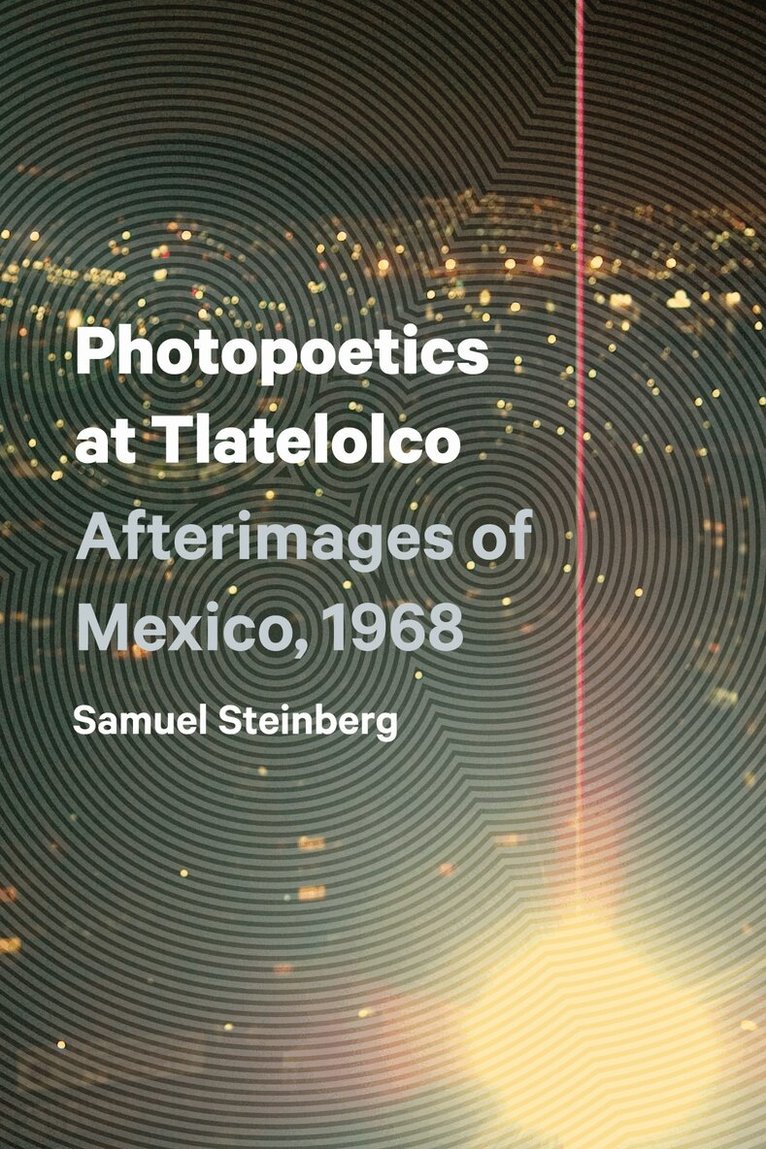
In the months leading up to the 1968 Olympic games in Mexico City, students took to the streets, calling for greater democratization and decrying crackdowns on political resistance by the ruling PRI party. During a mass meeting held at the Plaza of the Three Cultures in the Tlatelolco neighborhood, paramilitary forces opened fire on the gathering. The death toll from the massacre remains a contested number, ranging from an official count in the dozens to estimates in the hundreds by journalists and scholars. Rereading the legacy of this tragedy through diverse artistic-political interventions across the decades, Photopoetics at Tlatelolco explores the state’s dual repression-both the massacre’s crushing effects on the movement and the manipulation of cultural discourse and political thought in the aftermath.Examining artifacts ranging from documentary photography and testimony to poetry, essays, chronicles, cinema, literary texts, video, and performance, Samuel Steinberg considers the broad photographic and photopoetic nature of modern witnessing as well as the specific elements of light (gunfire, flares, camera flashes) that ultimately defined the massacre. Steinberg also demonstrates the ways in which the labels of “massacre” and “sacrifice” inform contemporary perceptions of the state’s blatant and violent repression of unrest. With implications for similar processes throughout the rest of Latin America from the 1960s to the present day, Photopoetics at Tlatelolco provides a powerful new model for understanding the intersection of political history and cultural memory.
Häftad, Engelska, 2022
142 kr
Skickas inom 5-8 vardagar
Inbunden, Engelska, 2026
1 316 kr
Kommande
A study of Mexican modernity through the author Juan Rulfo.From its very beginnings Latin American writing linked itself to public duty—to the constitution of symbolic kinship—in the hopes of holding in abeyance the question of its debt—that is, the problem posed by its production as economic expenditure. Indeed, while such demands were once made on literature as such (not coincidentally at a certain highpoint of the US academy), such a judgment was carried out with particular force on the body of a so-called Third World literature by metropolitan and Third World intellectuals alike. Juan Rulfo's work inhabits this peculiarly distanced and specular relation to historical event-as-allegory. Its effect in his writing grounds the book’s conception of the "ghostscript," as well as a broader critique of institutional norms of literary study. It is not that Rulfo's putative magical realist telling of Mexican (or, more broadly, Latin American) reality is more faithful to the difference and particularity of Mexican or Latin American reality. Rather, Rulfo's writing conveys the virtuality of Mexican history itself—its structurally phantasmal character—in order to unbind writing from its dutiful, allegorical support of the social.