Samuel Zipp – författare
Visar alla böcker från författaren Samuel Zipp. Handla med fri frakt och snabb leverans.
5 produkter
5 produkter
E-bok
PDF, Engelska, 2010456 kr
Läs direkt efter köp
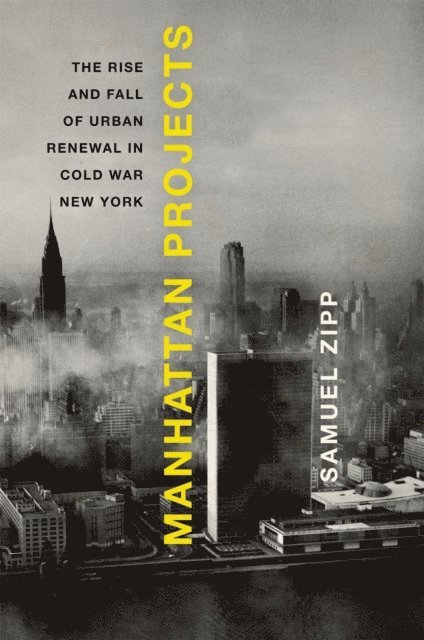
Moving beyond the usual good-versus-evil story that pits master-planner Robert Moses against the plucky neighborhood advocate Jane Jacobs, Samuel Zipp sheds new light on the rise and fall of New York''s urban renewal in the decades after World War II. Focusing on four iconic "Manhattan projects"--the United Nations building, Stuyvesant Town, Lincoln Center, and the great swaths of public housing in East Harlem--Zipp unearths a host of forgotten stories and characters that flesh out the conventional history of urban renewal. He shows how boosters hoped to make Manhattan the capital of modernity and a symbol of American power, but even as the builders executed their plans, a chorus of critics revealed the dark side of those Cold War visions, attacking urban renewal for perpetuating deindustrialization, racial segregation, and class division; for uprooting thousands, and for implanting a new, alienating cityscape. Cold War-era urban renewal was not merely a failed planning ideal, Zipp concludes, but also a crucial phase in the transformation of New York into both a world city and one mired in urban crisis.
E-bok
Engelska, 2010456 kr
Läs direkt efter köp
Moving beyond the usual good-versus-evil story that pits master-planner Robert Moses against the plucky neighborhood advocate Jane Jacobs, Samuel Zipp sheds new light on the rise and fall of New York''s urban renewal in the decades after World War II. Focusing on four iconic "Manhattan projects"--the United Nations building, Stuyvesant Town, Lincoln Center, and the great swaths of public housing in East Harlem--Zipp unearths a host of forgotten stories and characters that flesh out the conventional history of urban renewal. He shows how boosters hoped to make Manhattan the capital of modernity and a symbol of American power, but even as the builders executed their plans, a chorus of critics revealed the dark side of those Cold War visions, attacking urban renewal for perpetuating deindustrialization, racial segregation, and class division; for uprooting thousands, and for implanting a new, alienating cityscape. Cold War-era urban renewal was not merely a failed planning ideal, Zipp concludes, but also a crucial phase in the transformation of New York into both a world city and one mired in urban crisis.
Häftad, Engelska, 2012
591 kr
Skickas inom 7-10 vardagar
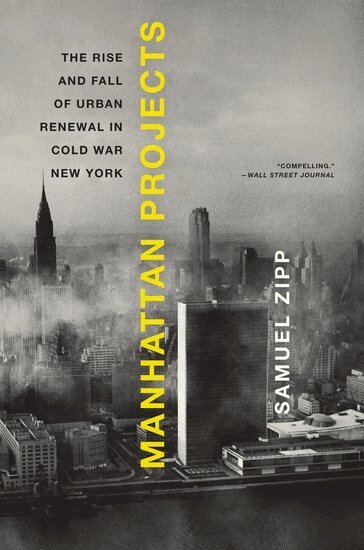
In a book praised by Times Literary Supplement as "richly detailed and thoughtfully written" and by Wall Street Journal as "compelling," Samuel Zipp sheds new light on the rise and fall of urban renewal in the decades after World War II. Focusing on four iconic "Manhattan projects"--the United Nations building, Stuyvesant Town, Lincoln Center, and the great swaths of public housing in East Harlem--Zipp unearths a host of forgotten stories and characters that flesh out the conventional history of urban renewal. He shows how boosters hoped to make Manhattan the capital of modernity and a symbol of American power, but even as the builders executed their plans, a chorus of critics revealed the dark side of those visions, attacking urban renewal for perpetuating deindustrialization, racial segregation, and class division, for uprooting thousands, and for implanting a new, alienating cityscape. Urban renewal was not merely a failed planning ideal, Zipp concludes, but also a crucial phase in the transformation of New York into a world city, but one mired in urban crisis. The book won Honorable Mention for the Ellis W. Hawley Prize of the Organization of American Historians.
E-bok
Engelska, 2016137 kr
Läs direkt efter köp
A career-spanning selection of previously uncollected writings and talks by the legendary author and activist No one did more to change how we look at cities than Jane Jacobs, the visionary urbanist and economic thinker whose 1961 book The Death and Life of Great American Cities started a global conversation that remains profoundly relevant more than half a century later. Vital Little Plans is an essential companion to Death and Life and Jacobs’s other books on urbanism, economics, politics, and ethics. It offers readers a unique survey of her entire career in forty short pieces that have never been collected in a single volume, from charming and incisive urban vignettes from the 1930s to the raw materials of her two unfinished books of the 2000s, together with introductions and annotations by editors Samuel Zipp and Nathan Storring. Readers will find classics here, including Jacobs’s breakout article “Downtown Is for People,” as well as lesser-known gems like her speech at the inaugural Earth Day and a host of other rare or previously unavailable essays, articles, speeches, interviews, and lectures. Some pieces shed light on the development of her most famous insights, while others explore topics rarely dissected in her major works, from globalization to feminism to universal health care. With this book, published in Jacobs’s centenary year, contemporary readers—whether well versed in her ideas or new to her writing—are finally able to appreciate the full scope of her remarkable voice and vision. At a time when urban life is booming and people all over the world are moving to cities, the words of Jane Jacobs have never been more significant. Vital Little Plans weaves a lifetime of ideas from the most prominent urbanist of the twentieth century into a book that’s indispensable to life in the twenty-first.Praise for Vital Little Plans“In Vital Little Plans, a new collection of the short writings and speeches of Jane Jacobs, one of the most influential thinkers on the built environment, editors Samuel Zipp and Nathan Storring have done readers a great service.”—The Huffington Post “A wonderful new anthology that captures [Jacobs’s] confident prose and her empathetic, patient eye for the way humans live and work together.”—The Globe and Mail“[A timely reminder] of the clarity and originality of [Jane Jacobs’s] thought.”—Toronto Star “[Vital Little Plans] comes to the foreground for [Jane Jacobs’s] centennial, and in a time when more of Jacobs’s prescient wisdom is needed.”—Metropolis“[Jane Jacobs] was one of three people I have met in a lifetime of meeting people who had an aura of sainthood about them. . . . The ability to radiate certainty without condescension, to be both very sure and very simple, is a potent one, and witnessing it in life explains a lot in history that might otherwise be inexplicable.”—Adam Gopnik, The New Yorker“Jane Jacobs saw the city like no other, and her observational genius, practical wisdom, and moral courage are on full display here, making this brilliantly curated book essential reading.”—Matthew Desmond, New York Times bestselling author of Evicted“In these stirring pages, Jane Jacobs shows herself once more to have been the keenest observer of the urban condition.”—Janette Sadik-Khan, Bloomberg Associates, former NYC transportation commissionerFrom the Hardcover edition.
Inbunden, Engelska, 2020
308 kr
Skickas inom 5-8 vardagar
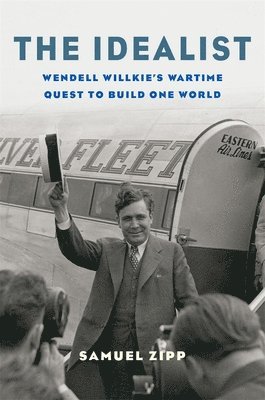
Winner of the Robert H. Ferrell Book Prize“The Idealist is a powerful book, gorgeously written and consistently insightful. Samuel Zipp uses the 1942 world tour of Wendell Willkie to examine American attitudes toward internationalism, decolonization, and race in the febrile atmosphere of the world’s first truly global conflict.”—Andrew Preston, author of Sword of the Spirit, Shield of FaithA dramatic account of the plane journey undertaken by businessman-turned-maverick-internationalist Wendell Willkie to rally US allies to the war effort. Willkie’s tour of a planet shrunk by aviation and war inspired him to challenge Americans to fight a rising tide of nationalism at home.In August 1942, as the threat of fascism swept the world, a charismatic Republican presidential contender boarded the Gulliver at Mitchel Airfield for a seven-week journey around the world. Wendell Willkie covered 31,000 miles as President Roosevelt’s unofficial envoy. He visited the battlefront in North Africa with General Montgomery, debated a frosty de Gaulle in Beirut, almost failed to deliver a letter to Stalin in Moscow, and allowed himself to be seduced by Chiang Kai-shek in China. Through it all, he was struck by the insistent demands for freedom across the world.In One World, the runaway bestseller he published on his return, Willkie challenged Americans to resist the “America first” doctrine espoused by the war’s domestic opponents and warned of the dangers of “narrow nationalism.” He urged his fellow citizens to end colonialism and embrace “equality of opportunity for every race and every nation.” With his radio broadcasts regularly drawing over 30 million listeners, he was able to reach Americans directly in their homes. His call for a more equitable and interconnected world electrified the nation, until he was silenced abruptly by a series of heart attacks in 1944. With his death, America lost its most effective globalist, the man FDR referred to as “Private Citizen Number One.”At a time when “America first” is again a rallying cry, Willkie’s message is at once chastening and inspiring, a reminder that “one world” is more than a matter of supply chains and economics, and that racism and nationalism have long been intertwined.