Sanchita Basu Das – författare
Visar alla böcker från författaren Sanchita Basu Das. Handla med fri frakt och snabb leverans.
23 produkter
Asia and the Middle-Income Trap
Av Francis E. Hutchinson, Sanchita Basu Das
Häftad, 2018
820 kr
Lägg i varukorg
The term ‘Middle-Income Trap’ refers to countries which stagnate economically after reaching a certain level of per capita income on the basis of labour- and capital-intensive growth, and are struggling to transition towards more skill-intensive and technology-driven development. It has resonance …
Asia and the Middle-Income Trap
Av Francis E. Hutchinson, Sanchita Basu Das
Inbunden, 2016
2836 kr
Lägg i varukorg
The term ‘Middle-Income Trap’ refers to countries which stagnate economically after reaching a certain level of per capita income on the basis of labour- and capital-intensive growth, and are struggling to transition towards more skill-intensive and technology-driven development. It has resonance …
Asia and the Middle-Income Trap
Av Sanchita Basu Das, Francis E. Hutchinson
E-bok, 2016
963 kr
Lägg i varukorg
The term ‘Middle-Income Trap’ refers to countries which stagnate economically after reaching a certain level of per capita income on the basis of labour- and capital-intensive growth, and are struggling to transition towards more skill-intensive and technology-driven development. It has …
Asia and the Middle-Income Trap
Av Sanchita Basu Das, Francis E. Hutchinson
E-bok, 2016
963 kr
Lägg i varukorg
The term ‘Middle-Income Trap’ refers to countries which stagnate economically after reaching a certain level of per capita income on the basis of labour- and capital-intensive growth, and are struggling to transition towards more skill-intensive and technology-driven development. It has …
Road to Recovery
Singapore''s Journey through the Global Crisis
E-bok, 2018
487 kr
Lägg i varukorg
No detailed description available for "Road to Recovery".
Achieving the ASEAN Economic Community 2015
Challenges for Member Countries and Businesses
Häftad, 2012
518 kr
Lägg i varukorg
ASEAN leaders proclaimed to create an ASEAN Economic Community by 2015. But achieving the target requires cooperation and coordination both within and among the ten ASEAN economies. Currently, with countries having varying considerations towards complete liberalisation, protectionism still persists …
Achieving the ASEAN Economic Community 2015
Challenges for Member Countries and Businesses
E-bok, 2018
694 kr
Lägg i varukorg
No detailed description available for "Achieving the ASEAN Economic Community 2015".
Enhancing ASEAN's Connectivity
E-bok, 2018
410 kr
Lägg i varukorg
No detailed description available for "Enhancing ASEAN''s Connectivity".
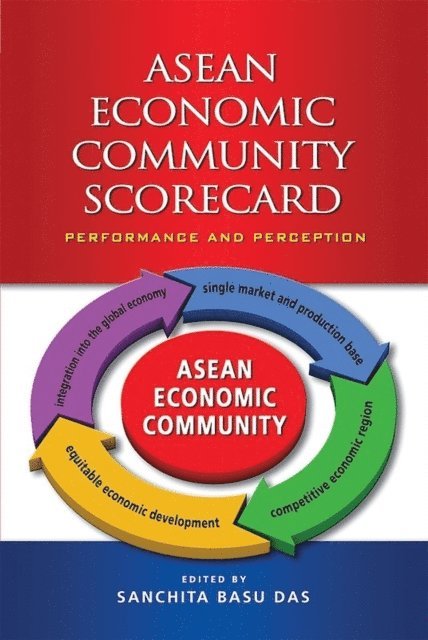
ASEAN Economic Community Scorecard
Performance and Perception
E-bok, 2018
473 kr
Lägg i varukorg
No detailed description available for "ASEAN Economic Community Scorecard".
ASEAN Economic Community Scorecard
Performance and Perception
Häftad, 2013
347 kr
Lägg i varukorg
During the 13th ASEAN Summit in November 2007, ASEAN Leaders endorsed the ASEAN Economic Community (AEC) Blueprint, which laid the foundation of creating a ""single market and production base"" among the ten Southeast Asian economies. Soon after that, ASEAN faced great uncertainties in the light of …
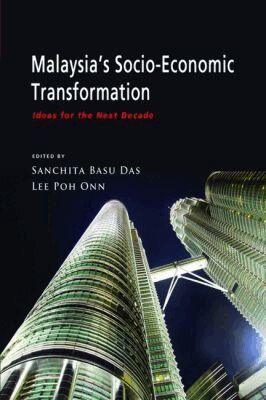
Malaysia's Socio-Economic Transformation
Ideas for the Next Decade
Av Lee Poh Onn, Sanchita Basu Das
E-bok, 2018
622 kr
Lägg i varukorg
No detailed description available for "Malaysia''s Socio-Economic Transformation".
Malaysia's Socio-Economic Transformation
Ideas for the Next Decade
Av Sanchita Basu Das, Lee Poh Onn
Häftad, 2014
474 kr
Lägg i varukorg
Since 1957, Malaysia's economic development has been an account of growth, transformation, and of structural change. More than 75 per cent of its gross domestic product (GDP) comes from the manufacturing and services sectors. However, Malaysia is stuck in a middle-income trap and is facing …
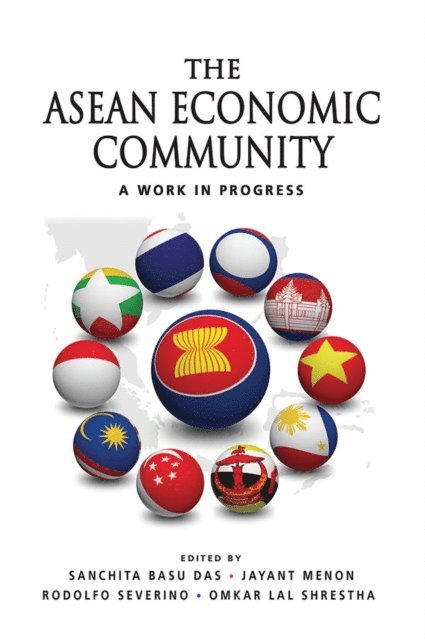
ASEAN Economic Community
A Work in Progress
Av Rodolfo C. Severino, Jayant Menon m. fl.
E-bok, 2018
951 kr
Lägg i varukorg
No detailed description available for "The ASEAN Economic Community".
ASEAN Economic Community
A Work in Progress
Av Sanchita Basu Das, Jayant Menon m. fl.
Inbunden, 2014
689 kr
Lägg i varukorg
This is an important and timely volume: important because ASEAN is an increasingly significant and influential regional and global actor; and timely because, as the 2015 ASEAN Economic Community target approaches, what is needed is a sympathetic yet arms-length survey of the issues and challenges. …
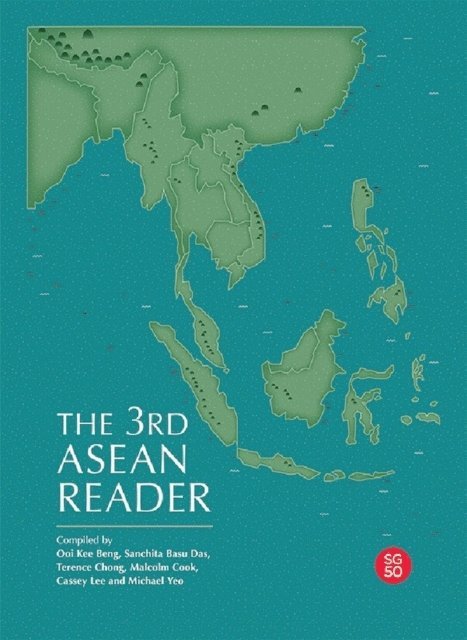
3rd ASEAN Reader
Av Terence Chong, Sanchita Basu Das m. fl.
E-bok, 2018
720 kr
Lägg i varukorg
No detailed description available for "The 3rd ASEAN Reader".
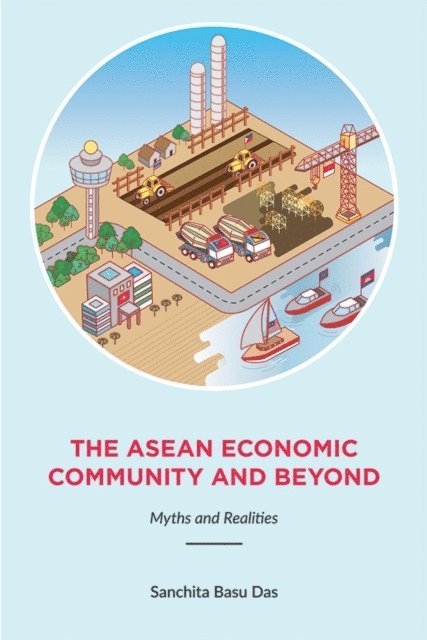
Asean Economic Community and Beyond
Myths and Realities
Häftad, 2015
357 kr
Lägg i varukorg
The year 2015 has special significance for regional economic integration. The ASEAN Community, integrating the political, economic and social aspects of regional cooperation, will complete its first milestone by December 2015. Expectations of tangible benefits under an ASEAN Economic Community have …
ASEAN Economic Community and Beyond
Myths and Realities
E-bok, 2018
362 kr
Lägg i varukorg
No detailed description available for "The ASEAN Economic Community and Beyond".
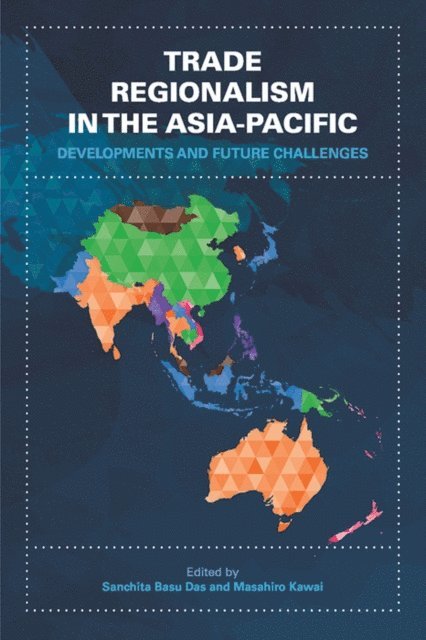
Trade Regionalism in the Asia-Pacific
Developments and Future Challenges
Av Sanchita Basu Das, Masahiro Kawai m. fl.
Häftad, 2016
357 kr
Lägg i varukorg
Asia has witnessed a proliferation of free trade agreements (FTAs) since the turn of the millennium. The first regional agreement — the ASEAN FTA — was transformed into the ASEAN Economic Community at the end of 2015. In the meantime, ASEAN forged five ASEAN 1 FTAs and began to negotiate a …
Trade Regionalism in the Asia-Pacific
Developments and Future Challenges
Av Masahiro Kawai, Sanchita Basu Das
E-bok, 2018
536 kr
Lägg i varukorg
No detailed description available for "Trade Regionalism in the Asia-Pacific".
Moving the AEC Beyond 2015
Managing Domestic Consensus for Community ? Building
Av Sanchita Basu Das, Siew Yean Tham
Häftad, 2016
240 kr
Lägg i varukorg
The ten Southeast Asian economies reached a milestone on 31 December 2015, when they announced the formation of an ASEAN Community. Although this includes three pillars – ASEAN Political-Security Community, ASEAN Economic Community (AEC) and the ASEAN Socio?Cultural Community – it is the economic …
Moving the AEC Beyond 2015
Managing Domestic Consensus for Community-Building
Av Sanchita Basu Das, Tham Siew Yean
E-bok, 2018
352 kr
Lägg i varukorg
No detailed description available for "Moving the AEC Beyond 2015".
Services Liberalization in ASEAN
Foreign Direct Investment in Logistics
Av Tham Siew Yean, Sanchita Basu Das
Häftad, 2018
357 kr
Lägg i varukorg
The services sector plays an important role in ASEAN economies as it accounts for about half of the region's GDP and more than 45 per cent of its total employment. ASEAN aspires to deepen integration in the services sector in order to enhance the sector's contribution to economic development and …