Sándor Chardonnens - Böcker
Visar alla böcker från författaren Sándor Chardonnens. Handla med fri frakt och snabb leverans.
2 produkter
2 produkter
2 649 kr
Skickas inom 5-8 vardagar
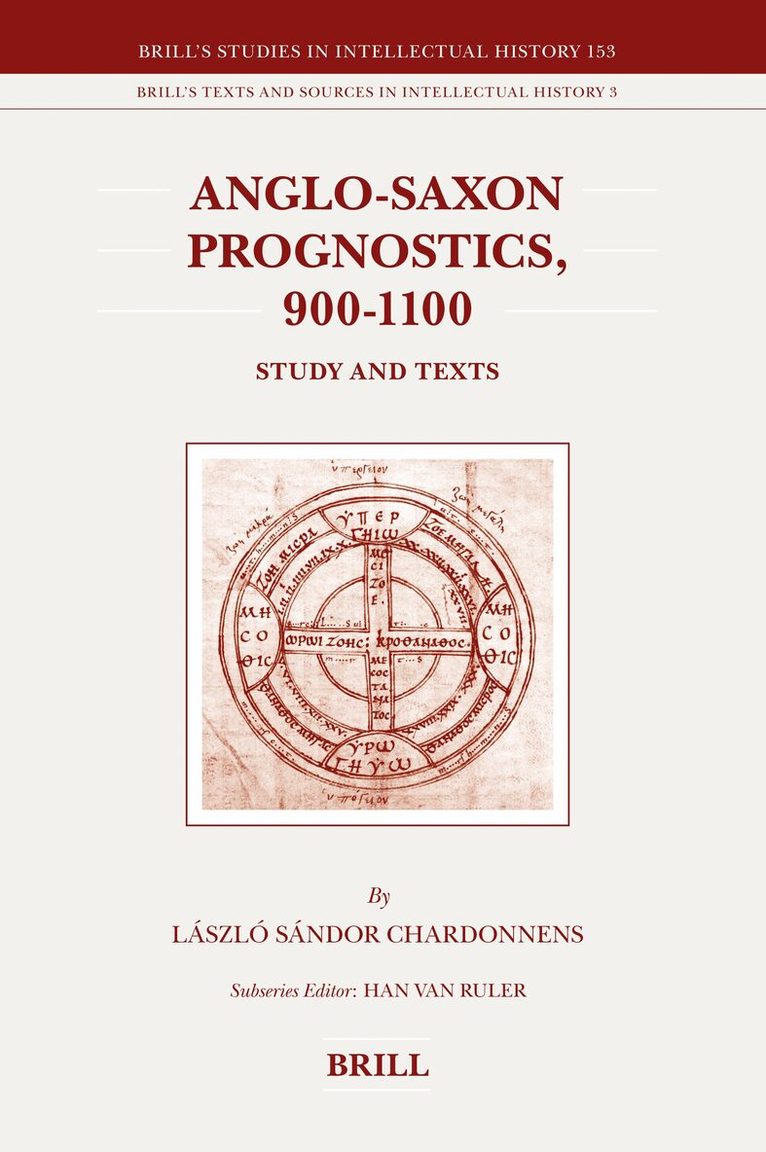
Recent scholarship on the Anglo-Saxon prognostics has tried to place these texts within the realm of folklore and medicine, inspired largely by studies and editions from the nineteenth and early twentieth centuries. By analysing prognostic material in its manuscript context, this book offers a novel approach to the status and purpose of prognostic texts in the early Middle Ages with particular attention to the Anglo-Saxon tradition. From this perspective, it emerges that prognostication in Anglo-Saxon England was not folkloric but a scholarly pursuit by monks not primarily interested in the medical aspects of prognostication. In addition, this book offers, for the first time, a comprehensive edition of prognostics in Old English and Latin from Anglo-Saxon and early post-Conquest manuscripts.Brill's Texts and Sources in Intellectual History, vol. 3
Del 69 - Amsterdamer Beiträge zur älteren Germanistik
Secular Learning in Anglo-Saxon England
Exploring the Vernacular
Häftad, Engelska, 2012
1 572 kr
Skickas inom 5-8 vardagar
The fruits of Anglo-Saxon learning continue to captivate Anglo-Saxonists and scholars of natural science and medicine, witness recent publications such as Martin Blake’s edition of Ælfric's De temporibus anni (2009), and the proceedings of the Storehouses of Wholesome Learning and Leornungcræft projects. In 1992, Stephanie Hollis and Michael Wright took stock of secular learning in the vernacular, in their monumental annotated bibliography Old English Prose of Secular Learning. The present volume surveys and evaluates advances in the study of Anglo-Saxon secular learning from the past two decades. It also consolidates an ongoing interest in scholarship by Anglo-Saxons by presenting nine original essays that focus on the disciplines of law, encyclopaedic notes, computus, medicine, charms, and prognostication, with a focus on learning in the vernacular, or the relationship between Latin and the vernacular. This volume is of interest for Anglo-Saxonists who work with vernacular sources of learning, and for historians of law, natural science, medicine, divination and magic.