Sandra Bott – författare
Visar alla böcker från författaren Sandra Bott. Handla med fri frakt och snabb leverans.
7 produkter
Environmental Regulation and the History of Capitalism
The Role of Business from Stockholm 1972 to the Climate Crisis
Av Sandra Bott, Sabine Pitteloud m. fl.
Inbunden, 2025
2578 kr
Lägg i varukorg
This edited collection examines the historical role of business actors in climate and environmental governance since the 1970s. Through a compilation of recent, evidence-based historical research, this book unveils the origins of contemporary challenges in regulating environmental pollution. With …
Environmental Regulation and the History of Capitalism
The Role of Business from Stockholm 1972 to the Climate Crisis
Av Sandra Bott, Sabine Pitteloud m. fl.
Häftad, 2026
725 kr
Lägg i varukorg
This edited collection examines the historical role of business actors in climate and environmental governance since the 1970s. Through a compilation of recent, evidence-based historical research, this book unveils the origins of contemporary challenges in regulating environmental pollution. With …
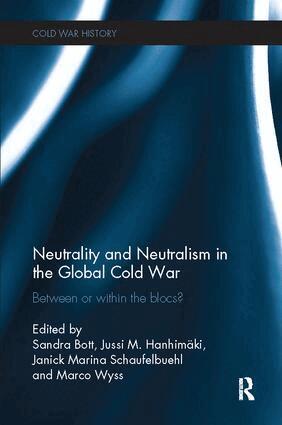
Neutrality and Neutralism in the Global Cold War
Between or Within the Blocs?
Av Sandra Bott, Jussi M. Hanhimaki m. fl.
Häftad, 2017
874 kr
Lägg i varukorg
This book sheds new light on the foreign policies, roles, and positions of neutral states and the Non-Aligned Movement (NAM) in the global Cold War.The volume places the neutral states and the NAM in the context of the Cold War and demonstrates the links between the East, the West, and the …
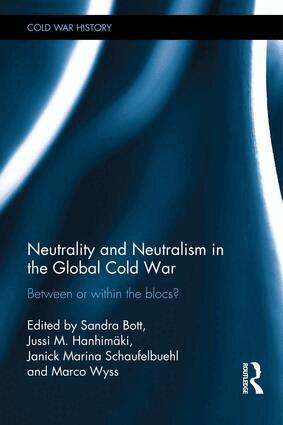
Neutrality and Neutralism in the Global Cold War
Between or Within the Blocs?
Av Sandra Bott, Jussi M. Hanhimaki m. fl.
Inbunden, 2015
2578 kr
Lägg i varukorg
This book sheds new light on the foreign policies, roles, and positions of neutral states and the Non-Aligned Movement (NAM) in the global Cold War.The volume places the neutral states and the NAM in the context of the Cold War and demonstrates the links between the East, the West, and the …
Neutrality and Neutralism in the Global Cold War
Between or Within the Blocs?
Av Marco Wyss, Janick Schaufelbuehl m. fl.
E-bok, 2015
1012 kr
Lägg i varukorg
This book sheds new light on the foreign policies, roles, and positions of neutral states and the Non-Aligned Movement (NAM) in the global Cold War. The volume places the neutral states and the NAM in the context of the Cold War and demonstrates the links between the East, the West, and the …
Neutrality and Neutralism in the Global Cold War
Between or Within the Blocs?
Av Marco Wyss, Janick Schaufelbuehl m. fl.
E-bok, 2015
1034 kr
Lägg i varukorg
This book sheds new light on the foreign policies, roles, and positions of neutral states and the Non-Aligned Movement (NAM) in the global Cold War. The volume places the neutral states and the NAM in the context of the Cold War and demonstrates the links between the East, the West, and the …