Sandra Halperin - Böcker
Visar alla böcker från författaren Sandra Halperin. Handla med fri frakt och snabb leverans.
11 produkter
11 produkter
601 kr
Skickas inom 5-8 vardagar
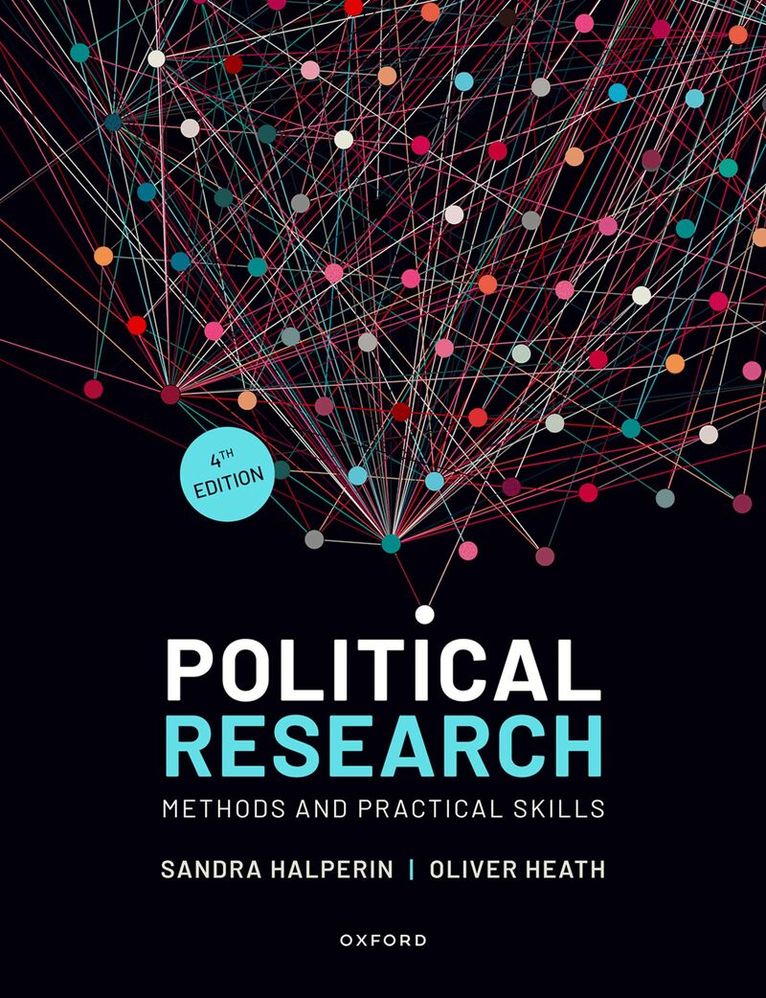
The most accessible and practical guide to research methods written especially for politics and international relations students. Key features - Discusses step-by-step how to conduct research to support students through the entire research process - Broad coverage of both quantitative and qualitative methods makes it relevant to any research project - Discussion of key debates of theory, methodology, and the philosophy of social science to broaden students' knowledge of research methods - Includes a range of learning features such as chapter summaries and test questions to re-enforce students' understanding of research methods - Also available as an e-book with functionality, navigation features, and links that offer extra learning support New to this Edition - New content on mixed methods in Chapter 6 to highlight the advantages of using different methods or approaches as part of the same study. - Additional coverage of recent debates and concerns about transparency in research and ‘open science’, digital data, and analysing social media content. - Updated examples throughout to cover topical issues in political research, such as the rise of far-right movements and parties, issues relating to immigration and refugees, and the intergenerational transmission of political preferences. - Now available as an enhanced ebook, featuring video reflections from recent graduates who share their experience of conducting independent research, self-test questions, and flashcard glossaries.Digital formats and resources Political Research: Methods and Practical Skills is available for students and institutions to purchase in a variety of formats, and it is supported by online resources. The following additional resources are available to students: - Other Students Say videos, where graduate students in Politics and International Relations share their experience conducting research - Self-test questions at the end of each chapter section allow students to check and consolidate their knowledge - Flashcard glossaries improve understanding of content - Example datasets to prompt active engagement and hands-on experience Adopting lecturers will have access to the following teaching support resources: - Seminar questions and activities - Tutorials for data analysis software - Test bank of questions - PowerPoint slides
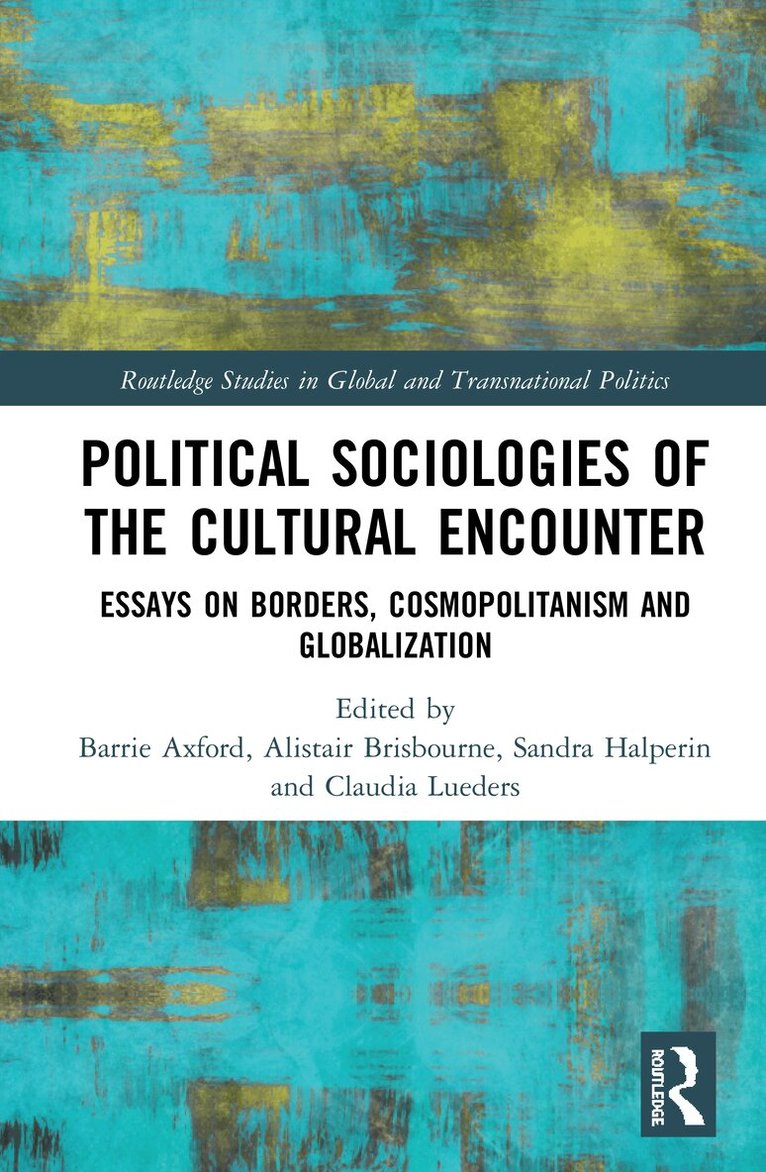
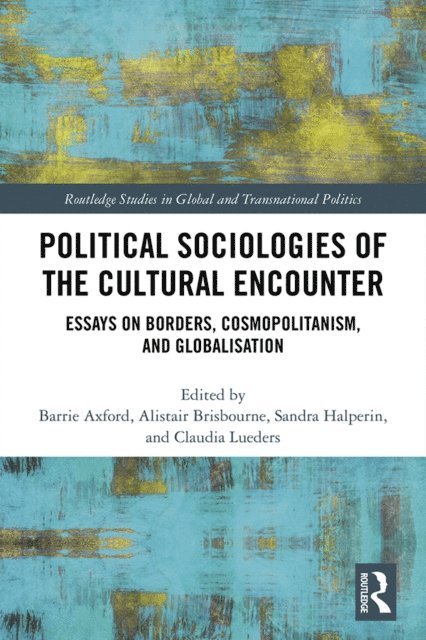
Political Sociologies of the Cultural Encounter
Essays on Borders, Cosmopolitanism, and Globalization
Inbunden, Engelska, 2020
2 098 kr
Skickas inom 10-15 vardagar
This book offers transdisciplinary scholarship which challenges the agendas of and markers around traditional social scientific fields. It builds on the belief that the study of major issues in the global cultural and political economies benefit from a perspective that rejects the limitations imposed by established boundaries, whether disciplinary, conceptual, symbolic or material. Established and early career academics explore and embrace contemporary political sociology following the ‘global’ and ‘cultural’ turns of recent decades. Categories such as state, civil society, family, migration, citizenship and identity are interrogated and sometimes found to be ill-suited to the task of analyzing global complexities. The limits of global theory, the challenges of global citizenship, and the relationship between globalisation and situated and mobile subjects and objects are all referenced in this book. The book will be of interest to scholars of International Relations, Political Science, Sociology, Political Sociology, Social Theory, Geography, Area studies and European studies.
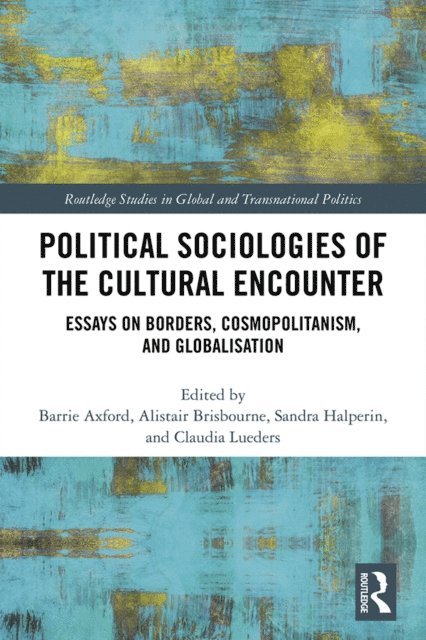
Political Sociologies of the Cultural Encounter
Essays on Borders, Cosmopolitanism, and Globalization
Häftad, Engelska, 2022
620 kr
Skickas inom 10-15 vardagar
This book offers transdisciplinary scholarship which challenges the agendas of and markers around traditional social scientific fields. It builds on the belief that the study of major issues in the global cultural and political economies benefit from a perspective that rejects the limitations imposed by established boundaries, whether disciplinary, conceptual, symbolic or material. Established and early career academics explore and embrace contemporary political sociology following the ‘global’ and ‘cultural’ turns of recent decades. Categories such as state, civil society, family, migration, citizenship and identity are interrogated and sometimes found to be ill-suited to the task of analyzing global complexities. The limits of global theory, the challenges of global citizenship, and the relationship between globalisation and situated and mobile subjects and objects are all referenced in this book. The book will be of interest to scholars of International Relations, Political Science, Sociology, Political Sociology, Social Theory, Geography, Area studies and European studies.
2 300 kr
Skickas inom 10-15 vardagar
Re-Envisioning Global Development offers an original conceptualisation of capitalist development from its origins to the present day.Most approaches to understanding contemporary development assume that industrial capitalism was achieved through a process of nationally organised economic growth, and that in recent years its organisation has become increasingly trans-local or global. However, Halperin shows that nationally organised economic growth has rarely been the case – it has only recently come to characterise a few countries and for only a few decades. This innovative text elaborates an alternative ontology and way of thinking about global development during the last two centuries – one linked, not to nations and regions, but to a set of essentially trans-national relations and connections. It argues that capitalist development has, everywhere and from the start, involved—not whole nations or societies–but only sectors or geographical areas within states. By bringing this aspect of historically ‘normal’ capitalist development into clearer focus, the book clarifies the specific conditions and circumstances that enabled European economies to pursue a more broad-based development following World War II, and what prevented a similar outcome in the contemporary ‘third world’. It also clarifies the nature, spatial extent, and circumstances of current globalising trends. Wide-ranging and provocative, this book is required reading for advanced level students and scholars in development studies, development economics and political science.
810 kr
Skickas inom 10-15 vardagar
Re-Envisioning Global Development offers an original conceptualisation of capitalist development from its origins to the present day.Most approaches to understanding contemporary development assume that industrial capitalism was achieved through a process of nationally organised economic growth, and that in recent years its organisation has become increasingly trans-local or global. However, Halperin shows that nationally organised economic growth has rarely been the case – it has only recently come to characterise a few countries and for only a few decades. This innovative text elaborates an alternative ontology and way of thinking about global development during the last two centuries – one linked, not to nations and regions, but to a set of essentially trans-national relations and connections. It argues that capitalist development has, everywhere and from the start, involved—not whole nations or societies–but only sectors or geographical areas within states. By bringing this aspect of historically ‘normal’ capitalist development into clearer focus, the book clarifies the specific conditions and circumstances that enabled European economies to pursue a more broad-based development following World War II, and what prevented a similar outcome in the contemporary ‘third world’. It also clarifies the nature, spatial extent, and circumstances of current globalising trends. Wide-ranging and provocative, this book is required reading for advanced level students and scholars in development studies, development economics and political science.
474 kr
Skickas inom 7-10 vardagar
Halperin traces the persistence of traditional class structures during the development of industrial capitalism in Europe, and the way in which these structures shaped states and state behavior and generated conflict. She documents European conflicts between 1789 and 1914, including small and medium scale conflicts often ignored by researchers and links these conflicts to structures characteristic of industrial capitalist development in Europe before 1945. This book revisits the historical terrain of Karl Polanyi's The Great Transformation (1944), however, it argues that Polanyi's analysis is, in important ways, inaccurate and misleading. Ultimately, the book shows how and why the conflicts both culminated in the world wars and brought about a 'great transformation' in Europe. Its account of this period challenges not only Polanyi's analysis, but a variety of influential perspectives on nationalism, development, conflict, international systems change, and globalization.
1 295 kr
Skickas inom 7-10 vardagar
Halperin traces the persistence of traditional class structures during the development of industrial capitalism in Europe, and the way in which these structures shaped states and state behavior and generated conflict. She documents European conflicts between 1789 and 1914, including small and medium scale conflicts often ignored by researchers and links these conflicts to structures characteristic of industrial capitalist development in Europe before 1945. This book revisits the historical terrain of Karl Polanyi's The Great Transformation (1944), however, it argues that Polanyi's analysis is, in important ways, inaccurate and misleading. Ultimately, the book shows how and why the conflicts both culminated in the world wars and brought about a 'great transformation' in Europe. Its account of this period challenges not only Polanyi's analysis, but a variety of influential perspectives on nationalism, development, conflict, international systems change, and globalization.
1 525 kr
Skickas inom 10-15 vardagar
In Marx's familiar dictum, the more-developed country shows the less developed an image of its own future. Turning this idea upside down, In the Mirror of the Third World looks to the contemporary Third World for a reflection of European history. The resulting view challenges standard accounts of European social, economic, and political development. Sandra Halperin's analysis of the European experience begins where studies of Third World development often start: considering the legacies of colonial domination. Europe also had a colonial past, she reminds us, and the states of Europe, like those of today's Third World, were the product of colonialism and imperialism. From this starting point, Halperin traces features characteristic of Third World development through the history of European capitalism: enclave economies oriented to foreign markets; weak middle classes; alliances among the state, traditional landowning elites, and new industrial classes; unstable and partial democracy; sharp inequalities; and increasing poverty—all as much a part of European society on the eve of World War I as they are of developing countries today. Halperin also emphasizes the emergence of a militant, literal religion in Europe and its critical role in the class struggles of the nineteenth century.
489 kr
Skickas inom 10-15 vardagar
In Marx's familiar dictum, the more-developed country shows the less developed an image of its own future. Turning this idea upside down, In the Mirror of the Third World looks to the contemporary Third World for a reflection of European history. The resulting view challenges standard accounts of European social, economic, and political development. Sandra Halperin's analysis of the European experience begins where studies of Third World development often start: considering the legacies of colonial domination. Europe also had a colonial past, she reminds us, and the states of Europe, like those of today's Third World, were the product of colonialism and imperialism. From this starting point, Halperin traces features characteristic of Third World development through the history of European capitalism: enclave economies oriented to foreign markets; weak middle classes; alliances among the state, traditional landowning elites, and new industrial classes; unstable and partial democracy; sharp inequalities; and increasing poverty—all as much a part of European society on the eve of World War I as they are of developing countries today. Halperin also emphasizes the emergence of a militant, literal religion in Europe and its critical role in the class struggles of the nineteenth century.
1 065 kr
Skickas inom 7-10 vardagar
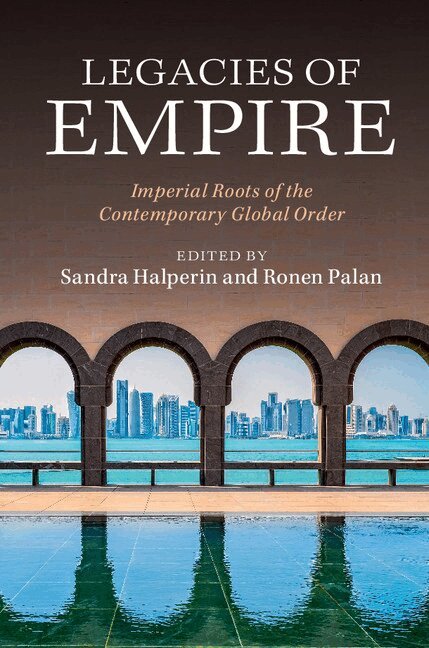
The nation-state is a fairly recent historical phenomenon. Human history over the past two to four millennia has been dominated by empires, and the legacies of these empires continues to shape the contemporary world in ways that are not always recognised or fully understood. Much research and writing about European colonial empires has focused on relations between them and their colonies. This book examines the phenomenon of empire from a different perspective. It explores the imprint that imperial institutions, organisational principles, practices, and logics have left on the modern world. It shows that many features of the contemporary world - modern armies, multiculturalism, globalised finance, modern city-states, the United Nations - have been profoundly shaped by past empires. It also applies insights about the impact of past empires to contemporary politics and considers the long-term institutional legacies of the American 'empire'.
357 kr
Skickas inom 7-10 vardagar
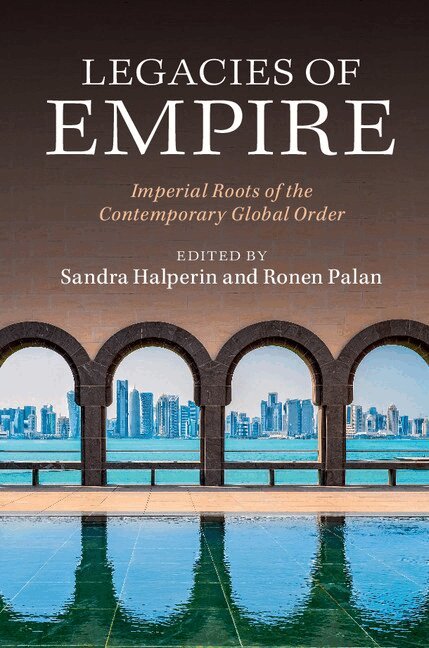
The nation-state is a fairly recent historical phenomenon. Human history over the past two to four millennia has been dominated by empires, and the legacies of these empires continues to shape the contemporary world in ways that are not always recognised or fully understood. Much research and writing about European colonial empires has focused on relations between them and their colonies. This book examines the phenomenon of empire from a different perspective. It explores the imprint that imperial institutions, organisational principles, practices, and logics have left on the modern world. It shows that many features of the contemporary world - modern armies, multiculturalism, globalised finance, modern city-states, the United Nations - have been profoundly shaped by past empires. It also applies insights about the impact of past empires to contemporary politics and considers the long-term institutional legacies of the American 'empire'.