Sandra Hirsh - Böcker
Visar alla böcker från författaren Sandra Hirsh. Handla med fri frakt och snabb leverans.
5 produkter
5 produkter
278 kr
Skickas inom 7-10 vardagar
This book in the Library Futures Series examines blockchain technology, a concept with far-reaching implications for the future of record keeping. Blockchain uses a distributed database (multiple devices not connected to a common processor) that organises data into records (blocks) that have cryptographic validation. The data are timestamped and linked to previous records so that they can only be changed by those who own the encryption keys to write to the files. Firms like Microsoft and IBM are already exploring ways that blockchain can more securely handle valuable transaction data. And Sony is harnessing blockchain to store educational information (registration documents, attendance, grades, and even the lesson plans that previous teachers have used) that can easily be transferred between schools as students move or graduate. In this book, technology experts and editors Alman and Hirsh build on their ongoing research to discuss how blockchain’s potential use as a convenient system for record keeping could lead to more government documents, historical records, and other pieces of information migrating to such a system. They and their contributors also examine its possible consequences for academic, public, school, and special libraries, as well as the information professionals who sustain those institutions, making this book a valuable primer for everyone interested in the future of librarianship.
1 550 kr
Skickas inom 10-15 vardagar
This third edition of Information Services Today: An Introduction demonstrates the ever-changing landscape of information services today and the need to re-evaluate curriculum, competency training, professional development, and lifelong learning in order to stay abreast of current trends and issues, and more significantly, remain competent to address the changing user needs of information communities. Specifically, the Information Services Today: An Introduction: provides a thorough introduction, history, and overall state of the field, explores different types of information communities, the varying information needs within those communities, and the role of equity of access, diversity, inclusion, and social justice in those communities, addresses why information organizations and information and technological literacy are more important today than ever before, discusses how technology has influenced the ways that information professionals provide information resources and services in today’s digital environment, highlights current issues and trends and provides expert insight into emerging challenges, innovations, and opportunities for the future, and identifies career management strategies and leadership opportunities in the information professions. The new edition features chapter updates to address changes in information services, introducing new/updated topics such as emergency/crisis management/community resilience, sustainability, data analysis and visualization, social justice, and equity of access, diversity, and inclusion (EDI). Information Services Today: An Introduction begins with an overview of libraries and their transformation as information and technological hubs within their local and digital communities, as well as trends impacting the information field. Information Services Today: An Introduction covers the various specializations within the field – emphasizing the exciting yet complex roles and opportunities for information professionals in a variety of information environments. With that foundation in place, it presents the fundamentals of information services, delves into management skills needed by information professionals today, and explores emerging issues related to the rapid development of new technologies. Information Services Today: An Introduction addresses how libraries and information centers serve different kinds of communities, highlighting the unique needs of increasingly diverse users.Information Services Today: An Introduction provokes discussion, critical thinking, and interaction to facilitate the learning process. The content and supplemental materials – discussion questions, rich sets of online accessible materials, multimedia webcast interviews featuring authors from this book discussing the trends and issues in their respective areas, and chapter presentation slides for use by instructors – give readers the opportunity to develop a deeper understanding of and engagement with the topics.
731 kr
Skickas inom 10-15 vardagar
This third edition of Information Services Today: An Introduction demonstrates the ever-changing landscape of information services today and the need to re-evaluate curriculum, competency training, professional development, and lifelong learning in order to stay abreast of current trends and issues, and more significantly, remain competent to address the changing user needs of information communities. Specifically, the Information Services Today: An Introduction: provides a thorough introduction, history, and overall state of the field, explores different types of information communities, the varying information needs within those communities, and the role of equity of access, diversity, inclusion, and social justice in those communities, addresses why information organizations and information and technological literacy are more important today than ever before, discusses how technology has influenced the ways that information professionals provide information resources and services in today’s digital environment, highlights current issues and trends and provides expert insight into emerging challenges, innovations, and opportunities for the future, and identifies career management strategies and leadership opportunities in the information professions. The new edition features chapter updates to address changes in information services, introducing new/updated topics such as emergency/crisis management/community resilience, sustainability, data analysis and visualization, social justice, and equity of access, diversity, and inclusion (EDI). Information Services Today: An Introduction begins with an overview of libraries and their transformation as information and technological hubs within their local and digital communities, as well as trends impacting the information field. Information Services Today: An Introduction covers the various specializations within the field – emphasizing the exciting yet complex roles and opportunities for information professionals in a variety of information environments. With that foundation in place, it presents the fundamentals of information services, delves into management skills needed by information professionals today, and explores emerging issues related to the rapid development of new technologies. Information Services Today: An Introduction addresses how libraries and information centers serve different kinds of communities, highlighting the unique needs of increasingly diverse users.Information Services Today: An Introduction provokes discussion, critical thinking, and interaction to facilitate the learning process. The content and supplemental materials – discussion questions, rich sets of online accessible materials, multimedia webcast interviews featuring authors from this book discussing the trends and issues in their respective areas, and chapter presentation slides for use by instructors – give readers the opportunity to develop a deeper understanding of and engagement with the topics.
863 kr
Skickas inom 10-15 vardagar
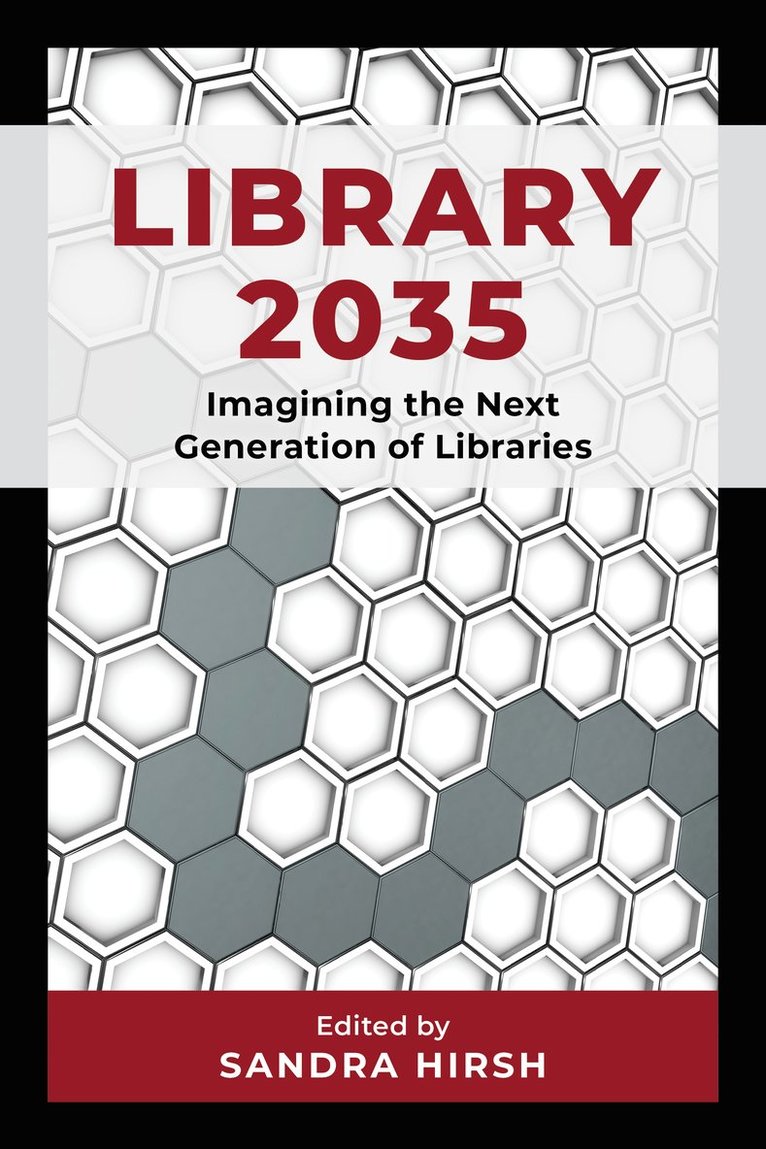
Publishing to critical acclaim, Library Journal says the book is "Essential reading for all library workers and information professionals and, indeed, for any person concerned about the future of libraries" and Booklist says "this accessible and visionary work belongs in most professional collections.”Building on the success and impact of Library 2020: Today’s Leading Visionaries Describe Tomorrow’s Library by Joseph Janes, Library 2035: Imagining the Next Generation of Libraries updates, expands upon, and broadens the discussions on the future of libraries and the ways in which they transform information services to best serve their communities.Library 2035 explores the lessons learned over the past decade and forecasts the opportunities, strengths, and challenges for libraries in the future. Contributors including R. David Lankes, Kelvin Watson, Annie Norman, Miguel Figueroa, and Nicole Cooke, along with 25 other library leaders, were asked to describe the “library of 2035” in whatever way they wanted. Their responses to this question will inspire, provoke, challenge, and expand our thinking about the role and importance of libraries in the future. Library leaders, LIS students and faculty will find this book particularly meaningful and useful as we grapple with what the future of libraries and the profession will be.
428 kr
Skickas inom 10-15 vardagar
Publishing to critical acclaim, Library Journal says the book is "Essential reading for all library workers and information professionals and, indeed, for any person concerned about the future of libraries" and Booklist says "this accessible and visionary work belongs in most professional collections.”Building on the success and impact of Library 2020: Today’s Leading Visionaries Describe Tomorrow’s Library by Joseph Janes, Library 2035: Imagining the Next Generation of Libraries updates, expands upon, and broadens the discussions on the future of libraries and the ways in which they transform information services to best serve their communities.Library 2035 explores the lessons learned over the past decade and forecasts the opportunities, strengths, and challenges for libraries in the future. Contributors including R. David Lankes, Kelvin Watson, Annie Norman, Miguel Figueroa, and Nicole Cooke, along with 25 other library leaders, were asked to describe the “library of 2035” in whatever way they wanted. Their responses to this question will inspire, provoke, challenge, and expand our thinking about the role and importance of libraries in the future. Library leaders, LIS students and faculty will find this book particularly meaningful and useful as we grapple with what the future of libraries and the profession will be.