Sandra Joireman - Böcker
Visar alla böcker från författaren Sandra Joireman. Handla med fri frakt och snabb leverans.
2 produkter
2 produkter
976 kr
Skickas inom 5-8 vardagar
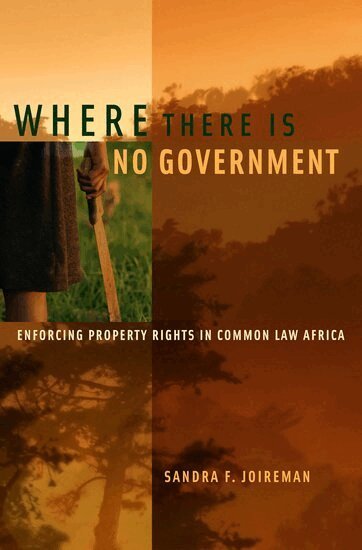
In Sub-Saharan Africa, property rights law is an especially potent source of instability. As the worldwide post-Cold War era trend toward state-run property rights expansion clashes with longstanding customs and what many would consider bureaucratic incapacity, conflicts are inevitable. Many advocates from NGOs have argued that the region's manifold governance problems stem at least in part from the state's inability to enforce property rights. Instead, 'private' property rights regimes, largely independent of the state, have flourished. In recent years, there has, in fact, been a concerted effort to create stronger property rights laws, and in Where There is No Government, Sandra Joireman traces how this has played out in Ghana, Uganda, and Kenya. The problem is that while new, better laws might now be on the books, they effectively do not exist if they are not enforced--a fact that causes major problems for development. Those who possess land cannot legally prove it's theirs, and those who are often culturally prohibited from owning property, like women and migrants, have trouble exercising their legal rights to property.While there are those who may argue that African understandings of property law are relatively efficient and adaptable because they have evolved organically, Joireman contends that this view discounts one very likely possibility--that such systems are in fact predatory and favor elites. Operating from this assumption, she employs a series of novel measures to determine which types of property regimes promote social welfare and which hinder it. She concludes that while the sub-Saharan states usually have a monopoly over the use of force, they typically do not have control over property law. Bowing to customary understandings of property, they have largely ceded it to private actors (many of whom are criminal). If Africa is to develop in a manner that promotes broad social well being, a legalistic approach is inadequate--changes in statutes and laws are not enough. State institutions must be able and willing to enforce property rights if development is to occur. Where There is No Government is at once an authoritative and powerful account of this central dilemma in Africa, and a prescription for addressing it.
875 kr
Skickas inom 10-15 vardagar
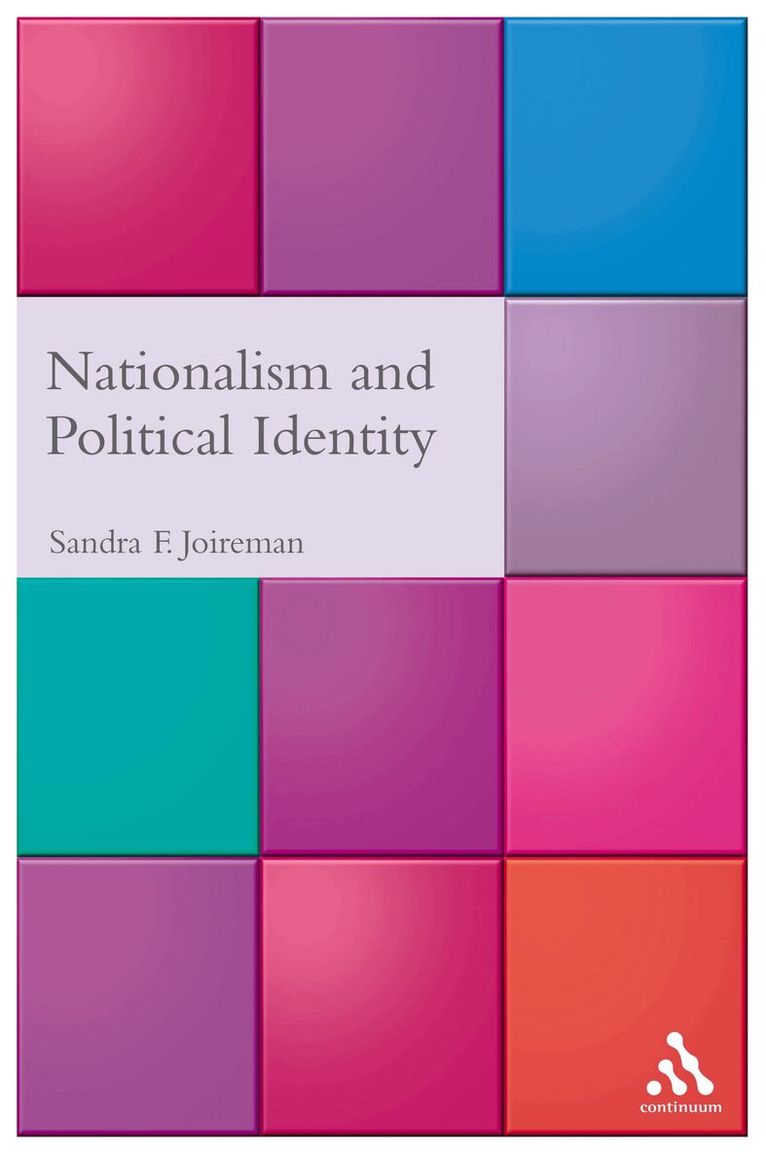
A textbook for undergraduates taking courses on nationalism and ethnicity, this title provides comprehensive coverage of the subject. Boxed summaries, questions and suggestions for further reading are all included. Nationalism and ethnicity are considered within the context of both traditional and "new" (Cold War perspectives) international relations theory. Sandra Joireman explains the conflict between primordialism (the view that ethnicity is inborn and ethnic division natural), instrumentalism (ethnicity is a tool to gain some larger, typically material end) and social constructivism (the emerging consensus that ethnicity is flexible and people can make choices about how they define themselves). Case studies are included on Quebec, Bosnia, Northern Ireland and Eritrea.