512 kr
Skickas inom 11-20 vardagar
512 kr
Skickas inom 11-20 vardagar
236 kr
Skickas inom 3-6 vardagar
661 kr
Läs direkt efter köp
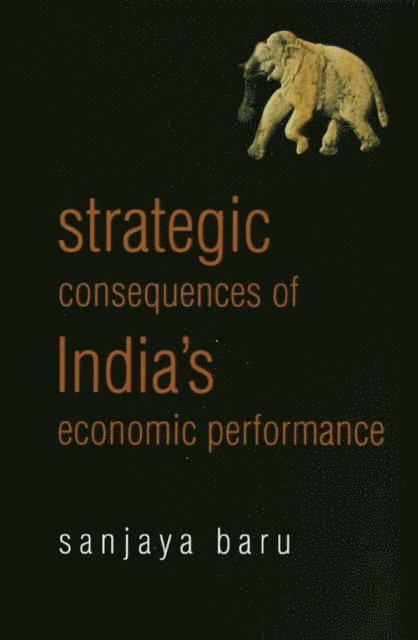
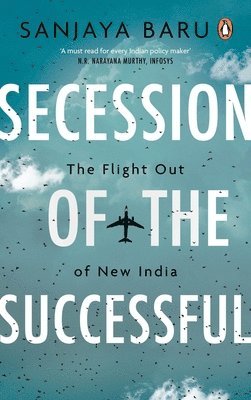
In this book, Sanjaya Baru, one of India’s most respected commentators on political and economic issues, pays close attention to the strategic consequences of India’s increasingly impressive economic performance. The new turn in India''s economic policies and performance in the last decade of the twentieth century; the success of Indian enterprise in the post-WTO world; the emergence of a confident professional middle-class; a demonstrated nuclear capability; and the resilience of an open society and an open economy, in the face of multiple and complex challenges, have all shaped India''s response to the tectonic shifts in the global balance of power in the post-Cold War era.
In this collection of academic essays and newspaper columns, Baru explores the business of diplomacy and the diplomacy of business in a rising India. The role of India''s cultural and intellectual ''soft power'' in shaping global perceptions of India are examined. The book offers a panoramic view of the geopolitics and the geo-economics of India''s recent rise as a free market democracy, and as such will interest both experts and lay readers.
654 kr
Läs direkt efter köp
In this book, Sanjaya Baru, one of India’s most respected commentators on political and economic issues, pays close attention to the strategic consequences of India’s increasingly impressive economic performance. The new turn in India''s economic policies and performance in the last decade of the twentieth century; the success of Indian enterprise in the post-WTO world; the emergence of a confident professional middle-class; a demonstrated nuclear capability; and the resilience of an open society and an open economy, in the face of multiple and complex challenges, have all shaped India''s response to the tectonic shifts in the global balance of power in the post-Cold War era.
In this collection of academic essays and newspaper columns, Baru explores the business of diplomacy and the diplomacy of business in a rising India. The role of India''s cultural and intellectual ''soft power'' in shaping global perceptions of India are examined. The book offers a panoramic view of the geopolitics and the geo-economics of India''s recent rise as a free market democracy, and as such will interest both experts and lay readers.
2 696 kr
Skickas inom 10-15 vardagar
322 kr
Skickas inom 10-15 vardagar
352 kr
Skickas inom 5-8 vardagar
228 kr
Skickas
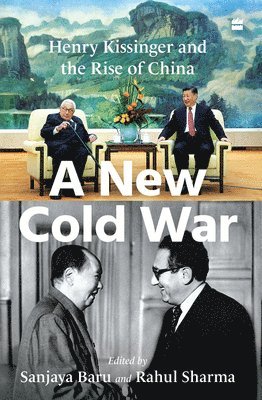
In July 1971, US National Security Advisor, Henry Kissinger, made a secret visit to China to meet top Chinese leaders. This inaugurated a new phase not just in US-China relations but in contemporary history. That visit and the subsequent US-China relationship, including the US decision to invest in China's economic rise and admit it into the WTO, combined to firm up the foundations of China's rise as a world power. For more than four decades, the leadership of the two countries had a secretive pact, which worked well to each other's benefit. The US helped power China's economic growth in the hope that Beijing would turn a new political leaf and adopt Western practices (e.g. democracy). China grew economically and militarily, used its financial prowess to spread its influence across continents, as four generations of Chinese leaders built their nation at the expense of the US. Half a century after Kissinger's historic visit, the US and China are today engaged in a trade war bordering on a new Cold War. Washington is not openly talking about 'de-coupling' from China, which has begun to challenge its global dominance, but it might very well be. China has already established itself as a dominant power across Eurasia. More worryingly, China is militarily and economically threatening its neighbours, including Japan, Korea, Vietnam, Taiwan, Australia, Philippines, Indonesia and India.
This collection of critical essays examines the impact, consequences and legacy of Kissinger's first, door-opening visit to China and how it has shaped world order.

341 kr
Skickas
348 kr
Skickas
384 kr
Skickas
512 kr
Skickas inom 11-20 vardagar
236 kr
Skickas inom 3-6 vardagar
661 kr
Läs direkt efter köp
In this book, Sanjaya Baru, one of India’s most respected commentators on political and economic issues, pays close attention to the strategic consequences of India’s increasingly impressive economic performance. The new turn in India''s economic policies and performance in the last decade of the twentieth century; the success of Indian enterprise in the post-WTO world; the emergence of a confident professional middle-class; a demonstrated nuclear capability; and the resilience of an open society and an open economy, in the face of multiple and complex challenges, have all shaped India''s response to the tectonic shifts in the global balance of power in the post-Cold War era.
In this collection of academic essays and newspaper columns, Baru explores the business of diplomacy and the diplomacy of business in a rising India. The role of India''s cultural and intellectual ''soft power'' in shaping global perceptions of India are examined. The book offers a panoramic view of the geopolitics and the geo-economics of India''s recent rise as a free market democracy, and as such will interest both experts and lay readers.
654 kr
Läs direkt efter köp
In this book, Sanjaya Baru, one of India’s most respected commentators on political and economic issues, pays close attention to the strategic consequences of India’s increasingly impressive economic performance. The new turn in India''s economic policies and performance in the last decade of the twentieth century; the success of Indian enterprise in the post-WTO world; the emergence of a confident professional middle-class; a demonstrated nuclear capability; and the resilience of an open society and an open economy, in the face of multiple and complex challenges, have all shaped India''s response to the tectonic shifts in the global balance of power in the post-Cold War era.
In this collection of academic essays and newspaper columns, Baru explores the business of diplomacy and the diplomacy of business in a rising India. The role of India''s cultural and intellectual ''soft power'' in shaping global perceptions of India are examined. The book offers a panoramic view of the geopolitics and the geo-economics of India''s recent rise as a free market democracy, and as such will interest both experts and lay readers.
2 696 kr
Skickas inom 10-15 vardagar
322 kr
Skickas inom 10-15 vardagar
352 kr
Skickas inom 5-8 vardagar
228 kr
Skickas
In July 1971, US National Security Advisor, Henry Kissinger, made a secret visit to China to meet top Chinese leaders. This inaugurated a new phase not just in US-China relations but in contemporary history. That visit and the subsequent US-China relationship, including the US decision to invest in China's economic rise and admit it into the WTO, combined to firm up the foundations of China's rise as a world power. For more than four decades, the leadership of the two countries had a secretive pact, which worked well to each other's benefit. The US helped power China's economic growth in the hope that Beijing would turn a new political leaf and adopt Western practices (e.g. democracy). China grew economically and militarily, used its financial prowess to spread its influence across continents, as four generations of Chinese leaders built their nation at the expense of the US. Half a century after Kissinger's historic visit, the US and China are today engaged in a trade war bordering on a new Cold War. Washington is not openly talking about 'de-coupling' from China, which has begun to challenge its global dominance, but it might very well be. China has already established itself as a dominant power across Eurasia. More worryingly, China is militarily and economically threatening its neighbours, including Japan, Korea, Vietnam, Taiwan, Australia, Philippines, Indonesia and India.
This collection of critical essays examines the impact, consequences and legacy of Kissinger's first, door-opening visit to China and how it has shaped world order.
341 kr
Skickas
348 kr
Skickas
384 kr
Skickas