Sanjeev Mishra - Böcker
Visar alla böcker från författaren Sanjeev Mishra. Handla med fri frakt och snabb leverans.
5 produkter
5 produkter
3 444 kr
Skickas inom 5-8 vardagar
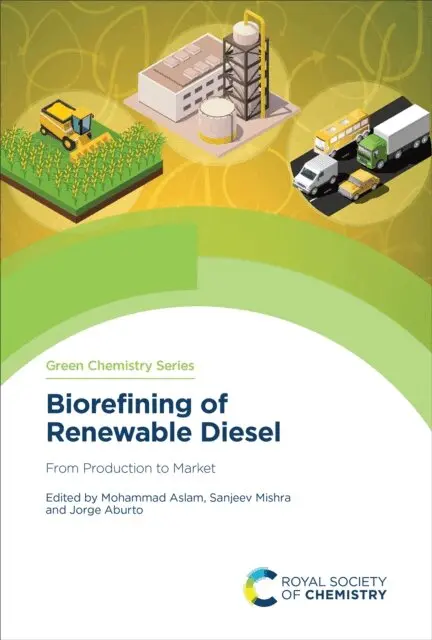
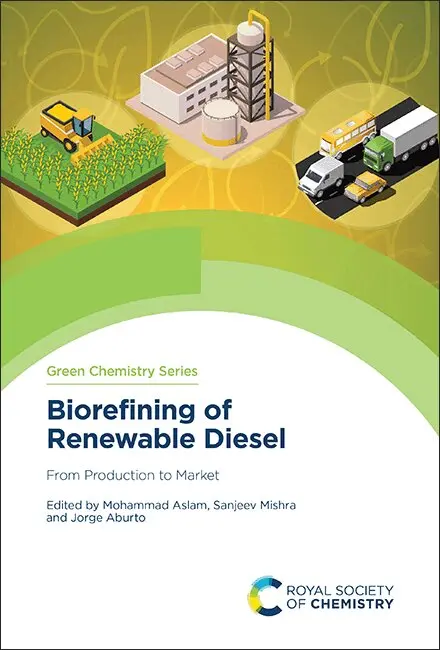
Renewable diesel is a liquid transportation fuel derived from biomass, making it more sustainable than standard fossil fuels. It differs from biodiesel in chemical composition, properties and processing route. Renewable diesel is produced through hydroprocessing and subsequent distillation using a fractional distillation process similar to that used for petroleum refining. This produces a fuel with a high cetane number, meaning it performs well in engines and can be a drop-in replacement for fossil-based diesel.Biorefining of Renewable Diesel begins with an introduction to the need for, and potential of, renewable diesel before looking at processes for 2nd and 3rd generation renewable diesel as well as production from waste feedstocks. It includes discussion of integrating renewable diesel biorefineries with existing petrol refineries, life cycle analysis of renewable diesel biorefineries and a perspective on the future of renewable diesel. This book is a valuable resource for any transportation fuel professionals interested in sustainability solutions.
1 377 kr
Skickas inom 10-15 vardagar
Sustainable aviation fuels have the potential to make an essential contribution to decarbonizing the aviation sector and play an important role in strengthening the circular bioeconomy. This book presents recent advances and challenges in sustainable aviation fuel, with contributions from a global group of industry experts exploring alternative fuel technologies, feedstocks and conversion processes, combustion performance and emissions, and the technical and environmental challenges of implementing the use of alternative fuels for aviation. The book presents sustainability assessments, including techno-economic analyses and lifecycle assessments on developing sustainable aviation fuels from renewable sources, mainly from second and third-generation biomass feedstocks.Sustainable Aviation Fuels: Recent Advances and Future Challenges provides an excellent overview ofthe aviation and green energy sectors and is an invaluable resource for researchers and industrypractitioners working on commercially viable sustainable aviation fuels. The book will also provide afoundation for graduate and postgraduate students, researchers, and professionals working in thebroader fields of sustainable energy.
Del 14 - Biofuel and Biorefinery Technologies
Biocrude Oil Biorefinery
An Emerging Biorefining Approach
Inbunden, Engelska, 2025
2 958 kr
Skickas inom 7-10 vardagar
Biorefineries are increasingly important in providing sustainable routes to the oil industry. This book provides a comprehensive analysis of biocrude biorefinery to convert biocrude into environmentally friendly fuels and high-value-added products.It begins by discussing the biorefinery concept with its fundamentals and biocrude biorefinery as a sustainable solution for bioenergy and the green economy, explaining the chemistry and reaction mechanism behind biocrude production and analysing the different feedstocks, including lignocellulosic biomass, for biocrude production, recent developments and associated challenges.The second part focuses on waste oils and liquid wastes for sustainable biocrude oil production in a biorefinery approach, as well as on 3rd generation of biorefinery feedstocks (algal biomass) as emerging feedstock for biocrude oil production and high-value products in biorefineries and biocrude oil derived from municipal and industrial organic wastes in the framework of a waste biorefinery concept. Furthermore, bio-oil constitutes a promising energy source for future hydrogen production as well as for the catalytic conversion of crude bio-oil into environmentally friendly transport fuels. The physicochemical and analytical techniques used for the analysis of crude bio-oil with fuel properties and international standards, as well as microbial production and its future applications are also covered.This book will be of great interest to practitioners, graduate students, researchers and policymakers involved in crude bio-oil biorefineries for sustainable development. This book also explores the relationship between biofuels and Sustainable Development Goals (SDGs) 7. Furthermore, the book lays a solid foundation for the establishment of crude bio-oil-based biorefineries and thus contributes to a sustainable, cleaner, greener and livable blue planet for the next generations. Crude bio-oil is likely to be the "green gold" of the biorefinery of the future and this book will be a milestone for biorefineries.
2 958 kr
Skickas inom 10-15 vardagar
Biorefineries are increasingly important in providing sustainable routes to the oil industry. This book provides a comprehensive analysis of biocrude biorefinery to convert biocrude into environmentally friendly fuels and high-value-added products.It begins by discussing the biorefinery concept with its fundamentals and biocrude biorefinery as a sustainable solution for bioenergy and the green economy, explaining the chemistry and reaction mechanism behind biocrude production and analysing the different feedstocks, including lignocellulosic biomass, for biocrude production, recent developments and associated challenges.The second part focuses on waste oils and liquid wastes for sustainable biocrude oil production in a biorefinery approach, as well as on 3rd generation of biorefinery feedstocks (algal biomass) as emerging feedstock for biocrude oil production and high-value products in biorefineries and biocrude oil derived from municipal and industrial organic wastes in the framework of a waste biorefinery concept. Furthermore, bio-oil constitutes a promising energy source for future hydrogen production as well as for the catalytic conversion of crude bio-oil into environmentally friendly transport fuels. The physicochemical and analytical techniques used for the analysis of crude bio-oil with fuel properties and international standards, as well as microbial production and its future applications are also covered.This book will be of great interest to practitioners, graduate students, researchers and policymakers involved in crude bio-oil biorefineries for sustainable development. This book also explores the relationship between biofuels and Sustainable Development Goals (SDGs) 7. Furthermore, the book lays a solid foundation for the establishment of crude bio-oil-based biorefineries and thus contributes to a sustainable, cleaner, greener and livable blue planet for the next generations. Crude bio-oil is likely to be the "green gold" of the biorefinery of the future and this book will be a milestone for biorefineries.
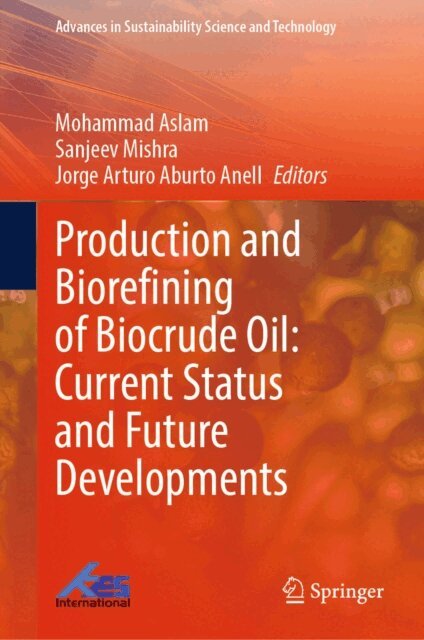
Production and Biorefining of Biocrude Oil: Current Status and Future Developments
Inbunden, Engelska, 2025
1 588 kr
Skickas inom 7-10 vardagar
This book confers a comprehensive discussion on the production and biorefining of biocrude oil derived from second- and third-generation biomass feedstocks. It discusses about the concept of biorefinery—fundamentals, biorefining raw materials, and feedstocks and its associated challenges. The book emphasizes on the 3rd-generation biorefining feedstock (algae) as an emerging feedstock for the biorefineries. In addition, co-feedstocks employed in biorefinery are also deliberated. It also presents various thermochemical conversion approaches such as hydrothermal liquefaction, pyrolysis, Fischer-Tropsch process and hydroprocessing. It deals with the sustainable production of biocrude oil from algal biomass and its upgradation for enhanced fuel properties. The book also deliberates on current scenario and future developments in the field of biorefining of biocrude oil and catalysts. A comparative assessment of properties and downstream upgradation of biocrude oil through hydrothermal and pyrolysis processes is presented. Moreover, sustainable production of biofuels and value-added products from biorefinery, life cycle and techno-economic assessment of the conversion of biocrude oil from pyrolysis, and biocrude upgrading technology and challenges are also discussed. This book is a good reference for professionals, post-graduate students, researchers, and policymakers working in the areas of biorefineries for sustainable development.