Sara Cobb – författare
Visar alla böcker från författaren Sara Cobb. Handla med fri frakt och snabb leverans.
5 produkter
5 produkter
Inbunden, Engelska, 2013
1 191 kr
Skickas inom 5-8 vardagar
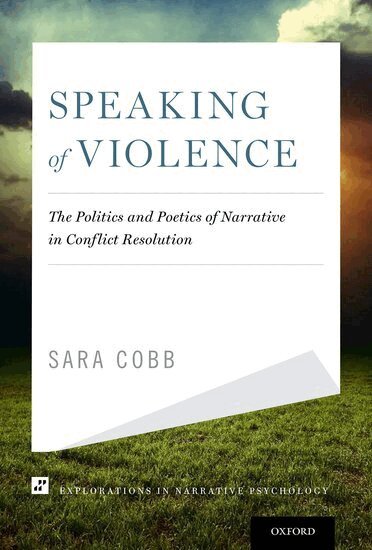
In the context of ongoing or historical violence, people tell stories about what happened, who did what to whom and why. Yet frequently, the speaking of violence reproduces the social fractures and delegitimizes, again, those that struggle against their own marginalization. This speaking of violence deepens conflict and all too often perpetuates cycles of violence. Alternatively, sometimes people do not speak of the violence and it is erased, buried with the bodies that bear it witness. This reduces the capacity of the public to address issues emerging in the aftermath of violence and repression. This book takes the notion of "narrative" as foundational to conflict analysis and resolution. Distinct from conflict theories that rely on accounts of attitudes or perceptions in the heads of individuals, this narrative perspective presumes that meaning, structured and organized as narrative processes, is the location for both analysis of conflict, as well as intervention.But meaning is political, in that not all stories can be told, or the way they are told delegitimizes and erases others. Thus, the critical narrative theory outlined in this book offers a normative approach to narrative assessment and intervention. It provides a way of evaluating narrative and designing "better-formed" stories: "better" in that they are generative of sustainable relations, creating legitimacy for all parties. In so doing, they function aesthetically and ethically to support the emergence of new histories and new futures. Indeed, critical narrative theory offers a new lens for enabling people to speak of violence in ways that undermine the intractability of conflict
Inbunden, Engelska, 2019
1 676 kr
Skickas inom 10-15 vardagar
The field of conflict resolution has evolved dramatically during the relatively short duration of the discipline’s existence. Each generation of scholars has struggled with the major puzzles of their era, providing theories and solutions that meet the needs of the time, only to be pushed forward by new insights and, at times, totally upended by a changing world.This introductory course text explores the genealogy of the field of conflict resolution by examining three different epochs of the field, each one tied to the historical context and events of the day. In each of these epochs, scholars and practitioners worked to understand and address the conflicts that the world was facing, at that time.This book provides a framework that students will carry with them far into their careers, enriching their contributions and strengthening their voices. Rather than a didactic approach to the field, students will develop their critical analytical skills through an inductive inquiry. Students will broaden their vocabulary, grapple with argumentation, and develop critical reading skills.
Häftad, Engelska, 2019
591 kr
Skickas inom 10-15 vardagar
The field of conflict resolution has evolved dramatically during the relatively short duration of the discipline’s existence. Each generation of scholars has struggled with the major puzzles of their era, providing theories and solutions that meet the needs of the time, only to be pushed forward by new insights and, at times, totally upended by a changing world.This introductory course text explores the genealogy of the field of conflict resolution by examining three different epochs of the field, each one tied to the historical context and events of the day. In each of these epochs, scholars and practitioners worked to understand and address the conflicts that the world was facing, at that time.This book provides a framework that students will carry with them far into their careers, enriching their contributions and strengthening their voices. Rather than a didactic approach to the field, students will develop their critical analytical skills through an inductive inquiry. Students will broaden their vocabulary, grapple with argumentation, and develop critical reading skills.
E-bok
Engelska, 2019636 kr
Läs direkt efter köp
The field of conflict resolution has evolved dramatically during the relatively short duration of the discipline’s existence. Each generation of scholars has struggled with the major puzzles of their era, providing theories and solutions that meet the needs of the time, only to be pushed forward by new insights and, at times, totally upended by a changing world.This introductory course text explores the genealogy of the field of conflict resolution by examining three different epochs of the field, each one tied to the historical context and events of the day. In each of these epochs, scholars and practitioners worked to understand and address the conflicts that the world was facing, at that time.This book provides a framework that students will carry with them far into their careers, enriching their contributions and strengthening their voices. Rather than a didactic approach to the field, students will develop their critical analytical skills through an inductive inquiry. Students will broaden their vocabulary, grapple with argumentation, and develop critical reading skills.
E-bok
Spanska, 2016170 kr
Läs direkt efter köp
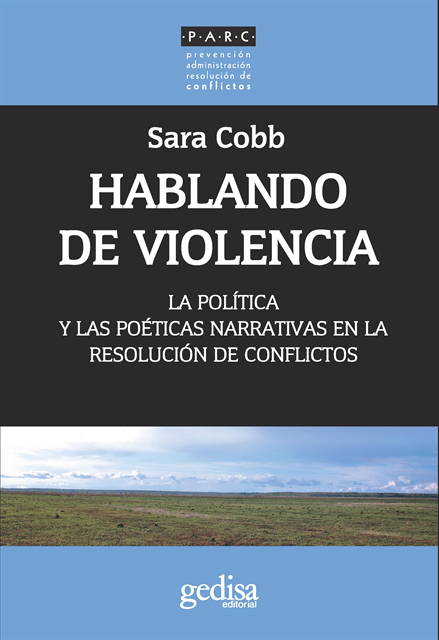
Este libro constituye una valiosa aportación para la investigación y la práctica sobre análisis y resolución de conflictos desde una perspectiva narrativa. Se basa en tres ideas fundamentales: la teoría narrativa crítica, la teoría de la transformación narrativa y la ética estética. El objetivo que la autora propone, en un proceso de la resolución de conflictos, es el paso desde una narrativa conflictiva (conflict story) hacia una historia mejor construida (better-formed story), a través de la consecución de momentos críticos (critical moments) y giros (turning points), tomando en cuenta la propia subjetividad y el testimonio de sufrimiento del Otro, así como dándoles voz y teniendo en cuenta el espacio donde se haga el proceso. Por lo tanto, el libro de Sara Cobb proporciona bases filosóficas sólidas para la resolución de conflictos a nivel local, nacional e internacional. Retoma autores como: Arendt, Levinas, Rancière, Foucault, Ricoeur, Lyotard y Derrida, entre otros.