Sara Delamont – författare
762 kr
Skickas inom 3-6 vardagar
2 435 kr
Skickas inom 10-15 vardagar
574 kr
Skickas inom 10-15 vardagar
2 407 kr
Skickas inom 10-15 vardagar
741 kr
Skickas inom 10-15 vardagar
2 264 kr
Skickas inom 10-15 vardagar
2 067 kr
Skickas inom 10-15 vardagar
2 617 kr
Skickas inom 10-15 vardagar
735 kr
Skickas inom 10-15 vardagar
720 kr
Skickas inom 10-15 vardagar
706 kr
Läs direkt efter köp
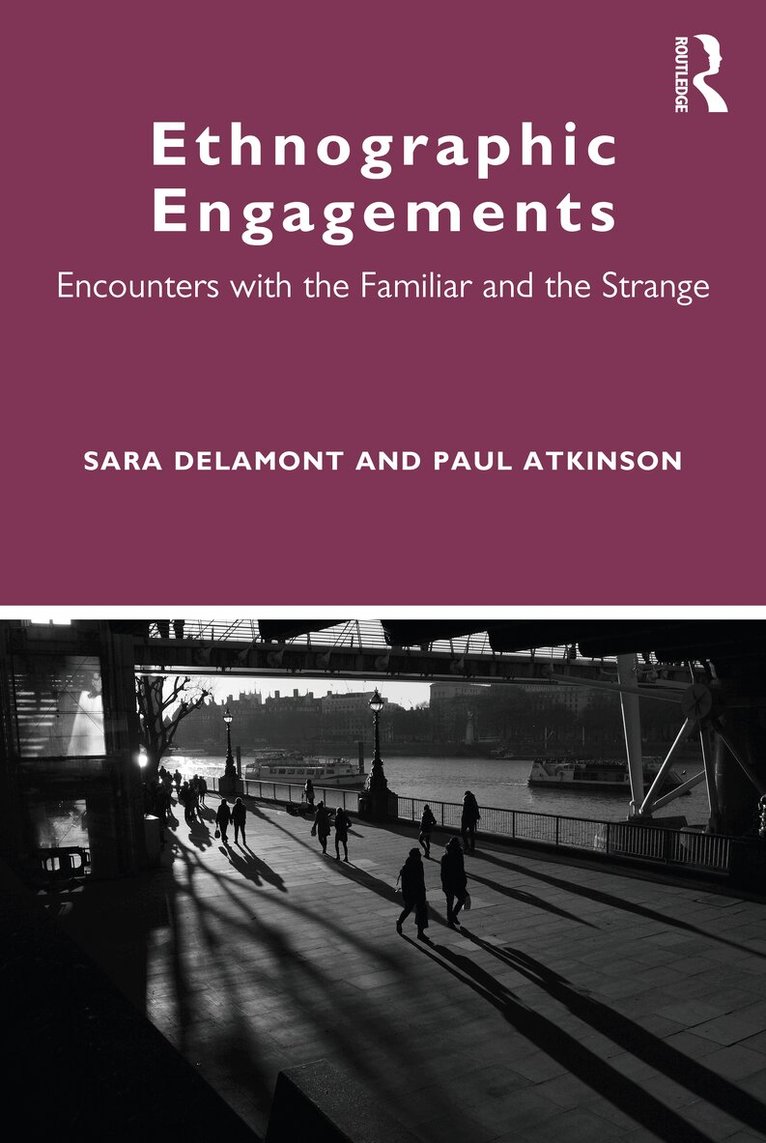
In Ethnographic Engagements: Encounters with the Familiar and the Strange Delamont and Atkinson, each with over 40 years of experience as ethnographers, present strategies for designing, conducting and publishing research that contributes original insights.
Ethnography is a core qualitative research method, widely used across the social sciences. However, producing good, interesting and thought-provoking ethnography is never easy. This book provides effective research strategies for combatting familiarity in the context of empirical fieldwork. The authors rehearse ways that challenge the ethnographer to avoid taken-for-granted ideas, and to make the familiar strange. The book covers the cycle of research from research questions to publication and leaving the field and brings together the central themes of their life’s work in one clearly written volume.
This book is aimed at researchers at postgraduate level and beyond, their supervisors and principal investigators, and at experienced investigators who want to improve their thinking. Any ethnographer will find ideas and proposals to help them reflect self-critically and creatively about their research practice.
706 kr
Läs direkt efter köp
In Ethnographic Engagements: Encounters with the Familiar and the Strange Delamont and Atkinson, each with over 40 years of experience as ethnographers, present strategies for designing, conducting and publishing research that contributes original insights.
Ethnography is a core qualitative research method, widely used across the social sciences. However, producing good, interesting and thought-provoking ethnography is never easy. This book provides effective research strategies for combatting familiarity in the context of empirical fieldwork. The authors rehearse ways that challenge the ethnographer to avoid taken-for-granted ideas, and to make the familiar strange. The book covers the cycle of research from research questions to publication and leaving the field and brings together the central themes of their life’s work in one clearly written volume.
This book is aimed at researchers at postgraduate level and beyond, their supervisors and principal investigators, and at experienced investigators who want to improve their thinking. Any ethnographer will find ideas and proposals to help them reflect self-critically and creatively about their research practice.
651 kr
Läs direkt efter köp
914 kr
Skickas inom 5-8 vardagar
2 754 kr
Skickas inom 10-15 vardagar
2 273 kr
Skickas inom 10-15 vardagar
605 kr
Skickas inom 10-15 vardagar
1 537 kr
Skickas inom 10-15 vardagar
591 kr
Skickas inom 10-15 vardagar
3 371 kr
Skickas inom 3-6 vardagar
`This wonderful Handbook establishes the central, and complex place ethnography now occupies in the human disciplines. All future work will begin here' - Norman K Denzin, University of Illinois, Urbana-Champaign
`A marvellous achievement! The Handbook has all the marks of a winner - compelling writing, comprehensive coverage and very useful discussions. This is a real benchmark for ethnography. It will set the background for debate and point to new directions for years to come. My graduate students will love it' - Jaber F Gubrium, University of Florida, Gainesville
`The Handbook of Ethnography compiles invaluable, original, critical essays on ethnographic work, earning it a place on everyone's must-have bookshelf' - Virginia Olesen, University of California, San Francisco
`The Handbook is a remarkable synthesis of existing thinking in and around ethnography' - Forum for Qualitative Social Research - follow the link below to read the complete review
`No self-respecting qualitative researcher should be without Paul Atkinson (et al's) handbook on ethnography. This really is encyclopaedic in concept and scope. Many "big names" in the field have contributed so this has to be the starting point for anyone looking to understand the field in substantive topic, theoretical tradition and methodology. The chapters on visual ethnography and semiotics expand the field marvellously, while those on field notes and on ethics are accomplished surveys of the field' - SRA News
Ethnography is one of the chief research methods in sociology, anthropology and other cognate disciplines in the social sciences. This Handbook provides an unparalleled, critical guide to its principles and practice.
The volume is organized into three sections. The first systematically locates ethnography firmly in its relevant historical and intellectual contexts. The roots of ethnography are pinpointed and the pattern of its development is demonstrated.
The second section examines the contribution of ethnography to major fields of substantive research. The impact and strengths and weaknesses of ethnographic method are dealt with authoritatively and accessibly.
The third section moves on to examine key debates and issues in ethnography, from the conduct of research through to contemporary arguments.
The result is a landmark work in the field, which draws on the expertise of an internationally renowned group of interdisicplinary scholars. The Handbook of Ethnography provides readers with a one-stop critical guide to the past, present and future of ethnography. It will quickly establish itself as the ethnographer's bible.
789 kr
Skickas
`This is a model of what a textbook should be, for Delamont states what she intends to do, does it with clarity, summarises succinctly and provides interesting and pertinent references' - Sociological Research Online
This book explores the achievements of British feminist sociology in theory, methods and empirical research. It outlines the barriers to the development of feminism and explores contemporary challenges. It provides an unrivalled guide to the origins of feminism in the discipline of sociology, analyses the uneasy relationships between feminists and the founding fathers and elucidates the opportunities and challenges presented by post-modernism. The book was written in the spirit of trying to be even-handed in its discussion of the various schools of feminism. It draws on a variety of empirical areas, from science to stratification and from healths and illness to the professions to illustrate the depth and vitality of feminist perspectives.
1 621 kr
Skickas
488 kr
Skickas inom 10-15 vardagar
1 655 kr
Skickas inom 10-15 vardagar
488 kr
Skickas inom 10-15 vardagar
1 161 kr
Skickas inom 10-15 vardagar
336 kr
Skickas inom 10-15 vardagar
572 kr
Läs direkt efter köp
Originally published in 1980 The Sociology of Women: An Introduction aimed to provide a sociological, biographically organised portrait of women written from a feminist perspective. It was the first self-contained analytical textbook treatment to present an account of the situation of women in modern Britain that was informed by sociological research. At the same time, it remained a straightforward and elementary text in the sense that it assumed no previous knowledge and is written throughout with the beginning student in mind; it provided a lively, thorough and realistic introduction to a range of sociological issues and problems; it is abundantly illustrated by examples from research findings and views women always in the context of the wider society around them; nor does it shirk controversial questions.
The book opens with a short chapter on sex and gender, then traces women’s lives as they grow from childhood through to old age. There are chapters on childhood, adolescence and early adulthood in the first part of the book, which deals principally with the home, the school and friendship patterns. In part two the focus shifts to the adult lives of women. The chapters here are on work, illness and deviance; on class and community; on politics, leisure and religion; and on motherhood and old age. An important feature of the book will be the extensive guidance it provides on further reading and the inclusion of a full bibliography of material on women’s lives.
572 kr
Läs direkt efter köp
Originally published in 1980 The Sociology of Women: An Introduction aimed to provide a sociological, biographically organised portrait of women written from a feminist perspective. It was the first self-contained analytical textbook treatment to present an account of the situation of women in modern Britain that was informed by sociological research. At the same time, it remained a straightforward and elementary text in the sense that it assumed no previous knowledge and is written throughout with the beginning student in mind; it provided a lively, thorough and realistic introduction to a range of sociological issues and problems; it is abundantly illustrated by examples from research findings and views women always in the context of the wider society around them; nor does it shirk controversial questions.
The book opens with a short chapter on sex and gender, then traces women’s lives as they grow from childhood through to old age. There are chapters on childhood, adolescence and early adulthood in the first part of the book, which deals principally with the home, the school and friendship patterns. In part two the focus shifts to the adult lives of women. The chapters here are on work, illness and deviance; on class and community; on politics, leisure and religion; and on motherhood and old age. An important feature of the book will be the extensive guidance it provides on further reading and the inclusion of a full bibliography of material on women’s lives.
552 kr
Läs direkt efter köp
In Knowledgeable Women, originally published in 1989, Sara Delamont traces the history of women''s education and the elites it produces. She examines class and gender divisions in the structure and contest of education in Britain and the USA from 1850 to 1989. Her empirical focus is of course elites – especially elite women – but the justification for this is the belief that sociologists should study the powerful as well as the poor and powerless. Above all, Delamont argues the case for the relevance to sociology of a serious study of women, their schooling and professional training, and their struggle to enter the professions.She also encourages a broader focus to the sociology of education itself, viewing her subject from an anthropological structuralist perspective and encouraging the inclusion of anti-sexist ideas and material from other areas of sociology such as the study of science and stratification. She demonstrates for the first time the relevance to education of structuralist theorists such as Mary Douglas.Knowledgeable Women is a structuralist and feminist challenge to the sociology of education by an author highly regarded in Britain and the USA. It offers a non-sexist, structuralist, fully sociological sociology of education.