Sara Morell – författare
Visar alla böcker från författaren Sara Morell. Handla med fri frakt och snabb leverans.
4 produkter
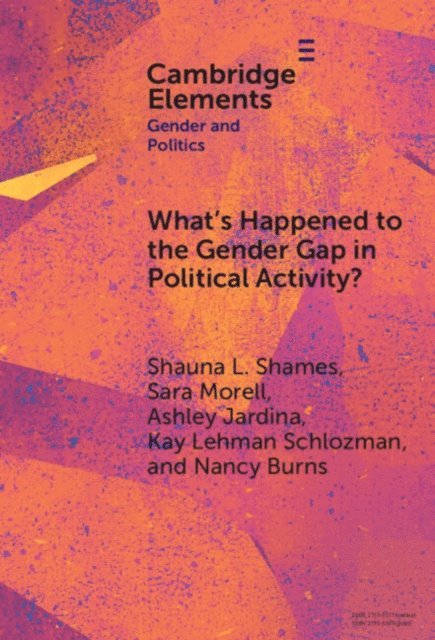
What's Happened to the Gender Gap in Political Activity?
Social Structure, Politics, and Participation in the United States
Av Nancy Burns, Kay Lehman Schlozman m. fl.
E-bok, 2025
294 kr
Lägg i varukorg
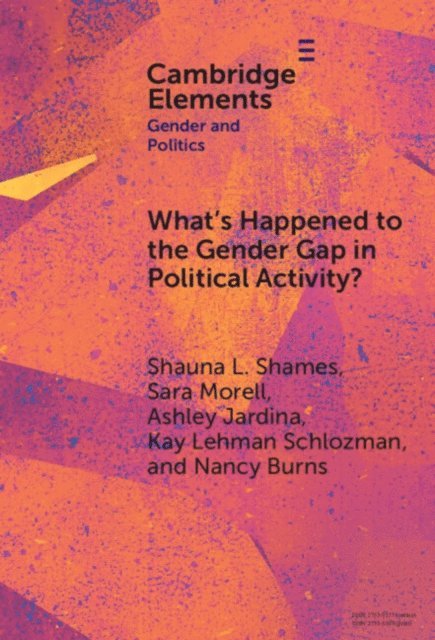
What's Happened to the Gender Gap in Political Activity?
Social Structure, Politics, and Participation in the United States
Av Shauna L. Shames, Sara Morell m. fl.
Häftad, 2025
282 kr
Lägg i varukorg
This Element considers recent changes to the long-standing pattern in US politics that women are less politically active than men. On one hand, the gender gap in political activity beyond voting has disappeared. On the other, the disparity remains when it comes to political money. What is the …
What's Happened to the Gender Gap in Political Activity?
Social Structure, Politics, and Participation in the United States
Av Nancy Burns, Kay Lehman Schlozman m. fl.
E-bok, 2025
294 kr
Lägg i varukorg
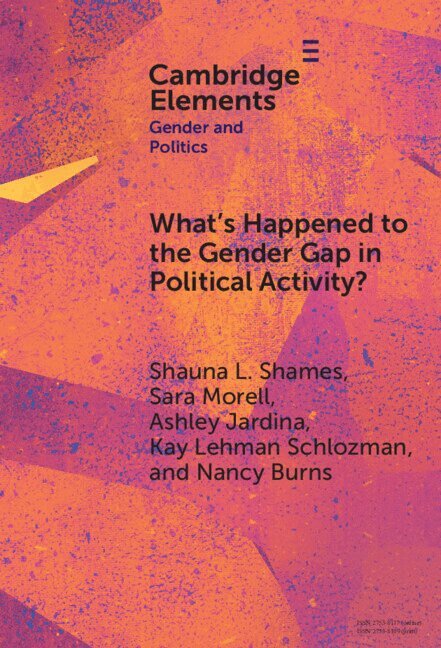
What's Happened to the Gender Gap in Political Activity?
Social Structure, Politics, and Participation in the United States
Av Shauna L. Shames, Sara Morell m. fl.
Inbunden, 2025
911 kr
Lägg i varukorg
This Element considers recent changes to the long-standing pattern in US politics that women are less politically active than men. On one hand, the gender gap in political activity beyond voting has disappeared. On the other, the disparity remains when it comes to political money. What is the …