Sara Smart – författare
Visar alla böcker från författaren Sara Smart. Handla med fri frakt och snabb leverans.
5 produkter
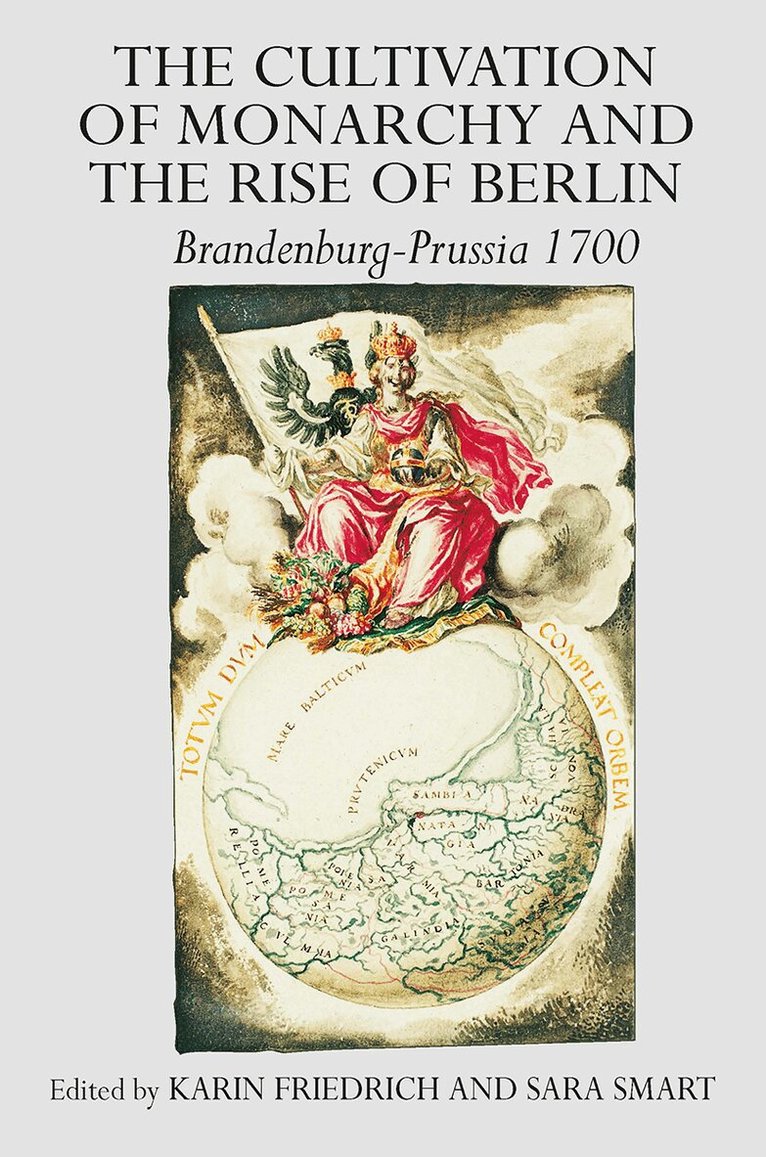
Cultivation of Monarchy and the Rise of Berlin
Brandenburg-Prussia 1700
Av Karin Friedrich, Sara Smart
Inbunden, 2010
2588 kr
Lägg i varukorg
The start of the eighteenth century witnessed the elevation of Prussia to monarchic status, a reflection of the rising importance of the Hohenzollern dynasty within the Empire as well as in Central Europe. In tandem with this, Berlin came to the fore as the capital city of Brandenburg, with the …
Cultivation of Monarchy and the Rise of Berlin
Brandenburg-Prussia 1700
Av Karin Friedrich, Sara Smart
Häftad, 2024
667 kr
Lägg i varukorg
The start of the eighteenth century witnessed the elevation of Prussia to monarchic status, a reflection of the rising importance of the Hohenzollern dynasty within the Empire as well as in Central Europe. In tandem with this, Berlin came to the fore as the capital city of Brandenburg, with the …
Cultivation of Monarchy and the Rise of Berlin
Brandenburg-Prussia 1700
Av Karin Friedrich, Sara Smart
E-bok, 2017
785 kr
Lägg i varukorg
The start of the eighteenth century witnessed the elevation of Prussia to monarchic status, a reflection of the rising importance of the Hohenzollern dynasty within the Empire as well as in Central Europe. In tandem with this, Berlin came to the fore as the capital city of Brandenburg, with the …
Cultivation of Monarchy and the Rise of Berlin
Brandenburg-Prussia 1700
Av Karin Friedrich, Sara Smart
E-bok, 2017
768 kr
Lägg i varukorg
The start of the eighteenth century witnessed the elevation of Prussia to monarchic status, a reflection of the rising importance of the Hohenzollern dynasty within the Empire as well as in Central Europe. In tandem with this, Berlin came to the fore as the capital city of Brandenburg, with the …
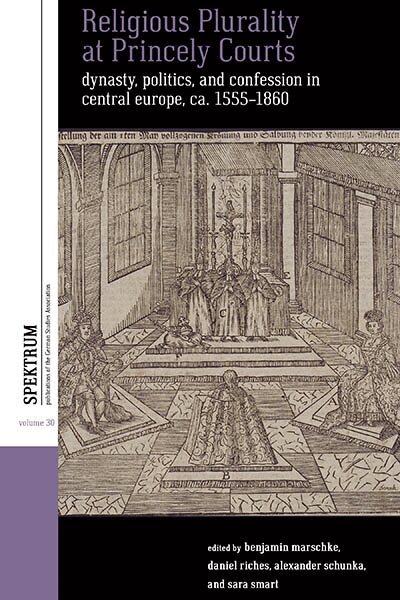
Religious Plurality at Princely Courts
Dynasty, Politics, and Confession in Central Europe, ca. 1555-1860
Av Benjamin Marschke, Daniel Riches m. fl.
Inbunden, 2024
1921 kr
Lägg i varukorg
Early modern European monarchies legitimized their rule through dynasty and religion, and ideally the divine right of the ruler corresponded with the confession of the territory. It has thus been assumed that at princely courts only a single confession was present. However, the reality of the …