Sarah A. Carter – författare
Visar alla böcker från författaren Sarah A. Carter. Handla med fri frakt och snabb leverans.
4 produkter
4 produkter
Häftad, Engelska, 1997
404 kr
Skickas inom 5-8 vardagar
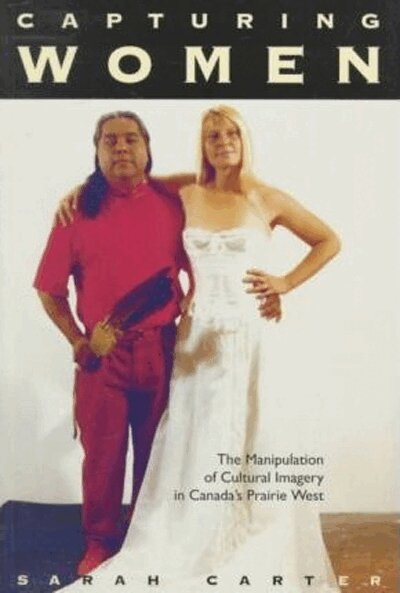
Consisting of a series of stories, events, and episodes, the book highlights shifting patterns, attitudes, and perspectives toward women in the Prairies. One of Carter's overarching themes is that women are seldom in a position to invent or project their own images, identities, or ideas of themselves, nor are they free to fully author their own texts. Focusing on captivity narratives, a popular genre in the United States that has received little attention in Canada, Carter looks at depictions of white women as victims of Aboriginal aggressors and explores the veracity of a number of accounts, including those of Fanny Kelly and Big Bear captives Theresa Delaney and Theresa Gowanlock, Canada's most famous captives. Carter also examines depictions of Aboriginal women as sinister and dangerous that appeared in the press as well as in government and some missionary publications. These representations of women, and the race and gender hierarchies created by them, endured in the Canadian West long after the last decades of the nineteenth century. Capturing Women fits into a growing body of literature on the question of women, race, and imperialism. Carter adopts a colonial framework, arguing that while the Prairies do not readily conjure up the powerful images of Empire, fundamental features of colonialism are clearly present in the extension of the power of the Canadian state and the maintenance of sharp social, economic, and spatial distinctions between the dominant and subordinate populations. She highlights similarities between images of women on the Prairies and symbols of women in other colonial cultures, such as the memsahib in Britain and the Indian captive in the United States.
E-bok
PDF, Engelska, 1990328 kr
Läs direkt efter köp
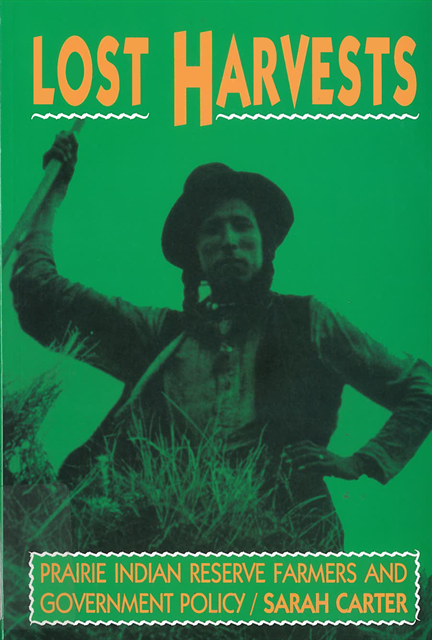
Despite repeated requests for assistance from Plains Indians, the Canadian government provided very little help between 1874 and 1885, and what little they did give proved useless. Although drought, frost, and other natural phenomena contributed to the failure of early efforts, reserve farmers were determined to create an economy based on agriculture and to become independent of government regulations and the need for assistance. Officials in Ottawa, however, attributed setbacks not to economic or climatic conditions but to the Indians'' character and traditions which, they claimed, made the Indians unsuited to agriculture. In the decade following 1885 government policies made farming virtually impossible for the Plains Indians. They were expected to subsist on one or two acres and were denied access to any improvements in technology: farmers had to sow seed by hand, harvest with scythes, and thresh with flails. After the turn of the century, the government encouraged land surrenders in order to make good agricultural land available to non-Indian settlers. This destroyed any chance the Plains Indians had of making agriculture a stable economic base. Through an examination of the relevant published literature and of archival sources in Ottawa, Manitoba, Saskatchewan, and Alberta, Carter provides the first in-depth study of government policy, Indian responses, and the socio-economic condition of the reserve communities on the prairies in the post-treaty era.
E-bok
PDF, Engelska, 19971 041 kr
Läs direkt efter köp
Consisting of a series of stories, events, and episodes, the book highlights shifting patterns, attitudes, and perspectives toward women in the Prairies. One of Carter''s overarching themes is that women are seldom in a position to invent or project their own images, identities, or ideas of themselves, nor are they free to fully author their own texts. Focusing on captivity narratives, a popular genre in the United States that has received little attention in Canada, Carter looks at depictions of white women as victims of Aboriginal aggressors and explores the veracity of a number of accounts, including those of Fanny Kelly and Big Bear captives Theresa Delaney and Theresa Gowanlock, Canada''s most famous captives. Carter also examines depictions of Aboriginal women as sinister and dangerous that appeared in the press as well as in government and some missionary publications. These representations of women, and the race and gender hierarchies created by them, endured in the Canadian West long after the last decades of the nineteenth century. Capturing Women fits into a growing body of literature on the question of women, race, and imperialism. Carter adopts a colonial framework, arguing that while the Prairies do not readily conjure up the powerful images of Empire, fundamental features of colonialism are clearly present in the extension of the power of the Canadian state and the maintenance of sharp social, economic, and spatial distinctions between the dominant and subordinate populations. She highlights similarities between images of women on the Prairies and symbols of women in other colonial cultures, such as the memsahib in Britain and the Indian captive in the United States.
265 kr
Skickas inom 5-8 vardagar