Sarah Barber – författare
Visar alla böcker från författaren Sarah Barber. Handla med fri frakt och snabb leverans.
20 produkter
History Beyond the Text
A Student’s Guide to Approaching Alternative Sources
Av Sarah Barber, Corinna Peniston-Bird
Inbunden, 2008
2601 kr
Lägg i varukorg
Historians are increasingly looking beyond the traditional, and turning to visual, oral, aural, and virtual sources to inform their work. The challenges these sources pose require new skills of interpretation and require historians to consider alternative theoretical and practical approaches.In …
History Beyond the Text
A Student’s Guide to Approaching Alternative Sources
Av Sarah Barber, Corinna Peniston-Bird
Häftad, 2008
671 kr
Lägg i varukorg
Historians are increasingly looking beyond the traditional, and turning to visual, oral, aural, and virtual sources to inform their work. The challenges these sources pose require new skills of interpretation and require historians to consider alternative theoretical and practical approaches.In …
Conquest and Union
Fashioning a British State, 1485-1725
Av Steven G. Ellis, Sarah Barber
Häftad, 1995
897 kr
Lägg i varukorg
The British Isles is a multi-national arena, but its history has traditionally been studied from a distinctively English -- often, indeed, London -- perspective. Now, however, the interweaving of the distinct but mutually-dependent histories of the four nations is at the heart of some of the …
Country House
Poems
Av Sarah Barber
Häftad, 2018
250 kr
Lägg i varukorg
Sarah Barber's Country House is a collection of pastoral poetry for the Anthropocene- she celebrates nature through attention to the scientific method and with appreciation for surrealist absurdities. Punchy and elegant, Barber's poems reintroduce readers to the strange beauty of a world they only …
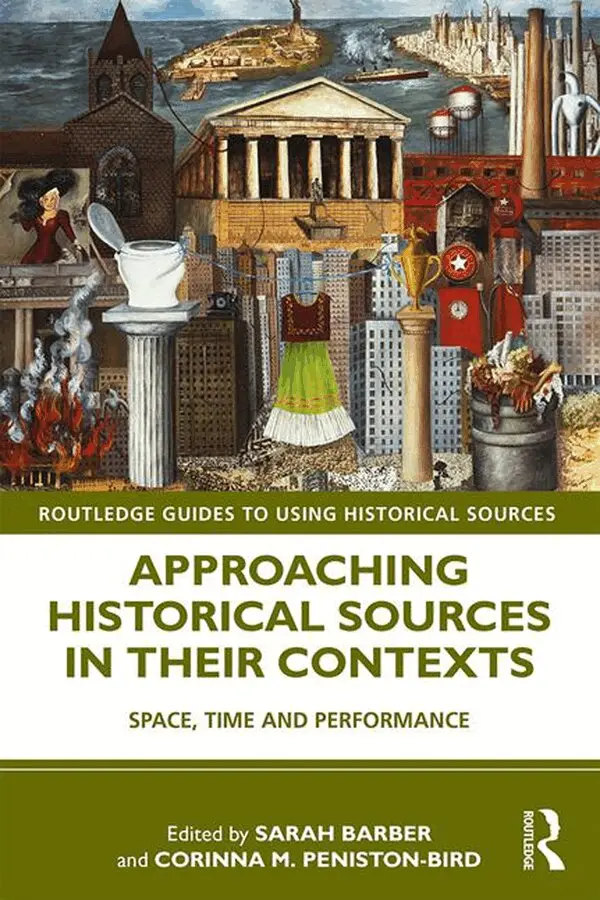
Approaching Historical Sources in their Contexts
Space, Time and Performance
Av Sarah Barber, Corinna M. Peniston-Bird
Inbunden, 2020
2601 kr
Lägg i varukorg
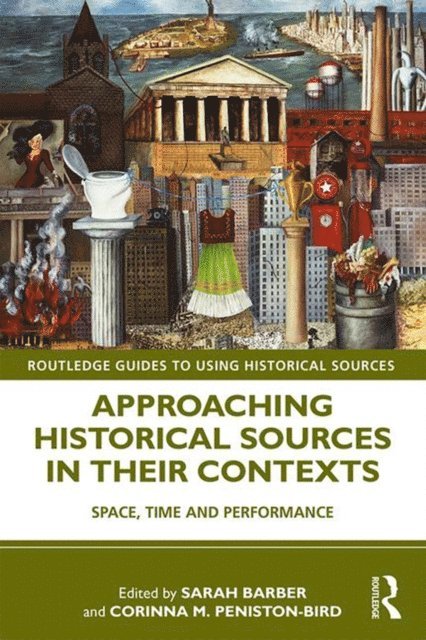
In Approaching Historical Sources in Their Contexts, 12 academics examine how space, time and performance interact to co-create context for source analysis.The chapters cover 2000 years and stretch across the Americas and Europe. They are grouped into three themes, with the first four exploring …
Approaching Historical Sources in their Contexts
Space, Time and Performance
Av Sarah Barber, Corinna M. Peniston-Bird
Häftad, 2020
641 kr
Lägg i varukorg
In Approaching Historical Sources in Their Contexts, 12 academics examine how space, time and performance interact to co-create context for source analysis.The chapters cover 2000 years and stretch across the Americas and Europe. They are grouped into three themes, with the first four exploring …
History Beyond the Text
A Student’s Guide to Approaching Alternative Sources
Av Corinna Peniston-Bird, Sarah Barber
E-bok, 2013
785 kr
Lägg i varukorg
Historians are increasingly looking beyond the traditional, and turning to visual, oral, aural, and virtual sources to inform their work. The challenges these sources pose require new skills of interpretation and require historians to consider alternative theoretical and practical approaches. In …
History Beyond the Text
A Student’s Guide to Approaching Alternative Sources
Av Corinna Peniston-Bird, Sarah Barber
E-bok, 2013
785 kr
Lägg i varukorg
Historians are increasingly looking beyond the traditional, and turning to visual, oral, aural, and virtual sources to inform their work. The challenges these sources pose require new skills of interpretation and require historians to consider alternative theoretical and practical approaches. In …
Conquest and Union
Fashioning a British State 1485-1725
Av Steven G. Ellis, Sarah Barber
Inbunden, 2016
2601 kr
Lägg i varukorg
The British Isles is a multi-national arena, but its history has traditionally been studied from a distinctively English -- often, indeed, London -- perspective. Now, however, the interweaving of the distinct but mutually-dependent histories of the four nations is at the heart of some of the …
Religion and Politics in the Ancient Americas
Av Sarah Barber, Arthur A. Joyce
Inbunden, 2017
2601 kr
Lägg i varukorg
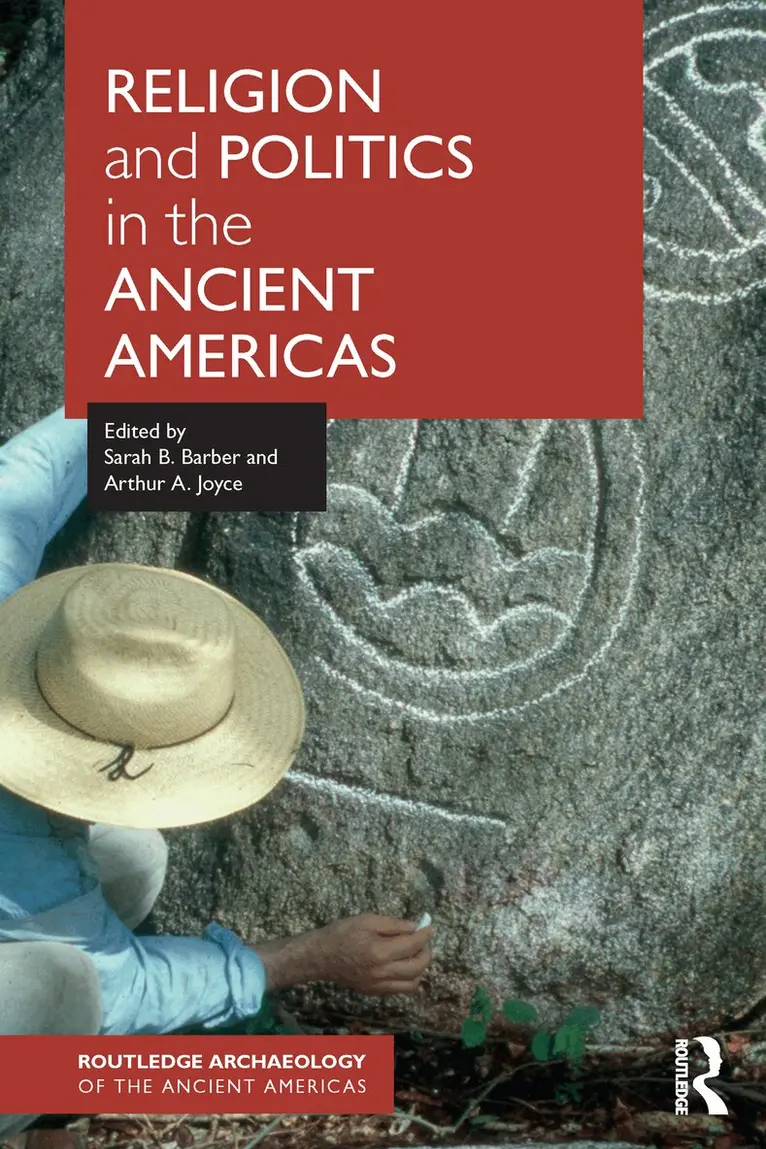
This exciting collection explores the interplay of religion and politics in the precolumbian Americas. Each thought-provoking contribution positions religion as a primary factor influencing political innovations in this period, reinterpreting major changes through an examination of how religion …
Religion and Politics in the Ancient Americas
Av Sarah Barber, Arthur A. Joyce
Häftad, 2017
656 kr
Lägg i varukorg
This exciting collection explores the interplay of religion and politics in the precolumbian Americas. Each thought-provoking contribution positions religion as a primary factor influencing political innovations in this period, reinterpreting major changes through an examination of how religion …
Religion and Politics in the Ancient Americas
Av Arthur A. Joyce, Sarah Barber
E-bok, 2017
721 kr
Lägg i varukorg
This exciting collection explores the interplay of religion and politics in the precolumbian Americas. Each thought-provoking contribution positions religion as a primary factor influencing political innovations in this period, reinterpreting major changes through an examination of how religion …
Religion and Politics in the Ancient Americas
Av Arthur A. Joyce, Sarah Barber
E-bok, 2017
745 kr
Lägg i varukorg
This exciting collection explores the interplay of religion and politics in the precolumbian Americas. Each thought-provoking contribution positions religion as a primary factor influencing political innovations in this period, reinterpreting major changes through an examination of how religion …
Conquest and Union
Fashioning a British State 1485-1725
Av Sarah Barber, Steven G. Ellis
E-bok, 2014
1052 kr
Lägg i varukorg
The British Isles is a multi-national arena, but its history has traditionally been studied from a distinctively English -- often, indeed, London -- perspective. Now, however, the interweaving of the distinct but mutually-dependent histories of the four nations is at the heart of some of the …
Conquest and Union
Fashioning a British State 1485-1725
Av Sarah Barber, Steven G. Ellis
E-bok, 2014
1030 kr
Lägg i varukorg
The British Isles is a multi-national arena, but its history has traditionally been studied from a distinctively English -- often, indeed, London -- perspective. Now, however, the interweaving of the distinct but mutually-dependent histories of the four nations is at the heart of some of the …
Approaching Historical Sources in their Contexts
Space, Time and Performance
Av Corinna M. Peniston-Bird, Sarah Barber
E-bok, 2020
749 kr
Lägg i varukorg
In Approaching Historical Sources in Their Contexts , 12 academics examine how space, time and performance interact to co-create context for source analysis. The chapters cover 2000 years and stretch across the Americas and Europe. They are grouped into three themes, with the first four exploring …
Approaching Historical Sources in their Contexts
Space, Time and Performance
Av Corinna M. Peniston-Bird, Sarah Barber
E-bok, 2020
727 kr
Lägg i varukorg
In Approaching Historical Sources in Their Contexts , 12 academics examine how space, time and performance interact to co-create context for source analysis. The chapters cover 2000 years and stretch across the Americas and Europe. They are grouped into three themes, with the first four exploring …
British Caribbean, c.1600-c.1730
Part 1
Av Sarah Barber
Inbunden, 2027
3116 kr
Kommande
During the long seventeenth century, colonial adventurers carved out a frontier in the tropics of the American Atlantic. The British Caribbean collects, presents and analyses the hand-written, unfiltered record of English-speaking colonial actors and empire-builders, exposed in letters, accounts, …
British Caribbean, c.1600-c.1730
Part 2
Av Sarah Barber
Inbunden, 2027
3116 kr
Kommande
During the long seventeenth century, colonial adventurers carved out a frontier in the tropics of the American Atlantic. The British Caribbean collects, presents and analyses the hand-written, unfiltered record of English-speaking colonial actors and empire-builders, exposed in letters, accounts, …