Sarah Bowden – författare
Visar alla böcker från författaren Sarah Bowden. Handla med fri frakt och snabb leverans.
9 produkter
9 produkter
Inbunden, Engelska, 2025
1 409 kr
Skickas inom 5-8 vardagar
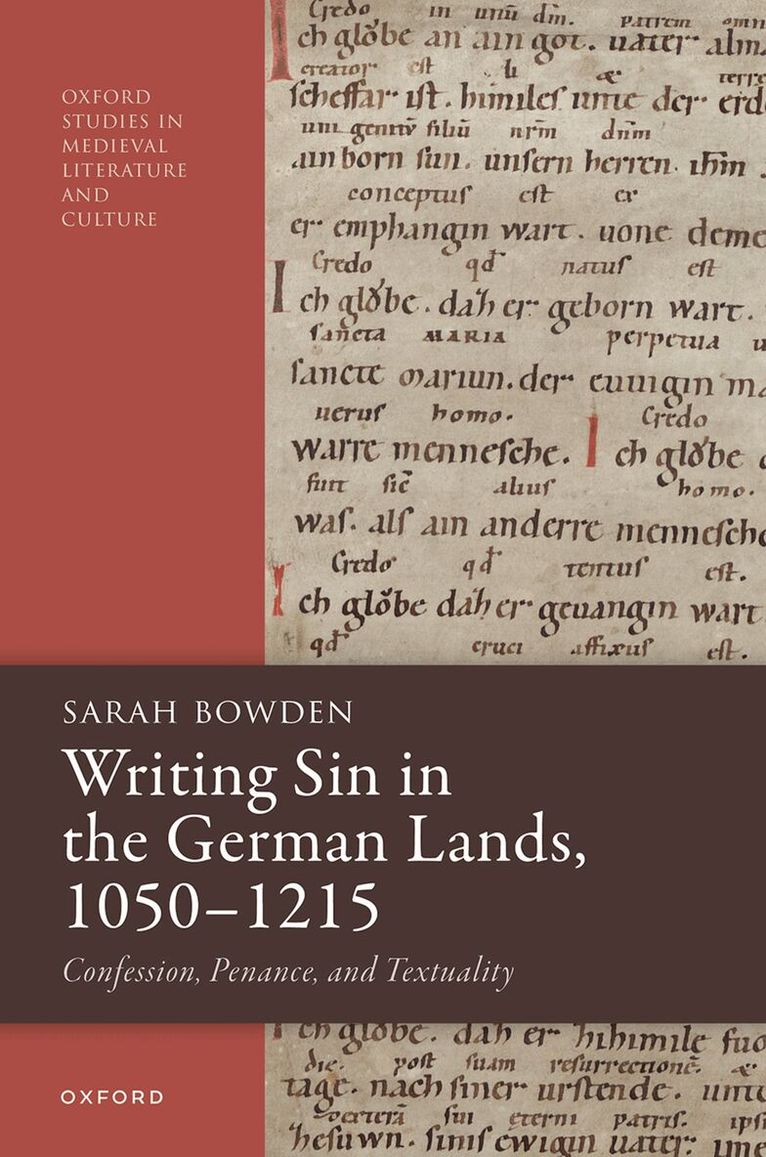
Writing Sin in the German Lands, 1050–1215 is about how sin and atonement function as an impetus for textual production and formal, linguistic, and intellectual creativity. It focuses on the late eleventh and twelfth centuries, a time in which various social and cultural conditions came together to provoke both an interest in sin and an opportunity for writing experimentally about it, and its area of enquiry is the German-speaking world. Working with a remarkably rich body of German-language texts, this book allows us not only to grasp with greater clarity aspects of medieval penitential thought and practice, but it also offers new ways of thinking about the development of German as a literary language. The book joins bodies of work on the history of penance and on devotional writing in the European vernaculars, and through the interconnection of these two fields of study, it offers a new perspective on questions that currently occupy scholars of the Middle Ages: the medieval conception of the self in relation to other and to God; the value and function of vernacular writing; the nature of textuality; and the relationship between writing, speech, material text, and performance. In five chapters that deal with a wide range of texts, many of which have had little scholarly attention, this volume shows that the long twelfth century was not only a period in which there was a particular interest in exploring aspects of the theology and practice of penance, but also, significantly, a time in which a fundamental connection can be seen between thinking about sin and creative literary production.
E-bok
PDF, Engelska, 20251 269 kr
Läs direkt efter köp
Writing Sin in the German Lands, 10501215 is about how sin and atonement function as an impetus for textual production and formal, linguistic, and intellectual creativity. It focuses on the late eleventh and twelfth centuries, a time in which various social and cultural conditions came together to provoke both an interest in sin and an opportunity for writing experimentally about it, and its area of enquiry is the German-speaking world. Working with a remarkably rich body of German-language texts, this book allows us not only to grasp with greater clarity aspects of medieval penitential thought and practice, but it also offers new ways of thinking about the development of German as a literary language. The book joins bodies of work on the history of penance and on devotional writing in the European vernaculars, and through the interconnection of these two fields of study, it offers a new perspective on questions that currently occupy scholars of the Middle Ages: the medieval conception of the self in relation to other and to God; the value and function of vernacular writing; the nature of textuality; and the relationship between writing, speech, material text, and performance. In five chapters that deal with a wide range of texts, many of which have had little scholarly attention, this volume shows that the long twelfth century was not only a period in which there was a particular interest in exploring aspects of the theology and practice of penance, but also, significantly, a time in which a fundamental connection can be seen between thinking about sin and creative literary production.
E-bok
Engelska, 20251 225 kr
Läs direkt efter köp
Writing Sin in the German Lands, 10501215 is about how sin and atonement function as an impetus for textual production and formal, linguistic, and intellectual creativity. It focuses on the late eleventh and twelfth centuries, a time in which various social and cultural conditions came together to provoke both an interest in sin and an opportunity for writing experimentally about it, and its area of enquiry is the German-speaking world. Working with a remarkably rich body of German-language texts, this book allows us not only to grasp with greater clarity aspects of medieval penitential thought and practice, but it also offers new ways of thinking about the development of German as a literary language. The book joins bodies of work on the history of penance and on devotional writing in the European vernaculars, and through the interconnection of these two fields of study, it offers a new perspective on questions that currently occupy scholars of the Middle Ages: the medieval conception of the self in relation to other and to God; the value and function of vernacular writing; the nature of textuality; and the relationship between writing, speech, material text, and performance. In five chapters that deal with a wide range of texts, many of which have had little scholarly attention, this volume shows that the long twelfth century was not only a period in which there was a particular interest in exploring aspects of the theology and practice of penance, but also, significantly, a time in which a fundamental connection can be seen between thinking about sin and creative literary production.
Del 26 - Kings College London Medieval Studies (KCLMS)
Punishment and Penitential Practices in Medieval German Writing
Inbunden, Engelska, 2018
880 kr
Skickas inom 5-8 vardagar
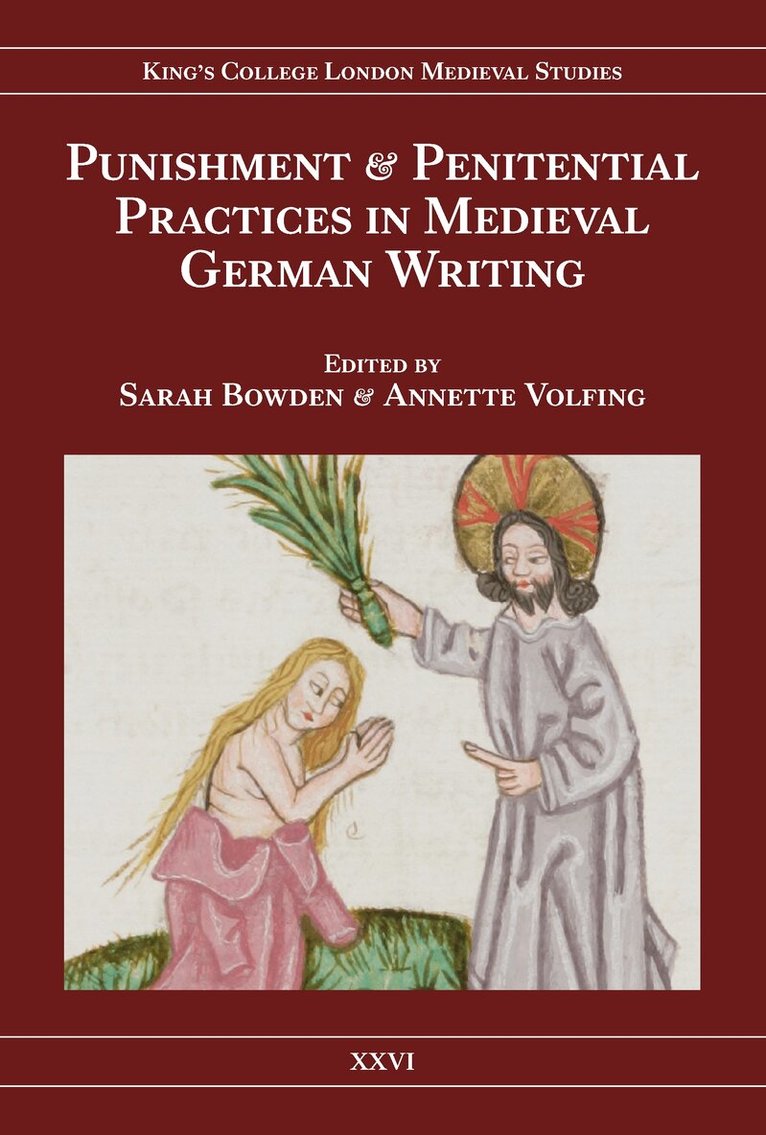
The twin themes of punishment and penance considered through both historical and literary medieval German texts.The supposed brutality of medieval punishment looms large in the popular contemporary imagination, yet this perception can obscure the diverse and nuanced reactions of medieval society to violent or criminal acts. This collectionaddresses the ways in which different approaches to punishment are depicted and discussed in written texts, focusing in particular on the often complex intersection - semantic, theoretical and theological - between punishment andpenitential practices, both self-imposed and imposed by others. Often in dialogue with theoretical approaches (for example, those of René Girard or Michel Foucault), individual essays explore a range of themes: the intersection ofthe literary representation of acts of punishment and penance with historical experience; the ways in which acts of punishment and penance engage the wishes and desires of those inflecting or witnessing them; legal and theological implications; the symbolic and communicative capital of the body. They focus on a range of texts (romance, lyric, mystical writing, saints' lives) written in German, from the twelfth to the sixteenth century.Sarah Bowden is Lecturer in German at King's College London; Annette Volfing is Professor of Medieval German Studies at the University of Oxford and Fellow of Oriel College.Contributors: Sarah Bowden, Björn Buschbeck, Sebastian Coxon, Racha Kirakosian, Andreas Kraß, Henrike Manuwald, Katharina Mertens-Fleury, Jamie Page, Aimut Suerbaum, Annette Volfing.
Del 40 - Bithell Series of Dissertations
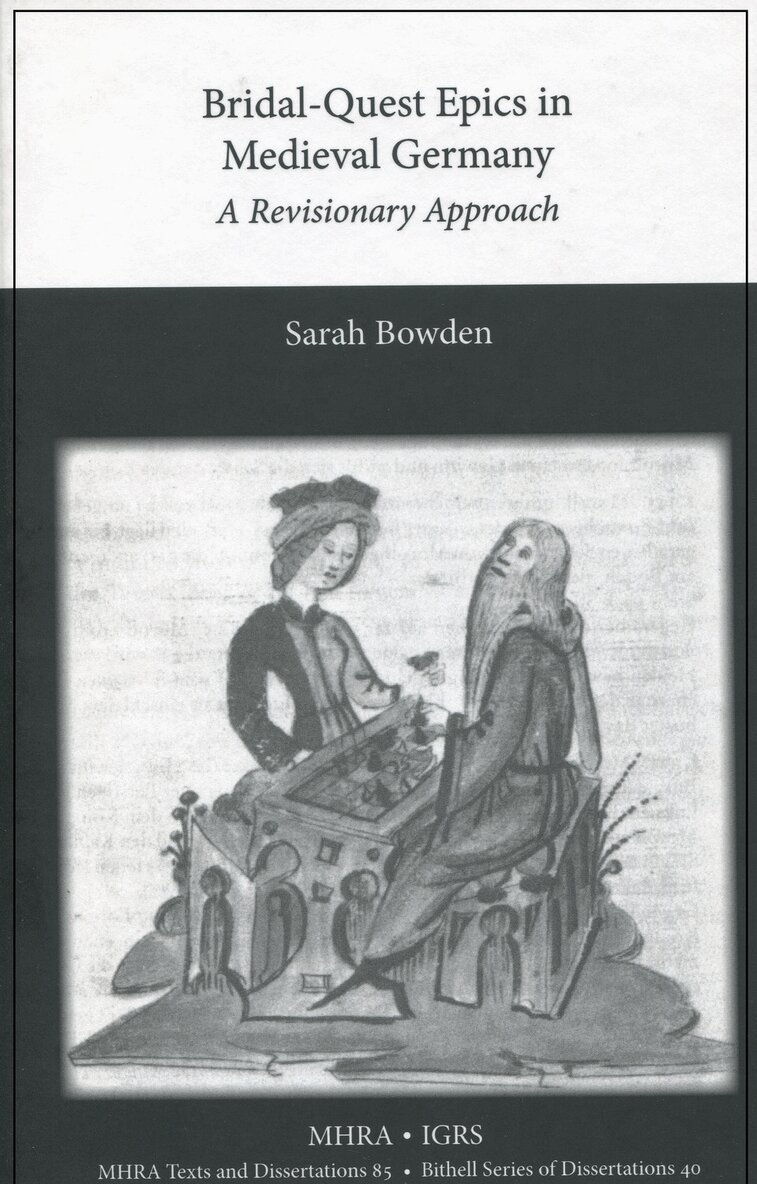
Bridal-Quest Epics in Medieval Germany. A Revisionary Approach
Inbunden, Engelska, 2012
930 kr
Skickas inom 5-8 vardagar
Del 85 - MHRA Texts and Dissertations
Bridal-Quest Epics in Medieval Germany
A Revisionary Approach
Häftad, Engelska, 2012
350 kr
Skickas inom 5-8 vardagar
E-bok
Engelska, 2020889 kr
Läs direkt efter köp
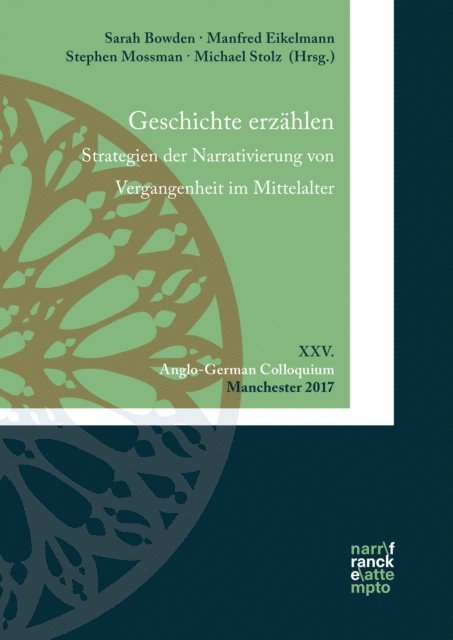
Die Beiträge dieses Bandes gehen auf eine internationale Tagung zurück, die 2017 in Manchester stattgefunden hat. Sie untersuchen die Darstellung von Geschichte in der mittelalterlichen deutschen Literatur auf der Basis von aktuellen erzähltheoretischen Forschungsansätzen. Dabei wird ein breites Spektrum an Texten, Gattungen und Diskursen in den Blick genommen; als Angelpunkt für zahlreiche relevante Fragestellungen erweist sich die im 12. Jahrhundert entstandene ›Kaiserchronik‹. Geleitet von der Erkenntnis, dass Vergangenheit erst im Erzählen zu Geschichte wird, analysieren die Beiträge einschlägige narrative Strategien.
E-bok
PDF, Tyska, 2020889 kr
Läs direkt efter köp
Wie gehen mittelalterliche literarische Werke und Sachtexte mit körperlicher und mentaler (Un-)Versehrtheit um? Die modernen Begriffe "Verletzungen" und "Unversehrtheit" eröffnen ein Themenfeld, dessen lexikalisch-semantische Aufarbeitung im vorliegenden Sammelband erstmalig versucht wird. Darüber hinaus bieten die interdisziplinären Beiträge philologische, theologische und medizinhistorische Ansätze mit Schwerpunkten auf den Bereichen Religion, Krieg und Kampf sowie minne. Es zeigt sich, dass geistliche Werke des Mittelalters eine eigentümliche Mischung von Hinweisen enthalten, die Verletzung etwa im Sinne der physischen Folter der Heiligen bejahen, und solchen, die Unversehrtheit positiv werten. Auch im weltlichen Bereich kann Verwundung einerseits als Auszeichnung, andererseits aber als Schmach gedeutet werden – sowohl in physischer, kriegerischer Auseinandersetzung als auch im seelischen minne-''Kampf''. Der Sammelband bietet so ein facettenreiches Bild des mittelalterlichen Umgangs mit der anthropologischen Grundkonstante der Verwundbarkeit des Menschen.
E-bok
PDF, Engelska, 2020889 kr
Läs direkt efter köp
Die Beiträge dieses Bandes gehen auf eine internationale Tagung zurück, die 2017 in Manchester stattgefunden hat. Sie untersuchen die Darstellung von Geschichte in der mittelalterlichen deutschen Literatur auf der Basis von aktuellen erzähltheoretischen Forschungsansätzen. Dabei wird ein breites Spektrum an Texten, Gattungen und Diskursen in den Blick genommen; als Angelpunkt für zahlreiche relevante Fragestellungen erweist sich die im 12. Jahrhundert entstandene ›Kaiserchronik‹. Geleitet von der Erkenntnis, dass Vergangenheit erst im Erzählen zu Geschichte wird, analysieren die Beiträge einschlägige narrative Strategien.