Sarah E. Gergel – författare
Visar alla böcker från författaren Sarah E. Gergel. Handla med fri frakt och snabb leverans.
3 produkter
3 produkter
E-bok
PDF, Engelska, 2006932 kr
Läs direkt efter köp
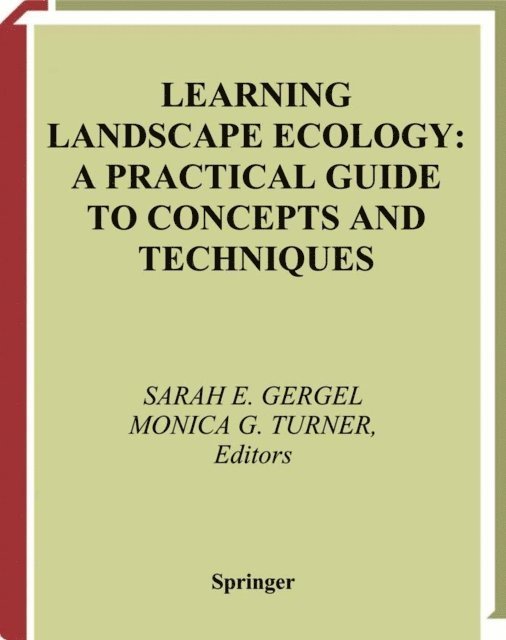
Landscape ecology continues to grow as an exciting, dynamic ecological d- cipline. With its broadscale emphasis and multidisciplinary approach, la- scape ecology lends itself both to basic research and to applications in land management, land-use planning, wildlife management, ecosystem mana- ment, and conservation biology. Landscape ecology makes a unique cont- bution to the scientific community in its attention to ecological dynamics across a broad range of spatial and temporal scales, and as a result it has - come increasingly important for students in the natural sciences to gain a - sic understanding of the subject. Colleges and universities across the United States are incorporating courses in landscape ecology into their curricula. However, nearly every book on landscape ecology is a book to be read, la- ing a hands-on approach. This text is intended to fill that void by providing a comprehensive collection of landscape ecology laboratory exercises. These teaching exercises stress the fundamental concepts of landscape ec- ogy, rather than highly specialized, technical methods. While students will gain experience using a variety of tools commonly used in landscape ecology, we stress the conceptual understanding necessary to use these techniques app- priately. This book attempts to convey the myriad approaches used by la- scape ecologists (as well as a multitude of approaches to teaching) and include group discussion, thought problems, fieldwork, data analysis, spatial data c- lection, exposure to Geographic Information Systems (GIS), simulation m- eling, analysis of landscape metrics, spatial statistics, and written exercises.
Häftad, Engelska, 2017
921 kr
Skickas inom 10-15 vardagar
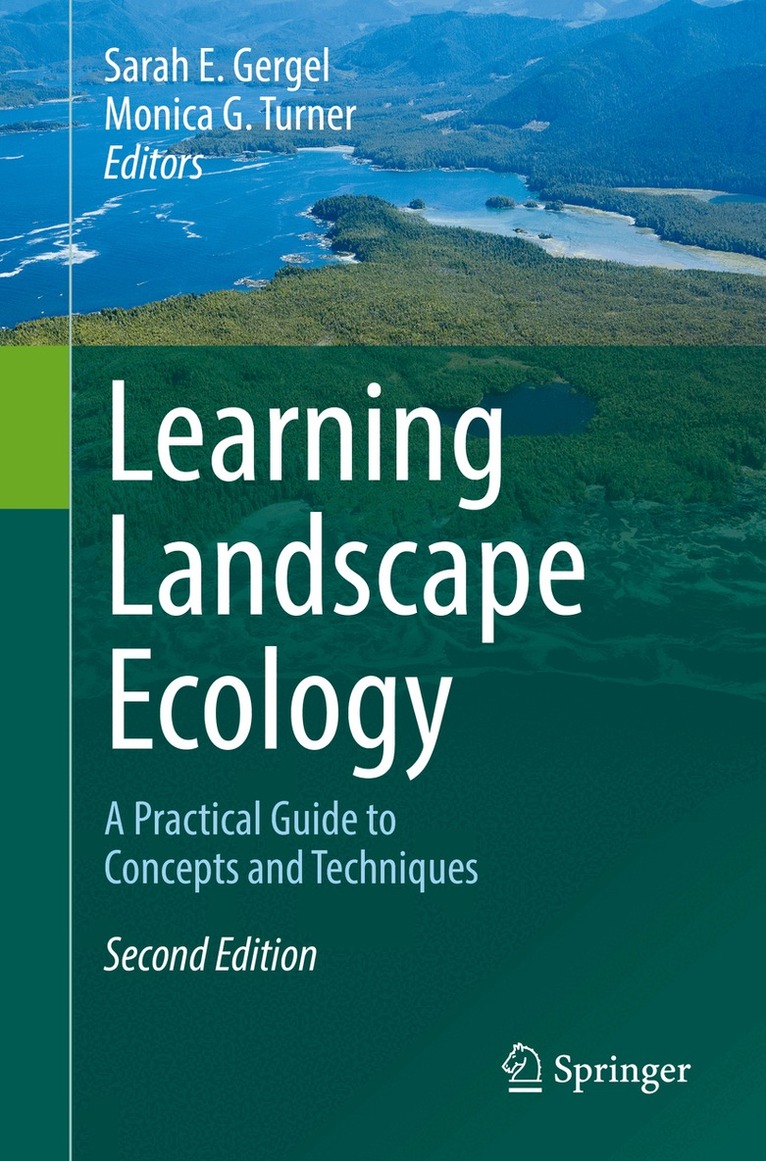
This title meets a great demand for training in spatial analysis tools accessible to a wide audience. Landscape ecology continues to grow as an exciting discipline with much to offer for solving pressing and emerging problems in environmental science. Much of the strength of landscape ecology lies in its ability to address challenges over large areas, over spatial and temporal scales at which decision-making often occurs. As the world tackles issues related to sustainability and global change, the need for this broad perspective has only increased. Furthermore, spatial data and spatial analysis (core methods in landscape ecology) are critical for analyzing land-cover changes world-wide. While spatial dynamics have long been fundamental to terrestrial conservation strategies, land management and reserve design, mapping and spatial themes are increasingly recognized as important for ecosystem management in aquatic, coastal and marine systems. This second edition is purposefully more applied and international in its examples, approaches, perspectives and contributors. It includes new advances in quantifying landscape structure and connectivity (such as graph theory), as well as labs that incorporate the latest scientific understanding of ecosystem services, resilience, social-ecological landscapes, and even seascapes. Of course, as before, the exercises emphasize easy-to-use, widely available software. http://sarahgergel.net/lel/learning-landscape-ecology/
E-bok
Engelska, 20171 145 kr
Läs direkt efter köp
This title meets a great demand for training in spatial analysis tools accessible to a wide audience. Landscape ecology continues to grow as an exciting discipline with much to offer for solving pressing and emerging problems in environmental science. Much of the strength of landscape ecology lies in its ability to address challenges over large areas, over spatial and temporal scales at which decision-making often occurs. As the world tackles issues related to sustainability and global change, the need for this broad perspective has only increased. Furthermore, spatial data and spatial analysis (core methods in landscape ecology) are critical for analyzing land-cover changes world-wide. While spatial dynamics have long been fundamental to terrestrial conservation strategies, land management and reserve design, mapping and spatial themes are increasingly recognized as important for ecosystem management in aquatic, coastal and marine systems. This second edition is purposefully more applied and international in its examples, approaches, perspectives and contributors. It includes new advances in quantifying landscape structure and connectivity (such as graph theory), as well as labs that incorporate the latest scientific understanding of ecosystem services, resilience, social-ecological landscapes, and even seascapes. Of course, as before, the exercises emphasize easy-to-use, widely available software. http://sarahgergel.net/lel/learning-landscape-ecology/