Sarah Teo – författare
Visar alla böcker från författaren Sarah Teo. Handla med fri frakt och snabb leverans.
7 produkter
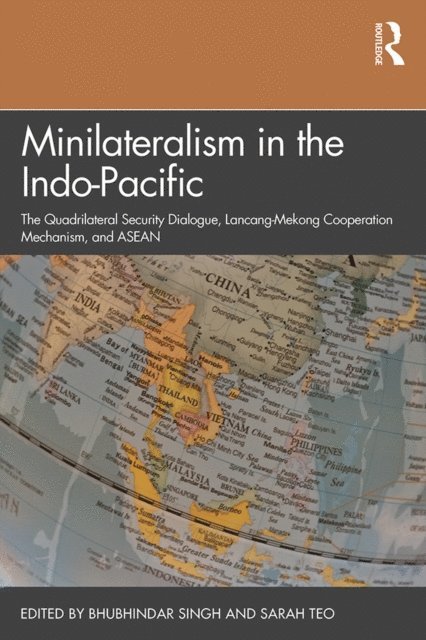
Minilateralism in the Indo-Pacific
The Quadrilateral Security Dialogue, Lancang-Mekong Cooperation Mechanism, and ASEAN
Av Bhubhindar Singh, Sarah Teo
Inbunden, 2020
2521 kr
Lägg i varukorg
While US-centred bilateralism and ASEAN-led multilateralism have largely dominated the post-Cold War regional security architecture in the Indo-Pacific, increasing doubts about their effectiveness have resulted in countries turning to alternative forms of cooperation, such as minilateral …
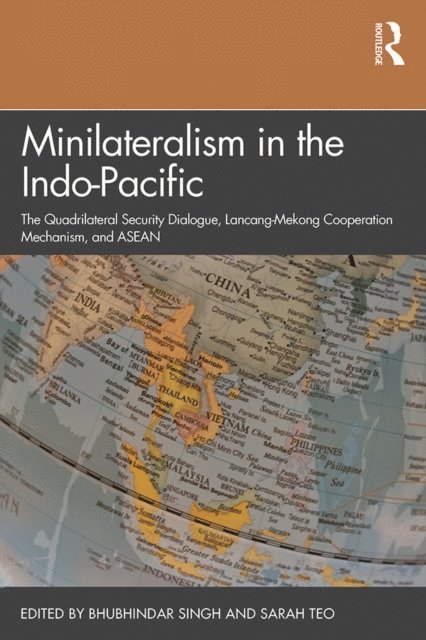
Minilateralism in the Indo-Pacific
The Quadrilateral Security Dialogue, Lancang-Mekong Cooperation Mechanism, and ASEAN
Av Bhubhindar Singh, Sarah Teo
Häftad, 2020
635 kr
Lägg i varukorg
While US-centred bilateralism and ASEAN-led multilateralism have largely dominated the post-Cold War regional security architecture in the Indo-Pacific, increasing doubts about their effectiveness have resulted in countries turning to alternative forms of cooperation, such as minilateral …
Security Strategies of Middle Powers in the Asia Pacific
Av Ralf Emmers, Sarah Teo
Häftad, 2018
386 kr
Lägg i varukorg
Security Strategies of Middle Powers in the Asia Pacific examines what drives the different regional security strategies of four middle powers in the Asia Pacific: Australia, Indonesia, South Korea and Malaysia.Drawing on the extant middle power literature, the authors argue that the regional …
Security Strategies of Middle Powers in the Asia Pacific
Av Ralf Emmers, Sarah Teo
Inbunden, 2018
583 kr
Lägg i varukorg
Security Strategies of Middle Powers in the Asia Pacific examines what drives the different regional security strategies of four middle powers in the Asia Pacific: Australia, Indonesia, South Korea and Malaysia.Drawing on the extant middle power literature, the authors argue that the regional …
Minilateralism in the Indo-Pacific
The Quadrilateral Security Dialogue, Lancang-Mekong Cooperation Mechanism, and ASEAN
Av Sarah Teo, Bhubhindar Singh
E-bok, 2020
745 kr
Lägg i varukorg
While US-centred bilateralism and ASEAN-led multilateralism have largely dominated the post-Cold War regional security architecture in the Indo-Pacific, increasing doubts about their effectiveness have resulted in countries turning to alternative forms of cooperation, such as minilateral …
Minilateralism in the Indo-Pacific
The Quadrilateral Security Dialogue, Lancang-Mekong Cooperation Mechanism, and ASEAN
Av Sarah Teo, Bhubhindar Singh
E-bok, 2020
729 kr
Lägg i varukorg
While US-centred bilateralism and ASEAN-led multilateralism have largely dominated the post-Cold War regional security architecture in the Indo-Pacific, increasing doubts about their effectiveness have resulted in countries turning to alternative forms of cooperation, such as minilateral …
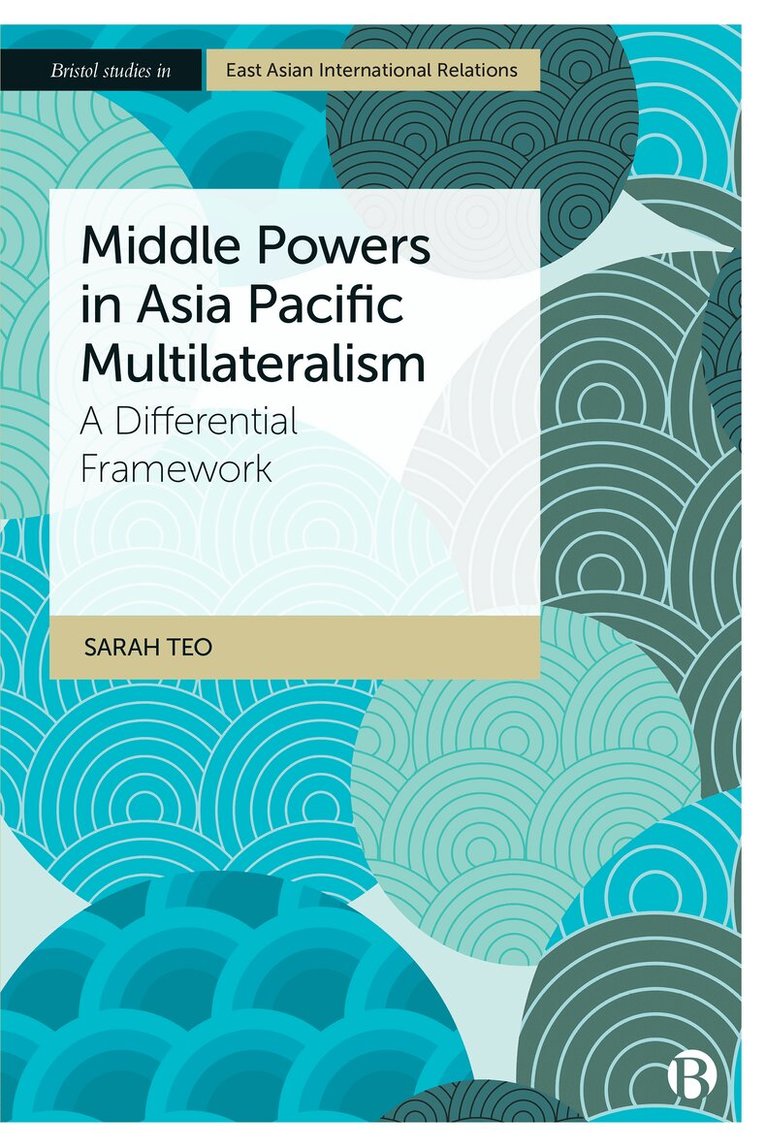
Middle Powers in Asia Pacific Multilateralism
A Differential Framework
Av Sarah Teo
Inbunden, 2022
1271 kr
Lägg i varukorg
Drawing on insights from differentiation theory, this book examines the participation of middle powers in multilateralism. Taking Australia, Indonesia and South Korea as examples, the book examines these countries’ roles in regional organizations, and particularly during the creation of the …