Sarah Wright - Böcker
Visar alla böcker från författaren Sarah Wright. Handla med fri frakt och snabb leverans.
19 produkter
19 produkter
1 810 kr
Skickas inom 5-8 vardagar
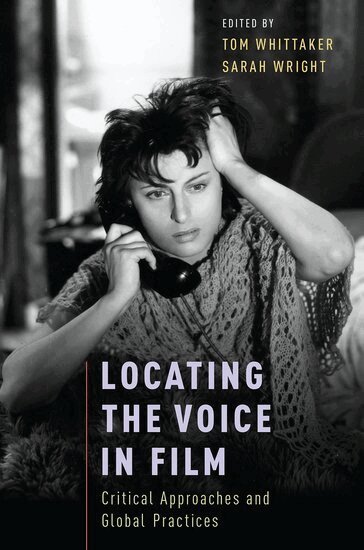
Where is the place of the voice in film? Where others have focused on Hollywood film, this volume aims to extend the field to other cinemas from around the world, encompassing Latin America, Asia and Africa amongst others. Traditional theoretical accounts, based on classical narrative cinema, examine the importance of the voice in terms of a desired perfect match between visuals and sonic effects. But, as the chapters of this volume illustrate, what is normative in one film industry may not apply in another. The widespread practices of dubbing, postsynch sound and "playback singing" in some countries, for instance, provide an alternative means of understanding the location of the voice in the soundtrack. Through seventeen original chapters, this volume situates the voice in film across a range of diverse national, transnational and cultural contexts, presenting readings which challenge traditional readings of the voice in film in exciting new ways. By taking a comparative view, this volume posits that the voice may be best understood as a mobile object, one whose trajectory follows a broader network of global flows. The various chapters explore the cultural transformations the voice undergoes as it moves from one industry to another. In doing so, the volume addresses sound practices which have been long been neglected, such as dubbing and non-synch sound, as well the ways in which sound technologies have shaped nationally specific styles of vocal performance. In addressing the place of the voice in film, the book intends to nuance existing theoretical writing on the voice while applying these critical insights in a global context.
634 kr
Skickas inom 5-8 vardagar
Where is the place of the voice in film? Where others have focused on Hollywood film, this volume aims to extend the field to other cinemas from around the world, encompassing Latin America, Asia and Africa amongst others. Traditional theoretical accounts, based on classical narrative cinema, examine the importance of the voice in terms of a desired perfect match between visuals and sonic effects. But, as the chapters of this volume illustrate, what is normative in one film industry may not apply in another. The widespread practices of dubbing, postsynch sound and "playback singing" in some countries, for instance, provide an alternative means of understanding the location of the voice in the soundtrack. Through seventeen original chapters, this volume situates the voice in film across a range of diverse national, transnational and cultural contexts, presenting readings which challenge traditional readings of the voice in film in exciting new ways. By taking a comparative view, this volume posits that the voice may be best understood as a mobile object, one whose trajectory follows a broader network of global flows. The various chapters explore the cultural transformations the voice undergoes as it moves from one industry to another. In doing so, the volume addresses sound practices which have been long been neglected, such as dubbing and non-synch sound, as well the ways in which sound technologies have shaped nationally specific styles of vocal performance. In addressing the place of the voice in film, the book intends to nuance existing theoretical writing on the voice while applying these critical insights in a global context.
1 744 kr
Skickas inom 10-15 vardagar
This accessible guide explores how our brains react to stress and offers a fresh perspective on how we define "trauma." Probing how the words we use can influence our understanding of distress, this text focuses on expanding awareness of excess stress and reducing judgment of its potential impact on relationships and day-to-day life.Helpfully split into three parts, the book introduces the terms "cortisprinkled," "cortisaturated," and "cortisoaked" and provides a rationale for why these states of brain occur. The role of culture and society are highlighted, and an in-depth focus on coping and offering support to others is presented. Whether caused by sexual assault, social rejection, abuse, the taboo of sexuality, disadvantaged status, or other difficulties, chapters detail specific coping skills and step-by-step strategies to deal with a variety of stress responses. Advice is offered on reconnecting with sexuality, phrasing difficult questions, and ways to offer validation, with concrete recommendations on incorporating healthier practices into everyday life.Both metaphor and real-world vignettes are interwoven throughout, making Redefining Trauma an essential and understandable resource for therapists and their clients, parents and support givers, and anyone looking to develop practical, informed methods for dealing with stress and trauma and reclaim life with intention.
428 kr
Skickas inom 10-15 vardagar
This accessible guide explores how our brains react to stress and offers a fresh perspective on how we define "trauma." Probing how the words we use can influence our understanding of distress, this text focuses on expanding awareness of excess stress and reducing judgment of its potential impact on relationships and day-to-day life.Helpfully split into three parts, the book introduces the terms "cortisprinkled," "cortisaturated," and "cortisoaked" and provides a rationale for why these states of brain occur. The role of culture and society are highlighted, and an in-depth focus on coping and offering support to others is presented. Whether caused by sexual assault, social rejection, abuse, the taboo of sexuality, disadvantaged status, or other difficulties, chapters detail specific coping skills and step-by-step strategies to deal with a variety of stress responses. Advice is offered on reconnecting with sexuality, phrasing difficult questions, and ways to offer validation, with concrete recommendations on incorporating healthier practices into everyday life.Both metaphor and real-world vignettes are interwoven throughout, making Redefining Trauma an essential and understandable resource for therapists and their clients, parents and support givers, and anyone looking to develop practical, informed methods for dealing with stress and trauma and reclaim life with intention.
238 kr
Skickas inom 3-6 vardagar
1 239 kr
Skickas inom 5-8 vardagar
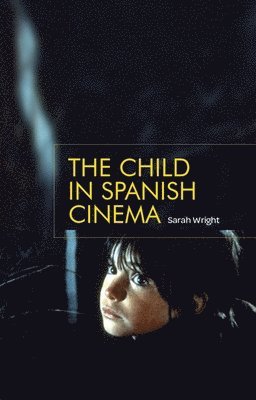
In this, the first full-length treatment of the child in Spanish cinema, Sarah Wright explores the ways that the cinematic child comes to represent ‘prosthetic memory’. The central theme of the child and the monster is used to examine the relationship of the self to the past, and to cinema. Concentrating on films from the 1950s to the present day, the book explores religious films, musicals, ‘art-house horror’, science-fiction, social realism and fantasy. It includes reference to Erice’s The Spirit of The Beehive, del Toro’s Pan’s Labyrinth, Mañas’s El Bola and the Marisol films. The book also draws on a century of filmmaking in Spain and intersects with recent revelations concerning the horrors of the Spanish past. The child is a potent motif for the loss of historical memory and for its recuperation through cinema. This book is suitable for scholars and undergraduates working in the areas of Spanish cinema, Spanish cultural studies and cinema studies.
2 165 kr
Skickas inom 10-15 vardagar
Following a relational, Indigenous-led approach grounded in 25 years of collaborative work, this book looks to weather and climate, tracing the embodied, emplaced and affective ways weather co-constitutes people, place and time/s raising critical questions of ethics, politics and becoming.Becoming weather leads the reader through a reflexive engagement with weather, seeking to shed light on pressing issues around climate change and its entanglements: from the body where contours of weather are intimately felt and known, to the ways that agencies of weather are implicated in the construction of nations, to global topologies of climate (in)justice. Reflecting on deep and ongoing collaborative work undertaken with Indigenous-led research collectives in Australia and the Philippines, the book traces contours of response-ability, learning from weathery relationships to speak back to constructions of climate that see it as aer nullius, belonging to no-one, and that deny ongoing responsibilities, becomings and belongings. The book aims to support more-than-human and relational understandings of weather that situate us all within an ethics of differential cobecoming and that demand attention to the connections that bind and co-constitute.The book is intended for those interested in thinking differently about weather and climate, particularly those who feel an urgent dissatisfaction with mainstream responses and understandings. It will be beneficial for those who would learn from weather, from and with place, in ways led by Indigenous scholars and their allies though an engaged, reflexive, more-than-human and ethnographic account. It does not shy away from critical engagement, nor the changes desperately needed to learn and unlearn, to attend to positionalities and responsibilities, and to engage with what it means to weather on unceded Indigenous land.
590 kr
Skickas inom 10-15 vardagar
Following a relational, Indigenous-led approach grounded in 25 years of collaborative work, this book looks to weather and climate, tracing the embodied, emplaced and affective ways weather co-constitutes people, place and time/s raising critical questions of ethics, politics and becoming.Becoming weather leads the reader through a reflexive engagement with weather, seeking to shed light on pressing issues around climate change and its entanglements: from the body where contours of weather are intimately felt and known, to the ways that agencies of weather are implicated in the construction of nations, to global topologies of climate (in)justice. Reflecting on deep and ongoing collaborative work undertaken with Indigenous-led research collectives in Australia and the Philippines, the book traces contours of response-ability, learning from weathery relationships to speak back to constructions of climate that see it as aer nullius, belonging to no-one, and that deny ongoing responsibilities, becomings and belongings. The book aims to support more-than-human and relational understandings of weather that situate us all within an ethics of differential cobecoming and that demand attention to the connections that bind and co-constitute.The book is intended for those interested in thinking differently about weather and climate, particularly those who feel an urgent dissatisfaction with mainstream responses and understandings. It will be beneficial for those who would learn from weather, from and with place, in ways led by Indigenous scholars and their allies though an engaged, reflexive, more-than-human and ethnographic account. It does not shy away from critical engagement, nor the changes desperately needed to learn and unlearn, to attend to positionalities and responsibilities, and to engage with what it means to weather on unceded Indigenous land.
242 kr
Skickas inom 7-10 vardagar
1 946 kr
Skickas inom 10-15 vardagar
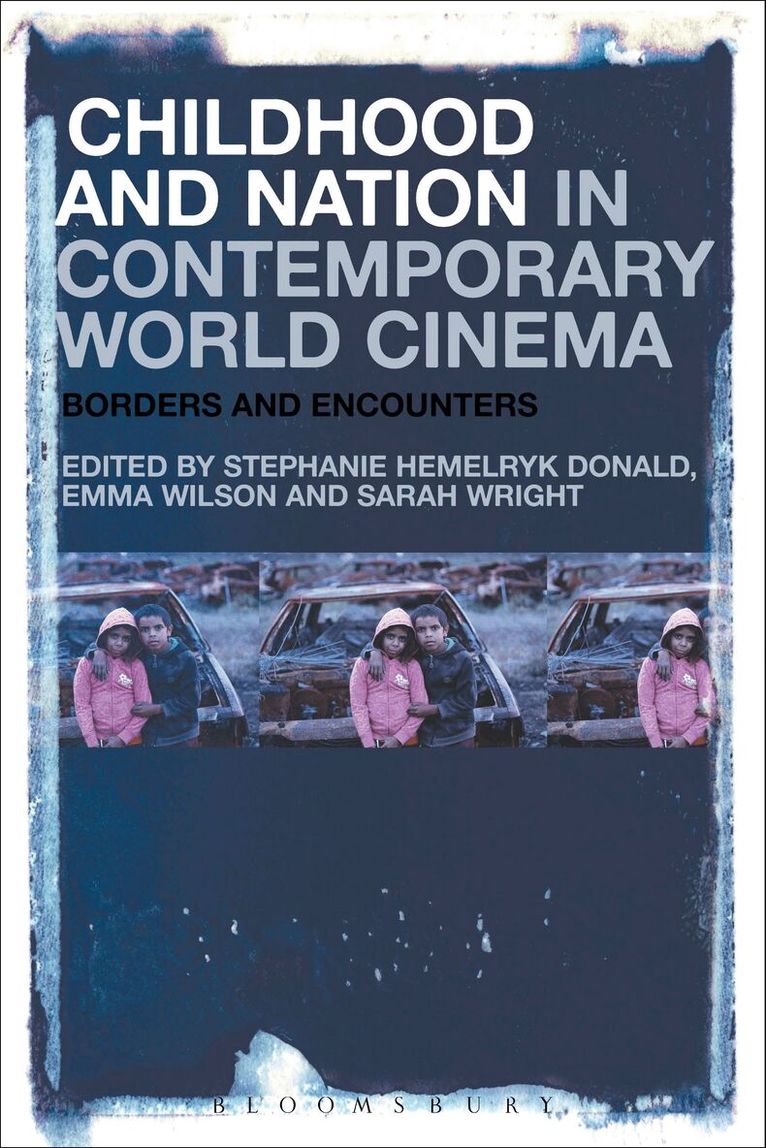
The child has existed in cinema since the Lumière Brothers filmed their babies having messy meals in Lyons, but it is only quite recently that scholars have paid serious attention to her/his presence on screen. Scholarly discussion is now of the highest quality and of interest to anyone concerned not only with the extent to which adult cultural conversations invoke the figure of the child, but also to those interested in exploring how film cultures can shift questions of agency and experience in relation to subjectivity. Childhood and Nation in World Cinema recognizes that the range of films and scholarship is now sufficiently extensive to invoke the world cinema mantra of pluri-vocal and pluri-central attention and interpretation. At the same time, the importance of the child in figuring ideas of nationhood is an undiminished tic in adult cultural and social consciousness. Either the child on film provokes claims on the nation or the nation claims the child. Given the waning star of national film studies, and the widely held and serious concerns over the status of the nation as a meaningful cultural unit, the point here is not to assume some extraordinary pre-social geopolitical empathy of child and political entity. Rather, the present collection observes how and why and whether the cinematic child is indeed aligned to concepts of modern nationhood, to concerns of the State, and to geo-political organizational themes and precepts.
518 kr
Skickas inom 10-15 vardagar
The child has existed in cinema since the Lumière Brothers filmed their babies having messy meals in Lyons, but it is only quite recently that scholars have paid serious attention to her/his presence on screen. Scholarly discussion is now of the highest quality and of interest to anyone concerned not only with the extent to which adult cultural conversations invoke the figure of the child, but also to those interested in exploring how film cultures can shift questions of agency and experience in relation to subjectivity. Childhood and Nation in World Cinema recognizes that the range of films and scholarship is now sufficiently extensive to invoke the world cinema mantra of pluri-vocal and pluri-central attention and interpretation. At the same time, the importance of the child in figuring ideas of nationhood is an undiminished tic in adult cultural and social consciousness. Either the child on film provokes claims on the nation or the nation claims the child. Given the waning star of national film studies, and the widely held and serious concerns over the status of the nation as a meaningful cultural unit, the point here is not to assume some extraordinary pre-social geopolitical empathy of child and political entity. Rather, the present collection observes how and why and whether the cinematic child is indeed aligned to concepts of modern nationhood, to concerns of the State, and to geo-political organizational themes and precepts.
223 kr
Skickas inom 5-8 vardagar
181 kr
Skickas inom 5-8 vardagar
375 kr
Skickas inom 5-8 vardagar
In this, the first full-length treatment of the child in Spanish cinema, Sarah Wright explores the ways that the cinematic child comes to represent 'prosthetic memory'. The central theme of the child and the monster is used to examine the relationship of the self to the past, and to cinema. Concentrating on films from the 1950s to the present day, the book explores religious films, musicals, 'art-house horror', science-fiction, social realism and fantasy. It includes reference to Erice's The Spirit of The Beehive, del Toro's Pan's Labyrinth, Mañas's El Bola and the Marisol films. The book also draws on a century of filmmaking in Spain and intersects with recent revelations concerning the horrors of the Spanish past. The child is a potent motif for the loss of historical memory and for its recuperation through cinema. This book is suitable for scholars and undergraduates working in the areas of Spanish cinema, Spanish cultural studies and cinema studies.
3 436 kr
Skickas inom 7-10 vardagar
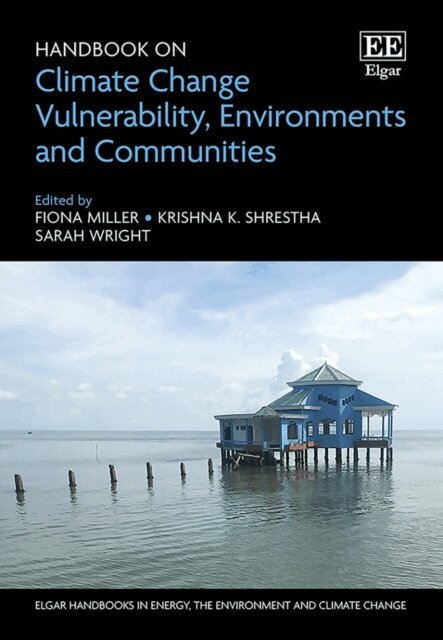
This thought-provoking Handbook explores the spatially and socially differentiated nature of climate change vulnerability. Expert authors discuss the ways that climate change vulnerability is materially and discursively produced as well as the agency, capacity and resilience of affected communities.Interdisciplinary in scope, this book features both leading and emerging international academics, offering diverse perspectives. Chapters delve into the conceptual origins and theoretical debates of climate change vulnerability, as well as existing and emerging responses to vulnerability in different environmental, cultural and social contexts. With a decolonising, Indigenous-led and justice-oriented approach, this innovative Handbook critically reflects on the concept of vulnerability, examining the disparities between the experiences of those of different gendered identities and social positions. Ultimately, this book provides insights into the navigation of communal futures in response to and beyond climate change vulnerability.Students and scholars of environmental sociology, development studies and human, environmental, social and cultural geography will greatly benefit from this Handbook’s integrated perspective. It is also a vital resource for climate change researchers working in the social sciences, as well as practitioners and policymakers working on climate change vulnerability policies and programs.
2 108 kr
Skickas inom 10-15 vardagar
Don Juan is one of the intriguing creations of Western literature. A subject of countless revisions over the centuries, he seems a perpetual source of fascination. In the popular imagination he exists as the legendary seducer of women, charismatic rogue and trickster. A potent icon of male sexual energy, he crosses cultures, from east to west.The twentieth-century has viewed the figure afresh through the prism of its own cultural terms of reference and social concerns. Using an interdisciplinary approach, "Tales of Seduction" focuses on those fascinating intersections between myth, culture and intellectual inquiry, yielding new connections. Don Juan is a figure of transnational and transcultural interest. Sarah Wright takes Don Juan back to Spain and examines the confluences of Spanish culture with aspects of Western intellectual history. Intellectually promiscuous, transgressive and iconoclastic, Don Juan constantly plays at the limits of culture.Whilst Don Juan's antecedents lie in tales of blasphemy or repentance, by the twentieth-century the figure often takes on explorations into the limits of gender as a framework for other, more general, questions about the limits of culture.Wright explores how Don Juan has entered into and been received in different ways in aspects of Spanish culture (opera, cinema, theatre, photography and virtual realities) and Western theory (nationhood, medicine, psychoanalysis, consumerism) in the twentieth century and at the start of the twenty-first.
423 kr
Skickas inom 10-15 vardagar
Don Juan is one of the intriguing creations of Western literature. A legendary seducer of women, trickster and transgressor of sacred boundaries, he has been the object of countless revisions over the centuries. The twentieth-century has viewed the figure afresh through the prism of its own cultural terms of reference and social concerns. Using an interdisciplinary approach, "Tales of Seduction" focuses on the intersections between myth, culture and intellectual inquiry. Sarah Wright takes Don Juan back to Spain, his birth-place, and examines the confluences of Spanish culture with aspects of Western intellectual history (medicine, psychoanalysis, linguistics), where she finds Don Juan continues to transgress the limits of culture from the early twentieth century to the present.
1 217 kr
Skickas inom 10-15 vardagar
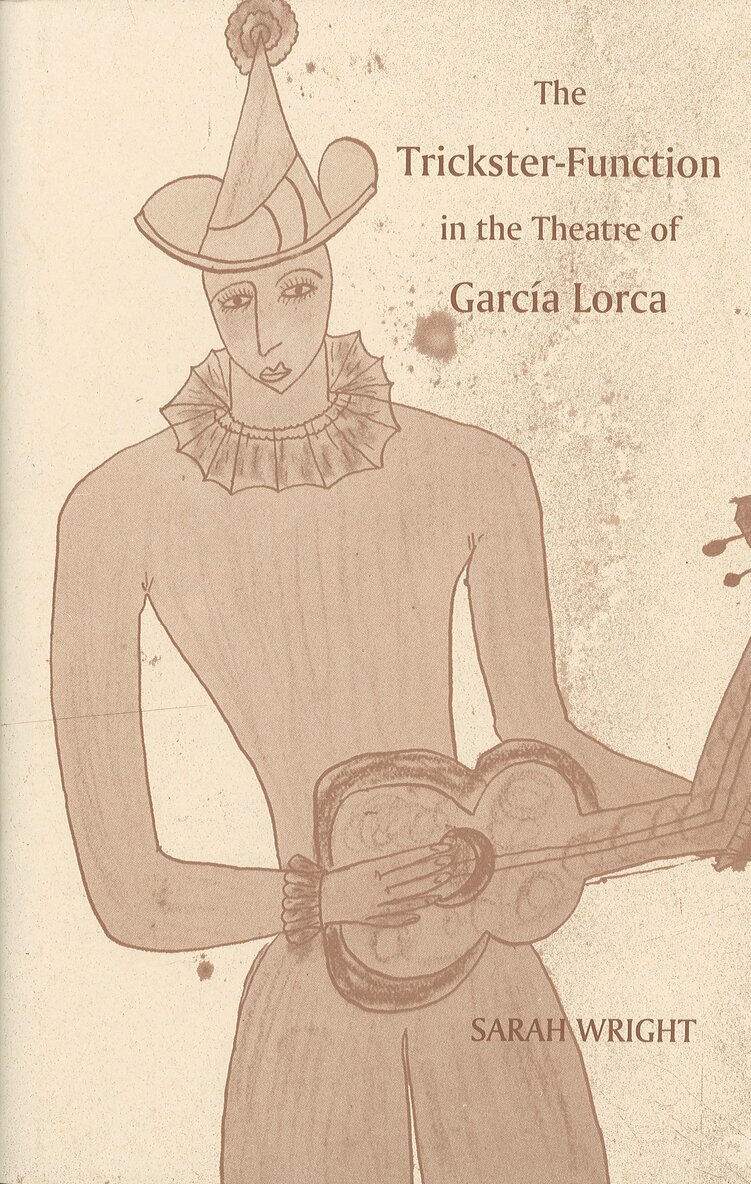
An important contribution to the understanding of the theatrical output of major figure of Spanish literary canon.Drawing on anthropology, psychoanalysis, and literary theory, this book uses the image of the trickster to argue for a fresh and original reading of García Lorca's plays, highlighting androgyny, male fantasy, masochism, masqueradeand the carnivalesque. The study includes detailed textual analyses of Amor de Don Perlimplín con Belisa en su jardín, Así que pasan cinco años and El público, as well as extensive examination of La zapatera prodigiosa and Bodas de sangre; in addition it makes reference to the lesser known El sueño de la vida, Retablillo de Don Cristóbal, Dragón and El loco y la loca, together with a relevant selection of Garcia Lorca's drawings and prose. Dr SARAH WRIGHT lectures in Hispanic Studies at the University of Hull.
325 kr
Skickas inom 10-15 vardagar